|
 |
|
 |
|
|

Judith Mason
Acquisitive muse (detail), 2005
Pencil and coloured pencil on paper, 820 X 740mm

Judith Mason
Waiting room, 2005
Pencil and coloured pencil on paper, 1040 X 750mm

Dumisani Mabaso
Shaka's portrait, 2004
Etching, engraving, 390 X 340mm

Dumisani Mabaso
Gossipers, 2005
Drypoint, 400 X 335mm
|
|
|
|
Mason and Mabasa at Art on Paper
Judith Mason was born in Pretoria in 1938, obtaining her Fine Arts degree at Wits University in 1960. She subsequently taught painting at Wits and Michaelis amongst other places. She has exhibited widely since the 60s and her work is found in most major South African collections.
Mason harnesses animals as 'thinking pieces' in her latest drawings. They are symbols and metaphors - never merely creaturely. Central in her new work is the hyena. Mason turns this scavenger into a muse.
She comments: 'I paint in order to make sense of my life, to manipulate various chaotic fragments of information and impulse into some sort of order, through which I can glimpse a hint of meaning. I am an agnostic humanist possessed of religious curiosity who regards making artworks as akin to alchemy. To use inert matter on an inert surface to convey real energy and presence seems to me a magical and privileged way of living out my days.
Dumisani Mabaso will be exhibiting new prints. Versatile in a number of intaglio techniques, he enjoys much respect in the printmaking community. In 1982, Mabaso set up Squzu Studio in Soweto, where he installed an etching press, originally owned by Cyprian Shilakoe. This was probably the first etching press in Soweto at a time when access to such facilities was exceptional. Squzu is still functional in Bertrams, Johannesburg.
Born in Soweto in 1955, Mabaso first attended art classes in the 1970s at the YWCA in Dube, Soweto, and was taught by Eric Mbatha and Ben Arnold. He trained at Mofolo Art Centre, Rorke's Drift and the Technikon Witwatersrand during the 1970s, and later taught at the YWCA, Mofolo, FUBA, the Johannesburg Art Foundation and Funda. He participated in Thupelo workshops locally, and a Triangle Workshop in New York.
Opens: February 5
Closes: February 24

Art on Paper
8 Main Road, Melville
Tel: (011) 726 2234
Email: info@artonpaper.co.za
Hours: Tue - Sat 10am - 5pm
|
|
|
|
|
|
|
|
Masters in Digital Arts Students at Wits School of the Arts
In an exhibition entitled 'the drift between', the Interactive Media Design Class of 2004, comprising Colleen Alborough, Elmi Dixon, Richard Kilpert, Nicholas Nesbitt and Sue van Zyl, will be showing their work. Utilising a range of electronic tools in order to explore 'responsive media', the works combine high tech software with more traditional art approaches, including photography, sculpture and poetry in order to arrive at a space of wonderment.
The central premise of this exhibition, which will be opened by James Sey, is a walk-through series of works with varying levels of interactivity, but with the whole space held together by the journey of the participant.
Much like waking from a deep sleep, 'the drift between' refers to the border between conscious and subconscious awareness, where familiar reality and the shadow-life become blurred. Each piece deals in some way with a transition or interstice between one state and another, alerting the viewer to unfamiliar sensations, be it the sound of dreams, the breath of poetry, the memory of sight or the weight of touch.
Digital Arts is the first new division in the Wits School of Arts. Housed in the refurbished Nunnery, with computer labs and studios for both image and audio recording, Digital Arts is a strongly interdisciplinary initiative, linking digital elements in music, fine arts and drama.
Opens: February 5
Closes: February 11
|
|
|
|
|
|
|
|
South African Stories at the University of Johannesburg Art Gallery
An exhibition entitled 'South African Stories' will feature arts and crafts focusing on rural and urban stories that are told in an effort to create awareness of other cultures, traditions, and issues, such as HIV/AIDS, ilobola, marriage, traditional family life, rural life and memories of growing up.
Large embroidered panels dealing with themes such as 'life in the township', distinctly African and appliquéd and embroidered books for children such as Wild Animals and Where does the fruit come from? are juxtaposed with artworks describing the hard realities of life: poverty, abuse and unemployment.
The works on display have been made through the Artist Proof Studio's (APS) outreach programme and include works by rural and urban embroidery groups, artists' collaborations with embroiderers as well as APS members' artists' books.
APS is a community and professional printmaking studio providing skills training development to over 100 artists. Its outreach programmes include the National Paper Prayers Campaign, an HIV/AIDS awareness and skills development project that focuses on product development and skills transfer to people infected and affected by HIV/AIDS. APS won the Arts and Culture Trust Award for 'Most successful ACT-funded project' in 2004. The Ikageng Embroidery Group, whose work will also be shown, won the Investec Zebra Art Competition in 2004.
Opens: February 9
Closes: February 23
UJ Art Gallery
B5 Building, Auckland Park Kingsway Campus, cor. Kingsway Avenue and University Road, Auckland Park, Johannesburg.
Tel: (011) 489 2099
Email: aed@rau.ac.za
Hours: Mon-Fri 9am-6pm, Sat 9am-1pm
|
|
|
|

Philippe Bousquet
|
|
|
|
Philippe Bousquet at Gallery @ 157
Philippe Bouquet was born in 1964 in Marseille, France and graduated from the Architecture School of Marseille in 1990. He is self-taught in jewellery making and silversmithery, and has been practicing as a designer in this discipline since 1997.
Bousquet's work continues in the illustrious traditions of precious objects crafted from silver and gold since the Middle Ages. Under Bousquet's mastery, the concept of preciousness goes further than the use of precious materials only; limestone or seashell are given a sense of preciousness in the context of his work.
Opens: February 17
Closes: March 5
Gallery @ 157, Jan Smuts Avenue, Parkwood
Tel: (011) 880 8529 or 083 447 8877 or 073 233 1133
Email: sorceres@mweb.co.za
Hours: Tue - Sun 10am - 4pm
|
|
|
|
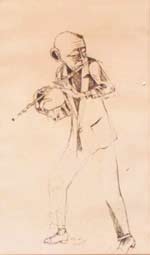
Dumile Feni
|
|
|
|
Dumile at JAG
Dumile Feni, born May 21, 1942, left South Africa to go into exile in 1968, after the powerful statements made in his work resulted in harassment by the apartheid security forces. He contributed not only to African 20th century art but also to the struggle against apartheid.
Feni's work and opposition to apartheid took him to countries as diverse as Nigeria, England, China and the USA. He believed that the cultures of the people of South Africa and their struggle for liberation were inextricably linked. His drawings are derived from the subconscious mind, communicating to the viewer messages about human life. He partook in numerous group and solo exhibitions and was the recipient of several international prestigious awards.
He died in New York, in 199 - just before he was due to return home to the country for which he had struggled so long. He died in poverty and didn't live to see democracy in South Africa.
Curated by Prince Dube, this project encompasses an effort to place Feni and his work in historical perspective. 'The Johannesburg Art Gallery prides itself for the role it played in organising the first truly comprehensive exhibition honouring Dumile's contribution to the art world... Putting together an exhibition that featured the calibre of Dumile's work was a complex task that required intensive international cooperation on different levels.
'Dumile's life and work read like the history of South Africa. My intent is not for this exhibition to provide a biographical account about Dumile, but to serve as a vehicle that contributes to the research relative to the sojourn of a South African artist. This exhibition is central to showing how Dumile's artistic development... can be seen as social commentary about what was happening in the South African art world at a particular time and place.'
Opens: January 30
Closes: April 10
Johannesburg Art Gallery
Cnr. Klein and King George Streets, Joubert Park
Tel: (011) 725 3130/ 80 / 81
Fax: (011) 720 6000
Email: tshdisom@joburg.co.za
Hours: Tues - Sun 10am - 5pm
|
|
|
|
|
|
|
|
Tswane University of Technology Students at Gordart and Franchise
Graduate and post-graduate students' work from the Department of Fine and Applied Arts, Tshwane University of Technology (TUT) will be held at the Gordart and Franchise Galleries, simultaneously.
Selected works by approximately 20 students will be on show at both galleries. As can be expected from a group exhibition, the works are of a diverse nature, combining new and traditional approaches. The works deal with many aspects of contemporary issues, such as feminism, post colonialism, racism, displacement and language.
The exhibition aims to showcase the local talent and ideas of emerging artists and thinkers. It gives a voice to TUT's graduates in the diverse and cosmopolitan environment of Johannesburg.
For more information please contact Abrie Fourie on 082 775 4272 or Kai McEvoy on 072 247 0578.
Opens at Gordart: 2pm, Saturday February 12
Opens at Franchise: 4pm, Saturday February 12
Close: February 26
Gordart Gallery
78 Third Avenue, Melville, Johannesburg
Tel: (011) 726 8519 or 084 423 8635
Email: gordon@gordart.co.za
Hours: Wed - Sat 10.30am - 6pm
Franchise Gallery
44 Stanley Avenue, Milpark
Tel: (011) 482 7995
Email: franchiseart@iafrica.com
Hours: Tues - Fri 11am - 6pm, Sat 10am - 4pm
|
|
|
|
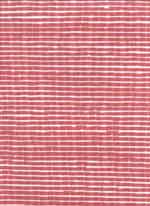
JP Meyer
Forever and ever, my heart belongs to you
Permanent marker on paper
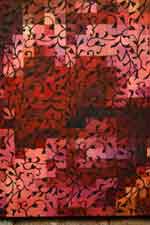
Varenka Paschke
Bloedrooi
Oil on canvas

Cobus van Bosch
Blouberg 1808
Bone, wood, resin and paint
|
|
|
|
JP Meyer, Varenka Paschke and Cobus van Bosch at Artspace
Arts advisor and journalist Lucia Burger opens 'Stukkies' at Artspace: 'All things are made up of little things. What makes it meaningful is that it is constructed in patterns.' This is the premise on which this three-person exhibition is based. The artists are JP Meyer, Varenka Paschke and Cobus van Bosch.
JP Meyer comments: 'I am interested in the relationship that exists between mark-making and human consciousness, the significance of sequence and repetition in the natural world and, more specifically, in our make-up, thought processes and behaviour. I am intrigued by how we perceive patterns, make connections and understand parts in relation to the whole. Continuous mark-making is my means of finding my place. It helps me to position my few thousand earth-hours in the long evolution of the world.'
Varenka Paschke says, 'Depicting life through painting is a way of controlling it, almost a way of freezing time manually. By using the abstract, I make sense of the figurative: as the human body owes its life to the unified functioning of cells. Likewise cells depend on millions of atoms in order to flourish. These make up a diverse network of universes. Distance transforms abstract colourful building blocks into figurative personalities. Colour is what gives life a sense of sanity. And shaping it turns it into reality.'
Cobus van Bosch adds, 'What fascinates me the most about bone (my prime material) is how it feels - cool, weighty and buttery. Just like paint. While it is a much more morbid material to work with (or to prepare), and never easily transformable, it has endless metaphoric qualities. In the past, my bone-works have aimed at evoking memory and loss, but now they include a visual approach - mainly through patterning. Bone as a document of the past still resonates - albeit through a landscape transformed over time by the elements.'
Opens: February 13
Closes: March 12
ArtSpace
3 Hetty Avenue, Fairlands, Johannesburg
Tel: (011) 678 1206 or 082 651 4702
Email: artspace@wol.co.za
Hours: Tues - Fri 10am - 6pm, Sat 10am - 2pm
|
|
|
|

Mapula and Monkeybiz
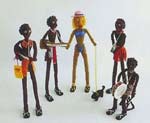
Mapula and Monkeybiz
|
|
|
|
Mapula and Monkeybiz at Gallery on the Square
An exhibition featuring the work of the Mapula Embroidery project and the Monkeybiz collective will be opened by Sheryl Ozinsky, consultant for Proudly South African, and Karin Skawran, one of the masterminds behind the Mapula project.
The Mapula (Mother of Rain) Embroidery Project was started in 1991 by Soroptimists International, Pretoria to create skills development opportunities for the women in the Winterveldt.
Needlework collectives have been envisaged as a means of enabling women who might otherwise attain, at best, only a tiny income by undertaking occasional work with an opportunity to receive better remuneration. They have also been intended to afford women creative satisfaction and have been perceived as a way of paying tribute to local art forms.
The Mapula collective receives input from various University of South Africa (Unisa) staff members as well as Jannétje van der Merwe, who markets the works. It also involves the Sisters of Mercy, who have established an adult education centre in the Winterveldt and have made a classroom available for the project. There are currently 80 needleworkers in Mapula from a range of backgrounds.
The women frequently rely on images extracted from newspapers, books, magazines and other forms of printed matter. Although many needleworkers in Mapula opt for representations of local wildlife, the project also includes a number of artists who focus on contemporary news events and aspects of popular culture.
Ceramic artists Barbara Jackson and Shirley Fintz, collectors of African beadwork and art, have, together with Mataphelo Ngaka, facilitated a revival of an ancient African tradition in southern Africa. A desire to create employment and empowerment for disadvantaged women in Cape Town has led to the creation of 'Monkeybiz'.
Jackson and Fintz supply coloured glass beads to women in the townships of Mandela Park, Khayelitsha and Phillipi. Each woman is paid for every item produced and since they work from home, each can still look after her family and avoid transport costs. The beadworks are creating a sensation wherever they appear, locally and overseas.
Opens: February 9
Closes: February 23
|
|
|
|
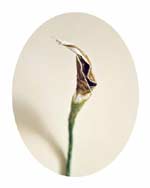
Frances Goodman
Magnificent Beauty, 2004
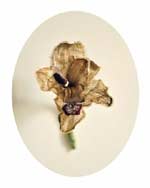
Frances Goodman
Mistakes, 2004
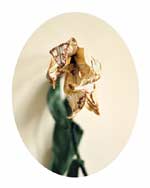
Frances Goodman
Purity, 2004
All from the series 'Love Smells Like Death'
Sculptures and Photographs: Sculptures made of silk, satin, thread, wire, dye. Photographs on metallic paper. 24x28cm. Mounted and framed in gilt frames
|
|
|
|
Frances Goodman at Goodman
In 2004, David Brodie wrote, 'Frances Goodman's audio monologues and sound sculptures capture moments of seeming ordinariness that reveal the dark (dis)contents of bodies and psyches under threat in urban environments.' In her upcoming solo exhibition, 'Petite Mort', Goodman shows new work comprising sound, narrative, sculpture and photography, investigating the expression of emotion, whether it be people's daydreams, the symbolic meaning of flowers or the way in which we declare or reveal our feelings.
The central piece of the exhibition is a four-track sound installation titled Table for Three. The work invites the viewer/listener to sit down and become a part of the piece, investigating the slip between the expectations of others, and one's own desires and dreams. The work references different female characters or scenarios from the books of Charles Dickens, Emily Bronté and Virginia Woolf.
The series of photographs and sculptures entitled Love Smells Like Death is premised, in part, on George Bataille's text on flowers in which he writes: '... the flower is betrayed by the fragility of its corolla: thus, far from answering the demands of human [ideals], it is the sign of their failure.' Flowers are often used to symbolise love and ideal beauty and they are always present at weddings and funerals. What interests Goodman, however, is the death of the flower, or rather the moment when its beauty fades, and its decay begins.
Frances Goodman was born in South Africa in 1975. She lives and works in Belgium and South Africa and has exhibited extensively internationally over the past few years. Having studied at the University of the Witwatersrand in Johannesburg, she completed a Master's at Goldsmith's College, London.
Opens: February 17
Closes: March 12
Goodman Gallery
163 Jan Smuts Avenue, Parkwood
Tel: (011) 788 1113
Fax: (011) 788 9887
Email: goodman@iafrica.com
Hours: Tues - Fri 9.30am - 5.30pm, Sat 9.30am - 4pm
|
|
|
|
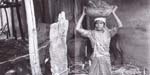
Omar Badsha
Domestic worker (detail)
from the series 'Road to Tadeshkwar'
|
|
|
|
'A Place Called Home' at JAG
Subtitled 'Art of the South Asian Diaspora', the opening of this exhibition, curated by Zayd Minty, featured a special performance choreographed by Jay Pather, entitled Duets in the Diaspora for the Siwela Sonke Dance Company.
Participating artists in 'A Place Called Home' include Bani Abidi (Pakistan/USA), Omar Badsha (South Africa), Ansuman Biswas (India/UK), Chila Kumari Burman (UK), Faiza Galdhari (South Africa), Sunil Gupta (India/Canada/UK), Roshini Kempadoo (UK/Guyana), Zen Marie (South Africa), Moti Roti (Trinidad/Pakistan/UK), Prema Murthy (India/Philippines/USA) and Usha Seejarim (South Africa).
This showing follows its successful runs at Durban's NSA Gallery and the SA National Gallery. It comprises photographic, print, video, web-based and installation works by artists of Indian/South Asian descent from all around the world, and resonates loudly in South Africa where over 1 000 000 people hail from the Indian subcontinent.
The South Asian Diaspora of today received its greatest growth from the mid 1800s when large groups of Indians began moving to countries such as Fiji, South Africa, Trinidad, Surinam, and a host of other places around the globe, at first through the to provide cheap labour in sugar fields, and later as traders. The most recent waves of immigration were in the 1960s and 70s to the UK and more recently to the US (largely to work in the IT industries).
Bollywood and a renewed interest in Indian inspired style, should not detract from the commentary that many artists of 'Indian' descent - third or fourth generation South Africans, British or Caribbean - have produced in the process of making 'home' in the place of their birth or by adopting as 'home' the place they have chosen to move to.
Minty is a cultural producer and organiser, who was born and educated in Durban but has worked, since 1991, in Cape Town particularly around issues of culture and transformation. He was previously artistic director of the Cape Town Festival (2002) and is presentlybased atthe District Six Museum. Amongst others, he has worked on 'Isintu' (1998) at the SA National Gallery and 'Returning the Gaze' (2000), a public art project. Both projects dealt with questions around race and identity. He is a fourth generation South African of Gujerati/Indian descent.
Opens: January 22
Closes: March 13
Johannesburg Art Gallery
Cnr. Klein and King George Streets, Joubert Park
Tel: (011) 725 3130/ 80 / 81 or 083 530 1912
Fax: (011) 720 6000
Email: KhweziG@joburg.org.za or one@intekom.co.za
Hours: Tues - Sun 10am - 5pm
|
|
|
|
|
|
|
|
Children's Rights at Constitution Hill
'Visions and Voices, Rights and Realities' is a photo-documentary exhibition exploring the realities facing children in South Africa today, which will be opened by Chief Justice Albie Sachs.
Opens: February 15
Closes: March 13
|
|
|
|
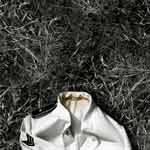
Bonita Alice
|
|
|
|
Bonita Alice at The Premises
'Promised Land' addresses a tender node somewhere between the endlessly enduring human preoccupation with place in life, and the inescapability of our material return to soil after death', artist Bonita Alice explains. 'The question I raised in previous works was: What bond of blood or history produces in us that mythical sense of lifelong attachment to a place, even one we have never visited? Now, it is an attempt to understand the nature of our desire for that connection to place.
'My new collection of works alludes to death but does not fetishise it in mourning and loss. It does not pretend away the ash and dust of death - so sweetly spoken in defiance of desiccation and crushed bone - which sprinkle through the work in counter-defiance. Considering that all life is transient and that there is no easy way to live mindfully of this fact, it seems necessary to credit death with a positive value rather than focus only on the empty space it leaves behind it.'
'This becomes enormously more difficult when death is premature, violent or of epidemic frequency. However, without putting too distant or cold an eye on death, I have attempted to separate death momentarily from grief and to give it another kind of weight. That of something completed ... the end of a rugged and trying task... closing the circle... completing a chapter... lowering the curtain... Retiring to Utopia.'
Opens: February 5
Closes: February 26
|
|
|
|
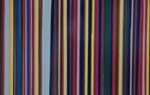
Mark Erasmus
26
oil on board
|
|
|
|
Mark Erasmus at Zuva
'Colour terra' is the debut solo exhibition of Johannesburg-based Mark Erasmus. Trained at the Johannesburg Art Foundation, Erasmus is an innovative young artist who has spent the past decade researching the history of colour and its use in contemporary art.
These studies and his constant quest for fresh dyes and fresh methods have enabled him to develop a highly technical process of 'dripping' paints in complex geometric patterns. His works have both a retro and pop feel, while holding true to a highly advanced return to overt modernism.More recently, Erasmus has incorporated spontaneous visual breaks into his grid-like patterns after working with mentors Willem Boshoff and Henry Symonds.
This exhibition comprises new, variously scaled oil on board works as well as mixed media sculpture using scrap metals and abandoned objects. It explores the synergies between brilliant splashes of colour and the landscapes, or 'terra', which they inhabit.
Opens: February 17
Closes: March 6
|
|
|
|
|
|
|
|
Allison Kearney at JAG
'The Portable Hawker's Museum: A Retrospective' is a work which Allison Kearney began in 2003. Items costing R10 or less which the artist bought from Johannesburg street hawkers, each relate to specific people and places and pay homage to the hawkers who live in Johannesburg, many of whom are negatively affected by Johannesburg's restructuring problems.
Kearney comments: 'This portable museum comments on the politics of existing museum practices and how value is attached to objects within contemporary culture, through the kinds of objects it houses and the ways in which the collection is displayed. The collection is exhibited in open public spaces, while 'documents' or 'representations' of the items belonging to the museum collection are exhibited within galleries. The gallery is thus denied its relationship to the original work of art'.
Opens: February 5
Closes: March 9
Johannesburg Art Gallery
Cnr. Klein and King George Streets, Joubert Park
Tel: (011) 725 3130/ 80 / 81
Fax: (011) 720 6000
Email: kearneya@hse.pg.wits.ac.za
Hours: Tues - Sun 10am - 5pm
|
|
|
|
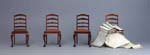
Paul Emmanuel
|
|
|
|
Paul Emmanuel at Constitution Hill
Award winning artist Paul Emmanuel mounts his second solo show, 'After-Image'. The first recipient of the prestigious Ampersand Foundation Fellowship in 1997 and winner of the Sasol wax in art competition 2002, Emmanuel is known for his sensitive and intimate intaglio works.
The highlight of this show is Emmanuel's new monumental work After-image. It comprises an original drawing on exposed colour photographic paper. Here Emmanuel explores the politics of South African militarism, power and patriarchy and their relationship to the male identity. This work has recently been purchased by Hollard for their new head office.
Other recent works on exhibition include Emmanuel's artists' book Cathexis as well as two editioned photographic works from 'The Lost Men', a site-specific memorial installation, launched at last year's Grahamstown National Arts Festival.
Says Emmanuel, 'The war in Iraq in 2003, with its resultant destruction, loss and pain, evoked memories of personal loss ... I am influenced by this war - the futility, the wasted lives... we all are. We suffer the loss of humanity, we suffer the loss of gentleness and vulnerability, the loss of feeling, empathy and sensitivity. We suffer the loss of dignity, we suffer the loss of relationships and potential, we suffer the loss of hope and future... We become defined by ideas of manliness, militarism and patriarchy which confine and define men to live out pre-determined gender roles limiting their emotional expression.'
Opens: January 17
Closes: February 10
|
|
|
|

Moshekwa Langa
Untitled (muscle-man; Brenda Fassie), 2003
Mixed Media on paper, 116X150cm
|
|
|
|
Moshekwa Langa at the Goodman Gallery
Moshekwa Langa mounts his second show at the Goodman Gallery. This exhibition comprises a series of new drawings, photographic editions and video works, created between 1999 and 2004.
Over the past few years Langa has participated in several high profile international shows, including 'Present + Tense' (2004) in Düsseldorf, 'Min(e)dfields' (2004) in Berne, 'Looking Both Ways: Art of the Contemporary African Diaspora' (2003) at New York's Museum for African Art, and 'Fault Lines: Contemporary African Art and Shifting Landscapes' (2003) at the Venice Biennale.
Langa describes his current body of work as 'a series of collages that fuse historical timelines with the present. They evoke issues of social transformation, and abandonment. They take forms of earlier explorers in search of new world, new excitements, and new 'everythings'.
'So all these things are packed into the work to make composites of the current times ... The drawings have a combined childlike quality with sophisticated fine lines. They are also expressive and decorative yet depict social meaning in the same instant. I have used a variety of media to bring my interests to the fore - there is no air to breathe, no space to consider - until you have left the building!"
Opens: January 22
Closes: February 12
|
|
|
|
|
|
|
|
Illuminando Vidas at the Bensusan Museum
This exhibition of Moçambiquan photography made between 1950 and 2001, curated by Dr. Bruno Z'Graggen and Mr. Grant Lee Neurenberg, features work by Ricardo Rangel, Kok Nam, Rui Assubuji, Luís Basto, José Cabral, Joel Chiziane, Joã Costa (Funcho), Alexandre Fenías, Martinho Fernando, Albino Mahumana, Ferhat Vali Momade, Alfredo Mueche, Alfredo Paco, Sérgio Santimano and Naíta Ussene.
Bruno Z'Graggen will be the guest speaker at the opening event. In addition, some of the photographers will be present at the exhibition openings and will be hosting peer workshops during the run of the show.
Opens: January 23
Closes: February 20
The Bensusan Museum of Photography, MuseuMAfricA,
121 Bree Street, Newtown, Johannesburg
Tel: 011 833 5624
Email: JonathanF@joburg.org.za
Hours: Tue-Sun 9am-5pm
|
|
|
|

Diana Hyslop
|
|
|
|
Diana Hyslop at Gallery @ 157
Diana Hyslop, an artist who enjoys permanent residency at the Bag Factory studios in Newtown, Johannesburg, presents new work. In her paintings, relics from the natural world and contemporary urban artefacts frequently co-exist within the same frame, erasing geo-political borders.
'I am interested in freedom, boundaries and space ... In how we limit and expand ourselves at the same time,' she comments. The Yeoville water tower, television sets, angels and aeroplanes have long been part of her visual vocabulary, along with animals, stars, roots and trees. The relationships between these things are determined by a dream-like spontaneity.
Her current exhibition draws on her experience working in film, photography and at Marvel Comics in London, where popular strips like Spiderman, The Incredible Hulk and The Avengers were adapted for a British audience. Using techniques drawn from these industries, she combines photographs, paintings and digital enhancement to create a storyboard sequence of images, like a condensed film clip.
Opens: January 29
Closes: February 26
Gallery@157
157 Jan Smuts Avenue, Rosebank, Johannesburg
Tel: (011) 880 8529, 083 447 8877 or 073 233 1133
Email: sorceres@mweb.co.za
Hours: Tues - Sun 10am - 4pm
|
|
|
|
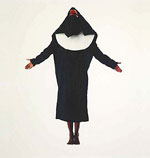
Tracey Rose
Regina Coeli, 2002
Performance.
|
|
|
|
SABC Collection at JAG
The South African Broadcasting Corporation (SABC) has been acquiring art works informally for more than half a century. Following the restructuring of the corporation in 1994, the art collection was formalised under a curator and funds were allocated for the acquisition of works representative of South Africa's new democracy. During the past 10 years, a primary concern has been to acquire work by black artists and other artists previously under-represented in the collection. Selected work is regularly displayed at the SABC in public and office spaces. Approximately 180 works will be shown in this exhibition, entitled 'Making Waves'.
The work on show ranges from that of William Timlin and Gerard Bhengu made in the 1920s to that by Santu Mofokeng and Robert Hodgins acquired at their recent solo exhibitions.
Approximately 100 artists are represented. The floor space is divided into eight thematic spaces as indicated in the catalogue to the exhibition. These in part reflect a concern to show work in a range of media from drawing (Julian Motau and Diane Victor), prints (Dan Rakgoathe, Malcolm Payne, Kendell Geers) and painting (Irma Stern, George Pemba, Robert Hodgins, Zwelethu Mthethwa) to sculpture (Ezrom Legae, Peter Schütz),
video (Konrad Welz), mixed media (Sam Nhlengethwa, David Koloane) and photographs
(Jo Ractliffe, Ken Oosterbroek) amongst others.
Johannesburg Art Gallery
Cnr. Klein and King George Streets, Joubert Park, Johannesburg
Tel: (011) 725 3130
Fax: (011) 720 6000
Tel: Koulla Xinisteris, curator SABC art collection: 082 574 5568
Email: dxarts@icon.co.za
Hours: Tues - Sun 10am - 5pm
|
|
