|
 |
|
 |
|
|
|
|
|
|
Recent Fine Arts graduates at University of Johannesburg Gallery
Five students, who completed their Fine Arts studies at the former Technikon Witwatersrand in 2004, exhibit work in the newly renamed art gallery of the University of Johannesburg. Entitled 'Self, Temptation, Love, Private, Opposites' the exhibition aims to embrace the content of each of the student's work.
Christina Lithebe's work speaks of lost love and the wish to be part of soap operas, fairy tales and the ballet, with the resulting disappointment and pain when the fairy tale prince does not ride in on his white horse. Mpho Makhubo examines bodily desire evoked by everyday life and the condemnation with which desire is tainted by her religious faith. A combination of contrasting materials articulates the tension between spiritual nourishment and sensual gratification in Makhubo's work.
Jaco van den Heever's work reflects urbanity and the physical attributes of Johannesburg's public and private domains. He draws a parallel between social consciousness and private subconscious insecurities. Candice Muir's work deals with her identity as person of mixed heritage and the issues and emotions that come with being a 'coloured' person. Candice Poulsen examines her childhood memories and plays with the positive and negative stereotypes of the Golliwog.
Opens: March 2
Closes: March 16

The University of Johannesburg Art Gallery
Auckland Park Kingsway Campus, Building B5, corner Kingsway Avenue and University Road, Auckland Park
Tel: (011) 489 2099
Email: aed@rau.ac.za
Hours: Mon - Fri 9am - 6pm, Sat 9am - 1pm
|
|
|
|

James Delaney
|
|
|
|
James Delaney at Moja Modern
A new exhibition of work by James Delaney entitled 'Epic Skies' displays intense combinations of vivid colours, dense textures and dramatic light. Strongly influenced by Turner's abstract landscapes devoid of human existence, Delaney explores the panoramic horizons of Johannesburg, the vast backdrop of the Highveld and the open skies of Africa.
Delaney also claims influence from the dramatic skies painted by Romantic and Impressionist painters in the 19th century, as well as the simple drama evoked by Chinese and Japanese traditional interest in nature.
Opens: March 10
Closes: March 31
MojaModern Art Gallery
16 Seventh Avenue, Parktown North
Tel: (011) 447 9000
Email: gallery@mojamodern.co.za
www.mojamodern.co.za
Hours: Fri-Wed 11am-7pm, Thu 11am-9pm
|
|
|
|

Matthew Wilman
|
|
|
|
Matthew Wilman at Gallery @157
Matthew Willman is a talented photo-journalist who has produced striking work about South Africa, its developing communities and its leaders. A limited number of Wilman's Robben Island collection form part of the newly established 'Centre of Memory' exhibition that opened at Mandela House in Houghton, Johannesburg in September 2004. This exhibition is designed to pay tribute to Nelson Mandela as a world leader and pioneer of reconciliation.
Following collaboration in the '46664: a prisoner working in the garden' exhibition, Wilman was privileged to undertake a private photoshoot with Nelson Mandela on August 13 last year. Among the photographs from this shoot are black-and-white images of Mandela, for which the Nelson Mandela Foundation granted permission, for inclusion in 'Naissance', Wilman's first major solo exhibition.
Opens: February 19
Closes: March 4
Gallery @ 157
157 Jan Smuts Avenue, Rosebank, Johannesburg
Tel: (011) 880 8529 or (Michele Bestbier) 083 447 8877 or (Anton Kieck) 083 637 1334
Email: sorceres@mweb.co.za or anton@eca.co.za
Hours: Tue - Sat 10am - 4pm
|
|
|
|
|
|
|
|
Gun Free South Africa at Constitution Hill
Gun-related violence is rising at an alarming rate in South Africa, with over 30 people a day dying from gun-related incidents. With an urgent need to address this devastating problem, Gun Free South Africa presents an exhibition entitled 'Reality and the Future: Transcending Violence, Transforming Society', in the Temporary Exhibition Spaces at Constitution Hill.
A number of South African artists are working on the project, including award-winning metal artist Martine Margoles with her huge tongue-in-cheek metal sculpture, The Trust Bank Man, and Willem Boshoff who is creating a work from toy guns handed to Gun Free South Africa by children in the townships.
In tandem with the exhibition, a Gun Free South Africa Art competition is being held, inviting people of all ages to create works that portray a move from the reality of gun violence in our society to envisioning a better future for all.
'ConstitutionHill is a symbolic place of freedom and human rights, and the right to life is a fundamental constitutional right and issue', says Judy Bassingthwaite, Director of Gun Free South Africa, '(Our) aim is to promote human rights; with so many guns/firearms in circulation, it is so easy for human rights violations to take place. The exhibition at Constitution Hill will highlight our focus on developing a healthy nation, free from fear as a result of gun violence.'
Opens: March 4
Closes: March 13
The Old Fort, Constitution Hill
1 Kotze Street, Hillbrow
Tel: (011) 381 3112 or (011) 403 4590 or (Marj Brown) 073 418 5758
www.gca.org.za
Hours: Mon - Sun 9am - 5pm
|
|
|
|

William Kentridge
The Embarkation Triptych (detail), 1987
Charcoal and pastel on paper
|
|
|
|
New Beginnings at Standard Bank Gallery
A comprehensive exhibition of works from the Standard Bank Corporate Collection celebrates the opening of the newly renovated Standard Bank Gallery in Johannesburg. Works on exhibition reflect the bank's continued commitment to the arts in South Africa. The Standard Bank Gallery opened its doors in 1990 and forms part of the Standard Bank Centre complex in downtown Johannesburg. Its status as one of the finest visual arts venues in the city, if not the country, has been firmly established.
The gallery has also established itself as one of the few non-commercial public spaces for major exhibitions, and through its extensive educational programme, plays an increasingly important role in facilitating the continued development of a truly South African culture.
Under the architects Pierre Lombart and Bridget Grosskopff from the architecture firm GLH, the gallery has undergone a major face-lift and now boasts a more art-friendly environment, including state-of-the-art audiovisual spaces.
The inaugural exhibition in the new gallery will feature the very best of the Standard Bank Corporate Collection. Standard Bank has acquired an impressive art collection over the years and this show gives the South African public the opportunity to see it together.
'New Beginnings' includes works by William Kentridge, Gerard Sekoto, Karel Nel, Penny Siopis, Sam Nhlengethwa, Andrew Verster, Bonnie Ntshalintshali, Pat Mautloa, Zwelethu Mthethwa, Minette Vári and more. In addition, it features the work of pioneers of South African art including Irma Stern, Jacob Hendrik Pierneef, Hugo Naudé and Maggie Laubser.
Opens: March 3
Closes: April 9
Standard Bank Gallery
Corner Simmonds and Frederick Streets, Johannesburg
Tel: (011) 636 4231
Email: Sue.Isaac@standardbank.co.za or Barbara.Freemantle@standardbank.co.za
www.sbgallery.co.za
Hours: Mon - Fri 8am - 4.30pm; Sat 9am - 1pm
|
|
|
|

George Pemba
ANC funeral in the red location, Port Elizabeth, 1965
Oil on board, 49x66cm
|
|
|
|
Sekoto to Sihlali at Warren Siebrits
Warren Siebrits Modern and Contemporary Art presents its first exhibition for 2005. Entitled 'Sekoto to Sihlali: Nine Black Pioneers of South African Art', the exhibition features work by Gerard Sekoto (1913-1993), Gerard Bhengu (1910-1990), George Pemba (1912-2000), John Koenakeefe Mohl (1903-1985), Gladys Mgudlandlu (1917-1979), Dumile Feni (1939-1991), Julian Motau (1948-1968) and Durant Sihlali (1935-2004).
Opens: February 15
Closes: March 10
Warren Siebrits Modern and Contemporary Art
140 Jan Smuts Avenue, Parkwood, Johannesburg
Tel: (011) 327 0000
Email: seymour23@icon.co.za
www.warrensiebrits.co.za
Hours: Tue - Fri 11am - 6pm, Sat 11am - 3pm
|
|
|
|
|
|
|
|
Steven Cohen, Jay Pather, Gerard Bester and others at Dance Umbrella
The FNB Dance Umbrella celebrates 17 years of providing a free and open platform for new contemporary dance and performance. This year it features the work of a number of practitioners who have earned themselves a reputation in the visual arts. These include Gerard Bester, Jay Pather, P J Sabbagha, Steven Cohen and Elu.
Untitled by Gerard Bester
6.30pm, March 2
The Wits Downstairs Theatre
University of the Witwatersrand, Braamfontein
The beautiful ones must be born by Jay Pather
6pm, March 5 and 6
Constitution Hill
The Old Fort, Constitution Hill
1 Kotze Street, Hillbrow
Still Here! by P J Sabbagha
8.30pm, March 11 and 12
The Wits Downstairs Theatre
University of the Witwatersrand, Braamfontein
Munk Punk by Elu
Dancing Inside Out by Steven Cohen
So is Os Gemaak by Peter van Heerden
8.30pm, March 16 and 17
The Wits Downstairs Theatre
University of the Witwatersrand, Braamfontein
Tel: (011) 482 4140
Email: danceumbrella@artslink.co.za
www.warrensiebrits.co.za
|
|
|
|

Artist Proof Studio
|
|
|
|
Artist Proof Studio's anniversary party
The Artist Proof Studio commemorates a year since it moved into its new premises in the Bus Factory, Newtown. The celebration will feature music, dance, art, printmaking demonstrations and the opportunity to make a paper prayer.
5pm, March 9
Nhlanhla Xaba Art Gallery
Artist Proof Studio, Bus Factory, President Street, Newtown
Tel: (011) 492 1278 or (Marjorie) 072 273 2427
Email: artistp@mweb.co.za
|
|
|
|

Bronwen Findlay
Blanket Part 2, 2005
Etching
Bronwen Findlay
Protea Arrangement and Crown, 2005
Monoprint

Bronwen Findlay
Cow Doily II, 2005
Monoprint
|
|
|
|
Bronwen Findlay at David Krut Arts Resource
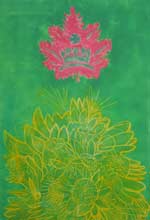
Bronwen Findlay's 'A Blanket Story: Breaking New Ground' is a striking new series of prints in which Findlay combines her instinct for bold designs and colours with her fascination for ordinary domestic objects.
Findlay has always collected and painted cups, saucers, doilies, tray cloths and other domestic objects, but has recently been inspired by the woolen blankets sold at trading stores near the Lesotho border. The designs on the blankets date to the 1940s and contain elements such as military insignia, the Victoria Cross, springbok heads, and phrases like 'Made in England'. Most of the blankets include the vertical red stripes that mark them as traditional Basotho garments of the kind given to children at birth.
The blankets constitute a fascinating cultural history of the interactions between Basotho tradition and colonial influence. Findlay is intrigued by the ways in which these iconic South African images and colonial motifs have found their way into the Basotho design vernacular. Working with printers at David Krut Print Workshop, Findlay has produced compelling etchings, monotypes and linocuts that make use of and extend the symbolism of the images on the Basotho blankets.
Bronwen Findlay has an MAFA from the University of Natal. She has taught at the University of Durban-Westville and Wits University, and currently teaches at the University of Johannesburg. She has had several solo exhibitions and has participated in local and international group shows. Her work is represented in private and public collections. In 2002 she was nominated for a Vita Award and in 2004 received a Brett Kebble Merit Award for A Painting about a Bedspread.
Opens: February 19
Closes: March 19
David Krut Arts Resource
140 Jan Smuts Avenue, Parkwood
Tel: (011) 880 4242
Fax: (011) 880 6368
Email: elizbuys@davidkrut.com
Hours: Mon - Fri 9am - 5pm, Sat 9am - 4pm
|
|
|
|

Conrad Botes
Sunday morning, 2005
Monoprint, 1050X750mm

Conrad Botes
Detective, 2005
Lithograph, 380X490mm

Conrad Botes
Untitled (bunny heads), 2005
Monoprint, 1050X750mm

Conrad Botes
The passion of the cute head, 2005
Lithograph, 650X500mm

Conrad Botes
Untitled (open wound), 2005
Monoprint, 650X500mm
|
|
|
|
Conrad Botes at Art on Paper
With a new suite of monoprints, silkscreens, lithographs and other work on paper, Conrad Botes indisputably proves his status as 'torchbearer of the Post-Pop movement in South Africa', according to Art on Paper.
With his icons of atavistic males and females, including the 'tortured soul' and the femme fatale, Botes mocks conventional notions of individualism and 'humanism', ranging from romantic love to self-flagellation. Botes has been portrayed in critical literature as the 'posthuman' artist par excellence (Ashraf Jamal, 2004). That said, he gives the sweet sentimentality, typical of many of Post-Pop's practitioners, a bittersweet edge in his latest work.
Botes uses Post-Pop's preference for 'sugary infantilism' to reflect on contemporary society. In such a society, religion is irreverent, violence is desirable, sadism institutionalised, and the individual triumphant in his existential crisis. Botes' work achieves an interesting fusion of the pastoral with contemporary realities and aesthetics: flowers are often wounds in his works and birds are harbingers of doom. Detached hands refer to creativity.
Opens: March 5
Closes: March 31
The artist will conduct a walkabout of his work at 6pm on March 8.
Art on Paper
8 Main Road, Melville
Tel: (011) 726 2234
Email: info@artonpaper.co.za
Hours: Tue - Sat 10am - 5pm
|
|
|
|

Alex Tropani
|
|
|
|
Alex Trapani at The Premises
'PREtension', a solo exhibition by Alex Trapani, comments on hypocrisy. The Swiss artist, Alberto Giacometti said: 'The object of art is not to reproduce reality, but to create a reality of the same intensity'. Picasso echoed the sentiment: 'Art is a lie that helps us realise the truth,' as did Paul Gauguin, who said, 'I shut my eyes in order to see'. Trapani draws from the sayings of these great masters to extrapolate on his own show.
'Hypocrisy is a human condition that one cannot be free of,' he comments, 'To varying degrees, we are all hypocrites. We say we will do one thing and instead do another. It is a state of flux that allows for a deceptive nature to transcend integrity. In art - as in life, politics, religion, the law, and so on - intentions are most often honourable, but it is inevitable that the 'imperfection' will be exposed, most often through the artist's own analysis of self and work.'
The exhibition comprises multiple sculptural pieces and large scale digital prints.
Opens: March 5
Closes: March 26
The Premises at the Johannesburg Civic Theatre
Loveday Street, Braamfontein
Tel: (011) 877 6859 or (Michael MacGarry) 073 279 5290
Email: mm@onair.co.za
www.onair.co.za/thepremises
Hours: Tue - Sat 12pm - 8am
|
|
|
|
Stephan Erasmus
|
|
|
|
Stephan Erasmus at Gordart
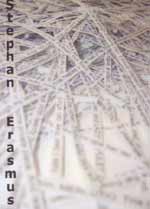
'Requiem for a Cipher' by Stephan Erasmus explores the interaction between love and sorrow through the engagement of encryption processes.
Erasmus has both accumulated and generated a large anthology of writings, which both recall and comment on the paradox between sorrowful love and the love of sorrow. It is from this anthology that Erasmus has painstakingly created a body of work where he has become 'the erotographimaniac', a writer of love letters to an ideal, to a muse. These love letters have, however been transformed from their original recognisable format through encryption. Veiled with substituted text, the compositions become serene, mysterious, enigmatic puzzles.
'Requiem for a Cipher' comprises artists' books, prints, drawings, paper constructions and string compositions. The distinct monochromatic palette strengthens Erasmus' investigation of emotional duality in a visually seductive, almost minimalist manner, resulting in objects of exquisite beauty.
Erasmus is currently exhibiting at Axis Gallery in New York City, on the group exhibition 'Imprints'.A recipient of the Ampersand Foundation Fellowship in 2004, Erasmus is fast becoming one of South Africa's more notable young artists.
Opens: March 6
Closes: March 19
Gordart Gallery
78 Third Avenue, Melville, Johannesburg
Tel: (011) 726 8519 or 084 423 8635
Email: gordon@gordart.co.za
Hours: Wed - Sat 10.30am - 6pm
|
|
|
|

Sue Williamson
Welcome to the Jet Hotel, 2004
Video still, dimensions variable
|
|
|
|
Sue Williamson at Goodman
Sue Williamson is one of South Africa's best known artists. Her first solo show
at the Goodman in three years comprises a body of work which takes a number
of new directions.
Included will be the powerful video and print series, Better Lives, commissioned
by Africalia for the mega show 'Transferts' at the Palais de Beaux Arts in Brussels
and shown on the Dakar Biennale last year, as well as the witty video installation Welcome
to the Jet Hotel, a major award winner on the 2004 Brett Kebble Art Awards.
New work made especially for the Goodman show includes work inspired by a residency
in Egypt last year, and two large scale engraved glass pieces, maquettes for
a public art commission in London.
Williamson lives and works in Cape Town. For many years she has been internationally acclaimed as an artist, and last year exhibited at the Smithsonian in Washington DC, on the Dakar Biennale, at the Museum Bochum in Germany, in Alexandria in Egypt, and at the Museum of World Cultures in Göthenburg in Sweden. Her work is in almost all the important public collections in this country.
Williamson is also the founding editor of ArtThrob and still has some involvement in the site.
Opens: March 19
Closes: April 16
Goodman Gallery
163 Jan Smuts Avenue, Parkwood
Tel: (011) 788 1113
Fax: (011) 788 9887
Email: goodman@iafrica.com
Hours: Tues - Fri 9.30am - 5.30pm, Sat 9.30am - 4pm
|
|
|
|
|
|
|
|
Meat in Parktown North
A collective of designers/writers/artists who curate what they term 'exhibition parties' along certain themes are proclaiming their boredom with exclusive shows that 'don't give up-and-coming artists a platform to exhibit their work'. Based in Parktown North, they've decided to give art an inclusive, popular culture voice, and extend a call for art submissions, for an exhibition which will be held on March 29.
'Our audience varies,' Kerry Friend comments, 'but mainly they're young professionals, media and advertising folk who like something irreverent and thought provoking. The show also includes some dancing and a cash bar, and usually continues into the wee hours of the morning.'
'Send us some meat', they invite. 'Rare, medium or simply well done will do. Each artwork must be wrapped in bubble wrap and have a secure tag attached to it.'
Submissions by: March 29
The event takes place on April 1
Louise Bredenkamp and Peter Guy
68 Seventh Avenue, Parktown North
Tel: (Jonathan Cane) 083 628 5159 or (Kerry Friend) 083 353 2625 or (Louise Bredenkamp) 084 901 2664
Email: kerry.friend@ogilvy.co.za
|
|
|
|

Dumile Feni
|
|
|
|
Dumile at JAG
Dumile Feni, born May 21, 1942, left South Africa to go into exile in 1968, after the powerful statements made in his work resulted in harassment by the apartheid security forces. He contributed not only to African 20th century art but also to the struggle against apartheid.
Feni's work and opposition to apartheid took him to countries as diverse as Nigeria, England, China and the USA. He believed that the cultures of the people of South Africa and their struggle for liberation were inextricably linked. His drawings are derived from the subconscious mind, communicating to the viewer messages about human life. He partook in numerous group and solo exhibitions and was the recipient of several international prestigious awards.
He died in New York, in 199 - just before he was due to return home to the country for which he had struggled so long. He died in poverty and didn't live to see democracy in South Africa.
Curated by Prince Dube, this project encompasses an effort to place Feni and his work in historical perspective. 'The Johannesburg Art Gallery prides itself for the role it played in organising the first truly comprehensive exhibition honouring Dumile's contribution to the art world... Putting together an exhibition that featured the calibre of Dumile's work was a complex task that required intensive international cooperation on different levels.
'Dumile's life and work read like the history of South Africa. My intent is not for this exhibition to provide a biographical account about Dumile, but to serve as a vehicle that contributes to the research relative to the sojourn of a South African artist. This exhibition is central to showing how Dumile's artistic development... can be seen as social commentary about what was happening in the South African art world at a particular time and place.'
Opens: January 30
Closes: April 10
Johannesburg Art Gallery
Cnr. Klein and King George Streets, Joubert Park
Tel: (011) 725 3130/ 80 / 81
Fax: (011) 720 6000
Email: tshdisom@joburg.co.za
Hours: Tues - Sun 10am - 5pm
|
|
|
|

JP Meyer
Forever and ever, my heart belongs to you
Permanent marker on paper

Varenka Paschke
Bloedrooi
Oil on canvas

Cobus van Bosch
Blouberg 1808
Bone, wood, resin and paint
|
|
|
|
JP Meyer, Varenka Paschke and Cobus van Bosch at Artspace
Arts advisor and journalist Lucia Burger opens 'Stukkies' at Artspace: 'All things are made up of little things. What makes it meaningful is that it is constructed in patterns.' This is the premise on which this three-person exhibition is based. The artists are JP Meyer, Varenka Paschke and Cobus van Bosch.
JP Meyer comments: 'I am interested in the relationship that exists between mark-making and human consciousness, the significance of sequence and repetition in the natural world and, more specifically, in our make-up, thought processes and behaviour. I am intrigued by how we perceive patterns, make connections and understand parts in relation to the whole. Continuous mark-making is my means of finding my place. It helps me to position my few thousand earth-hours in the long evolution of the world.'
Varenka Paschke says, 'Depicting life through painting is a way of controlling it, almost a way of freezing time manually. By using the abstract, I make sense of the figurative: as the human body owes its life to the unified functioning of cells. Likewise cells depend on millions of atoms in order to flourish. These make up a diverse network of universes. Distance transforms abstract colourful building blocks into figurative personalities. Colour is what gives life a sense of sanity. And shaping it turns it into reality.'
Cobus van Bosch adds, 'What fascinates me the most about bone (my prime material) is how it feels - cool, weighty and buttery. Just like paint. While it is a much more morbid material to work with (or to prepare), and never easily transformable, it has endless metaphoric qualities. In the past, my bone-works have aimed at evoking memory and loss, but now they include a visual approach - mainly through patterning. Bone as a document of the past still resonates - albeit through a landscape transformed over time by the elements.'
Opens: February 13
Closes: March 12
ArtSpace
3 Hetty Avenue, Fairlands, Johannesburg
Tel: (011) 678 1206 or 082 651 4702
Email: artspace@wol.co.za
Hours: Tues - Fri 10am - 6pm, Sat 10am - 2pm
|
|
|
|

Frances Goodman
Magnificent Beauty, 2004

Frances Goodman
Mistakes, 2004
Frances Goodman
Purity, 2004
All from the series 'Love Smells Like Death'
Sculptures and Photographs: Sculptures made of silk, satin, thread, wire, dye. Photographs on metallic paper. 24x28cm. Mounted and framed in gilt frames
|
|
|
|
Frances Goodman at Goodman
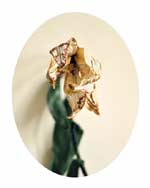
In 2004, David Brodie wrote, 'Frances Goodman's audio monologues and sound sculptures capture moments of seeming ordinariness that reveal the dark (dis)contents of bodies and psyches under threat in urban environments.' In her upcoming solo exhibition, 'Petite Mort', Goodman shows new work comprising sound, narrative, sculpture and photography, investigating the expression of emotion, whether it be people's daydreams, the symbolic meaning of flowers or the way in which we declare or reveal our feelings.
The central piece of the exhibition is a four-track sound installation titled Table for Three. The work invites the viewer/listener to sit down and become a part of the piece, investigating the slip between the expectations of others, and one's own desires and dreams. The work references different female characters or scenarios from the books of Charles Dickens, Emily Bronté and Virginia Woolf.
The series of photographs and sculptures entitled Love Smells Like Death is premised, in part, on George Bataille's text on flowers in which he writes: '... the flower is betrayed by the fragility of its corolla: thus, far from answering the demands of human [ideals], it is the sign of their failure.' Flowers are often used to symbolise love and ideal beauty and they are always present at weddings and funerals. What interests Goodman, however, is the death of the flower, or rather the moment when its beauty fades, and its decay begins.
Frances Goodman was born in South Africa in 1975. She lives and works in Belgium and South Africa and has exhibited extensively internationally over the past few years. Having studied at the University of the Witwatersrand in Johannesburg, she completed a Master's at Goldsmith's College, London.
Opens: February 17
Closes: March 12
Goodman Gallery
163 Jan Smuts Avenue, Parkwood
Tel: (011) 788 1113
Fax: (011) 788 9887
Email: goodman@iafrica.com
Hours: Tues - Fri 9.30am - 5.30pm, Sat 9.30am - 4pm
|
|
|
|

Omar Badsha
Domestic worker (detail)
from the series 'Road to Tadeshkwar'
|
|
|
|
'A Place Called Home' at JAG
Subtitled 'Art of the South Asian Diaspora', the opening of this exhibition, curated by Zayd Minty, featured a special performance choreographed by Jay Pather, entitled Duets in the Diaspora for the Siwela Sonke Dance Company.
Participating artists in 'A Place Called Home' include Bani Abidi (Pakistan/USA), Omar Badsha (South Africa), Ansuman Biswas (India/UK), Chila Kumari Burman (UK), Faiza Galdhari (South Africa), Sunil Gupta (India/Canada/UK), Roshini Kempadoo (UK/Guyana), Zen Marie (South Africa), Moti Roti (Trinidad/Pakistan/UK), Prema Murthy (India/Philippines/USA) and Usha Seejarim (South Africa).
This showing follows its successful runs at Durban's NSA Gallery and the SA National Gallery. It comprises photographic, print, video, web-based and installation works by artists of Indian/South Asian descent from all around the world, and resonates loudly in South Africa where over 1 000 000 people hail from the Indian subcontinent.
The South Asian Diaspora of today received its greatest growth from the mid 1800s when large groups of Indians began moving to countries such as Fiji, South Africa, Trinidad, Surinam, and a host of other places around the globe, at first through the to provide cheap labour in sugar fields, and later as traders. The most recent waves of immigration were in the 1960s and 70s to the UK and more recently to the US (largely to work in the IT industries).
Bollywood and a renewed interest in Indian inspired style, should not detract from the commentary that many artists of 'Indian' descent - third or fourth generation South Africans, British or Caribbean - have produced in the process of making 'home' in the place of their birth or by adopting as 'home' the place they have chosen to move to.
Minty is a cultural producer and organiser, who was born and educated in Durban but has worked, since 1991, in Cape Town particularly around issues of culture and transformation. He was previously artistic director of the Cape Town Festival (2002) and is presentlybased atthe District Six Museum. Amongst others, he has worked on 'Isintu' (1998) at the SA National Gallery and 'Returning the Gaze' (2000), a public art project. Both projects dealt with questions around race and identity. He is a fourth generation South African of Gujerati/Indian descent.
Opens: January 22
Closes: March 13
Johannesburg Art Gallery
Cnr. Klein and King George Streets, Joubert Park
Tel: (011) 725 3130/ 80 / 81 or 083 530 1912
Fax: (011) 720 6000
Email: KhweziG@joburg.org.za or one@intekom.co.za
Hours: Tues - Sun 10am - 5pm
|
|
|
|
|
|
|
|
Children's Rights at Constitution Hill
'Visions and Voices, Rights and Realities' is a photo-documentary exhibition exploring the realities facing children in South Africa today, which will be opened by Chief Justice Albie Sachs.
Opens: February 15
Closes: March 13
|
|
|
|
Mark Erasmus
26
oil on board
|
|
|
|
Mark Erasmus at Zuva
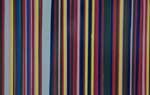
'Colour terra' is the debut solo exhibition of Johannesburg-based Mark Erasmus. Trained at the Johannesburg Art Foundation, Erasmus is an innovative young artist who has spent the past decade researching the history of colour and its use in contemporary art.
These studies and his constant quest for fresh dyes and fresh methods have enabled him to develop a highly technical process of 'dripping' paints in complex geometric patterns. His works have both a retro and pop feel, while holding true to a highly advanced return to overt modernism.More recently, Erasmus has incorporated spontaneous visual breaks into his grid-like patterns after working with mentors Willem Boshoff and Henry Symonds.
This exhibition comprises new, variously scaled oil on board works as well as mixed media sculpture using scrap metals and abandoned objects. It explores the synergies between brilliant splashes of colour and the landscapes, or 'terra', which they inhabit.
Opens: February 17
Closes: March 6
|
|
|
|
|
|
|
|
Allison Kearney at JAG
'The Portable Hawker's Museum: A Retrospective' is a work which Allison Kearney began in 2003. Items costing R10 or less which the artist bought from Johannesburg street hawkers, each relate to specific people and places and pay homage to the hawkers who live in Johannesburg, many of whom are negatively affected by Johannesburg's restructuring problems.
Kearney comments: 'This portable museum comments on the politics of existing museum practices and how value is attached to objects within contemporary culture, through the kinds of objects it houses and the ways in which the collection is displayed. The collection is exhibited in open public spaces, while 'documents' or 'representations' of the items belonging to the museum collection are exhibited within galleries. The gallery is thus denied its relationship to the original work of art'.
Opens: February 5
Closes: March 9
Johannesburg Art Gallery
Cnr. Klein and King George Streets, Joubert Park
Tel: (011) 725 3130/ 80 / 81
Fax: (011) 720 6000
Email: kearneya@hse.pg.wits.ac.za
Hours: Tues - Sun 10am - 5pm
|
|
|
|

Tracey Rose
Regina Coeli, 2002
Performance.
|
|
|
|
SABC Collection at JAG
The South African Broadcasting Corporation (SABC) has been acquiring art works informally for more than half a century. Following the restructuring of the corporation in 1994, the art collection was formalised under a curator and funds were allocated for the acquisition of works representative of South Africa's new democracy. During the past 10 years, a primary concern has been to acquire work by black artists and other artists previously under-represented in the collection. Selected work is regularly displayed at the SABC in public and office spaces. Approximately 180 works will be shown in this exhibition, entitled 'Making Waves'.
The work on show ranges from that of William Timlin and Gerard Bhengu made in the 1920s to that by Santu Mofokeng and Robert Hodgins acquired at their recent solo exhibitions.
Approximately 100 artists are represented. The floor space is divided into eight thematic spaces as indicated in the catalogue to the exhibition. These in part reflect a concern to show work in a range of media from drawing (Julian Motau and Diane Victor), prints (Dan Rakgoathe, Malcolm Payne, Kendell Geers) and painting (Irma Stern, George Pemba, Robert Hodgins, Zwelethu Mthethwa) to sculpture (Ezrom Legae, Peter Schütz),
video (Konrad Welz), mixed media (Sam Nhlengethwa, David Koloane) and photographs
(Jo Ractliffe, Ken Oosterbroek) amongst others.
Johannesburg Art Gallery
Cnr. Klein and King George Streets, Joubert Park, Johannesburg
Tel: (011) 725 3130
Fax: (011) 720 6000
Tel: Koulla Xinisteris, curator SABC art collection: 082 574 5568
Email: dxarts@icon.co.za
Hours: Tues - Sun 10am - 5pm
|
|
|
|
|
|
 |
|
|

Outlet
|
|
|
|
Deborah Weber, Michael MacGarry, Zander Blom and Jan-Henri Booyens at Outlet
Outlet showcases the work of young artists Deborah Weber, Michael MacGarry, Zander Blom and Jan-Henri Booyens in a show entitled 'DWG'.
Outlet Gallery
Projector Room, Building 10, Arts Factory, Tswane University of Technology, 24 Du Toit Street, Pretoria
Tel: 082 440 5406
Email: outlet@mweb.co.za
Hours: By appointment
|
|
