|
 |
|
 |
|
|
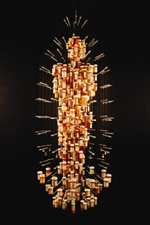
Daniel Goldstein and John Kapellas 2007
Medicine Man
used plastic medicine bottles, syringes, steel/nylon wire, latex
254 x 76.2cm

Adriana Bertini
Condom Dress
reject coloured condoms
800cm
|
|
|
|
Not Alone - An international project of Make Art/Stop Aids at the Durban Art Gallery
'Not Alone - An international project of Make Art/Stop Aids' includes works by artists from Brazil, the USA, India and South Africa in a variety of media including painting, sculpture, photography and embroidery. A highlight will be the Keiskamma altarpiece embroidered and beaded by 120 people from the Eastern Cape. Another iconic piece is Medicine Man by Daniel Goldstein and Daniel Kapellas, a sculpture comprising over 300 empty medicine bottles and syringes used by the artists over the 20 years since they were diagnosed as being HIV-Positive.
Local artists include William Kentridge as well as Pieter Hugo, Langa Magwa, Clive Van den Berg and others. Over 50 works are on show and most of the international artists are new to South African audiences. The title refers to the fact that the epidemic does not affect isolated communities, and the nature of this exhibition, which changes at each venue, conveys the different stages which have developed since the beginning of Aids in the 80s. Solidarity and communication are the leitmotifs of this exhibition.
Opens: February 25
Closes: May 20

Durban Art Gallery
2nd Floor City Hall, Anton Lembede St (former Smith St) Durban
Tel: (031) 311 2264
Fax: (031) 311 2273
Email: strettonj@durban.gov.za
Hours: Mon - Sat 8.30am - 4pm, Sun 11am - 4pm
|
|
|
|
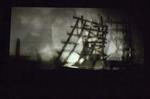
Stephen Hobbs
State 2008
DVD single channel data projection with sound
projection size 3 x 2m
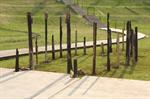
Avhashoni Mainganye
Zwifhoni (Secret Place) 2008
carved pine totems, wax, Venda ropes, stones and bone
dimensions variable
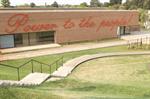
Brett Murray
Power 2008
candle-holders
3.7 x 29m
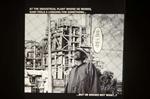
Tracey Rose
!XAW! 2008
DVD projection, found objects, bronze cast objects, drawings
dimensions variable
|
|
|
|
Sasol Wax Art Award at KZNSA
The Sasol Wax Art Award is, arguably, South Africa's most prestigious accolade for established artists. It is the only industry benchmark that recognises artists who have achieved professional maturity and are on a par with the best internationally.
Five of South Africa's most dynamic contemporary artists -Avhashone Mainganye, Tracey Rose, Stephen Hobbs, Hentie van der Merwe and Brett Murray - were selected from over 100 nominations to participate in the third Sasol Wax Art Award exhibition.
Each of the five produced a body of work that took as its starting point wax, whether through process, medium or concept. 2008 winner, Hentie Van der Merwe, joins the two previous winners, Jeremy Wafer and Walter Oltmann.
Van Der Merwe's Reaching New Frontiers is a complex installation in which van der Merwe explores new avenues in terms of medium, execution and display.
The relationship between art and industry has existed throughout art history. According to van der Merwe, one of the earliest examples of an artwork where the relationship between art and industry is explored, is in a suite of poems by Virgil called The Georgics from 29 BC, in which 'a strong sense of the necessity and dignity of labour breathes throughout the poem from beginning to end'. In the fourth book of this poem Virgil speaks of bees and beekeeping as a means of exploring the strife and flux between the metaphysical and the material. Another conceptual concern which the artist outlines is that of the artist/patron alliance.
This theme is explored trough a video of an unnamed man in a suit reading Virgil's text in its original Latin, with subtitles on screen. The screen is located on the wall of a sterile office cubicle, executed to the exact specs as set out by governmental labour practices.
The exhibition will also include works from the Sasol Wax Art Award Jewellery Outreach Initiative, funded by the Department of Arts and Culture. This project seeks to enhance skills exchange in the jewellery industry. It is highly significant that this exhibition is showing in Durban, as most of the winners of this initiative were drawn from the Durban University of Technology and Durban-based Velobala community group.
Opens: February 17
Closes: March 8
The KZNSA Gallery
166 Bulwer Road, Glenwood, Durban
Tel: (031) 202 3686
Fax: (031) 201 8051
Email: curator@kznsagallery.co.za
www.kznsagallery.co.za
Hours: Tue - Fri 10am - 5pm, Sat - Sun 10am - 4pm
|
|
|
|

Sicelo Ziqubu with his 2010 chair
photograph: The Witness
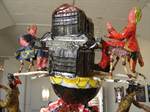
Sicelo Ziqubu
Unfinished Story of Drums and Pianos (detail) 2008
mixed media
200 x 108 x 110cm
|
|
|
|
Sicelo Ziqubu at artSPACE durban
Sicelo Ziqubu is a young artist working in the Municipal offices in Charlestown in rural KwaZulu Natal. He spent l993 at the M L Sultan Technikon on a bridging course for graphic design, but he is largely self-taught. Ziqubu has been inspired by crafts made by prisoners at the Waterval Prison where his father was a warder. He creates 'thrones' out of papier-maâché that are becoming increasingly more elaborate and noticed by collectors.
He placed second in 2007 Start Nivea Art Award exhibition at the KZNSA Gallery and was a regional finalist in the Absa L'Atelier Art Award 2008. He was also among the 100 artists at the 2008 Spier Contemporary. His work is represented in the collections of the Carnegie Art Gallery (Newcastle), Museum Stadthof Zwolle (Netherlands), the Tatham Art Gallery (Pietermaritzburg) and the Johannesburg Art Gallery.
Opens: February 16
Closes: March 7
artSPACE durban
3 Millar Road (off Umgeni Rd next to Waste Centre), Stamford Hill
Tel: (031) 312 0793
Email: artspace_durban@yahoo.com
www.artspacedurban.co.za
Hours: Mon - Fri 10am - 4pm, Sat 10am - 1pm
|
|
|
|
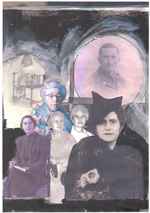
Liz Speight
Mother and Child
oil on canvas on board
100 x 46cm
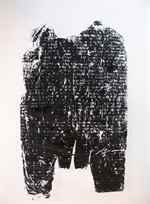
Anni Wakerley
Torso II 2007
monoprint
|
|
|
|
Liz Speight, Hermine Spies and Anni Wakerley at artSPACE Durban
'Under my Skin' presents works by three women artists. Of 'The Ancestors', Liz Speight says, 'Part of who I am, and influencing the choices I make, is the legacy of my ancestors. Their stories lie under my story. I stand in the Present, with the Past behind me and confronting the Future. I am becoming an ancestor whose legacy will impact on the lives of my descendents'.
Hermine Spies Coleman says of her 'Skin of dreams', 'Under my skin lurk dreams and possibilities of what I can be, can do and can experience. Under my skin lies the potential for experiencing the rest of my life. Decisions, self-discovery, sub-conscious and contact with the world, people and situations, past, present and future determine the outcome of this exhibition and my future'. Anni Wakerley, on 'Skin of emotions', says, 'Very often, trauma survivors strive to appear normal on the outside, as if nothing has happened. Only when we get to the deeper levels do the hurt, the fragility and woundedness become apparent. My own artworks are made to deal with the way my work as a therapist gets "under my skin". Painting is a way of dealing with the pain I experience, and recovering my willingness to be bruised again and again in the process of my work'.
Opens: January 26
Closes: February 14
artSPACE durban
3 Millar Road (off Umgeni Rd next to Waste Centre), Stamford Hill
Tel: (031) 312 0793
Email: artspace_durban@yahoo.com
www.artspacedurban.co.za
Hours: Mon - Fri 10am - 4pm, Sat 10am - 1pm
|
|
|
|
|
|
|
|
Members Exhibition at KZNSA Gallery
The annual Members Exhibition at the KZNSA Gallery allows all members, as part of their membership benefit, to participate in this show. The theme for this year is 'Green' and participants have been invited to interpret this in the broadest possible way.
Entries are to be brought to the gallery from 10am - 5pm, January 23 - 24.
For further information and entry forms please contact the KZNSA Gallery
Opens: January 27
Closes: February 21
The KZNSA Gallery
166 Bulwer Road, Glenwood, Durban
Tel: (031) 202 3686
Fax: (031) 201 8051
Email: curator@kznsagallery.co.za
www.kznsagallery.co.za
Hours: Tue - Fri 10am - 5pm, Sat - Sun 10am - 4pm
|
|
|
|
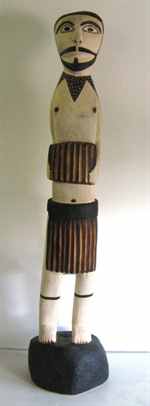
Michael Mpungose
The Accordian Player 2000
wood
56 x 14cm
|
|
|
|
Michael Mpungose at African Art Centre
Michael Mpungose was born in Greytown, KwaZulu-Natal in 1944 and started carving wooden spoons and meat platters at school. His sculptures, made from indigenous Isidakana and Isifidi woods, are decorated by burning and scratching out designs. He portrays animals and the human figure, which have very definite personalities and are often very humorous. His animal sculptures show a great understanding of movement and the innate personality of the animal.
Some of the sculptures have double heads which show other aspects of the subject such as male/female, animal/human and sometimes have messages carved on them such as 'God bless our home', 'Coca Cola', 'Lets go my darling', or 'The Husband is married to his beer and neglects his two wives'.
Opens: January 11
Closes January 31
The African Art Centre
94 Florida Road, Durban
Tel: (031) 312 3804/5
Email: anthea@afri-art.co.za
www.afriart.org.za
Hours: Mon - Fri 8.30am - 4.30pm, Sat 8.30am - 3pm
|
|
|
|
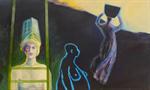
Megan Anderson
uThwala
oil on canvas
|
|
|
|
Megan Anderson at Artisan Contemporary
This exhibition features oil paintings on canvas and works on paper by South African-born, now international artist Megan Anderson. The works draw on images of South Africa, mostly female forms, which are brilliantly coloured and function both figuratively and metaphorically. Anderson has been working as an artist in residence at UKZN Pietermaritzburg for the past few months.
The exhibition will be opened by lecturer and artist Vulindlela Nyoni.
Opens: January 21
Closes: February 21
Artisan Contemporary Gallery
344 Florida Rd, Morningside, Durban
Tel: (031) 312 4364
Email: sue@artisan.co.za
Hours: Mon - Fri 10am - 5pm, Sat 9am - 3pm
|
|
|
|
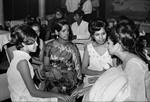
G.R. Naidoo
A Modern Tradition 1960
copyright: BAHA
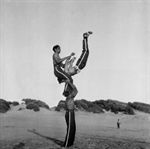
Jurgen Schadeberg
Flying Men! 1952
copyright: BAHA
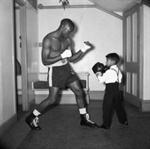
Barney Desai
Boxing Mascot 1956
Copyright: BAHA
|
|
|
|
Indian Ink: Indian South Africans in the media - a history of propaganda and resistance at the Durban Art Gallery
For the average person who grew up in apartheid South Africa, the bizarre reality of being confined almost exclusively to living and interacting with people classified as the same racial group was made to feel almost natural by the routine activities of daily life. The enforcement of division among apartheid subjects created fertile grounds for racialised notions of 'us' and 'them'. Under these conditions racial stereotypes were deeply internalised, resulting often in oversimplified and exaggerated negative archetypes allowing the forcibly estranged racial groups 'to display their likes or dislikes of the other'.
Photography has been used by colonial regimes since the mid-19th century to construct and perpetuate racial stereotypes. For example, author of the accompanying book and curator of 'Indian Ink: Indian South Africans in the media - a history of propaganda and resistance' Riason Naidoo, argues how the photos in Meet the Indian in South Africa (1950) and The Indian South African (1975) produced by the State Information Office reveal how the state exploited notions such as the rich 'Indian' to create the perception abroad that 'black' people (i.e. 'Africans', 'Indians' and 'Coloureds') were benefiting under the apartheid state.
Images of 'Indian' affluence are contrasted with portraits of indentured labourers from the 19th century that are intended to emphasise the notion of the wealthy Indian under apartheid. Other photos in the publication play on other 'Indian' stereotypes such as caste, religion and the exotic through vivid photographic examples.
The exhibition includes previously unseen photos taken by well known names such as Bob Gosani, Alf Kumalo, Jurgen Schadeberg, Peter Magubane and Barney Desai, although the major body of work comes from Ranjith Kally and G R Naidoo who were based at the Drum office in Durban. The images on the exhibition (and in the book) argue that this form of self representation, of 'black' writers and photographers having access to and recording this history, has been hidden in the general portrayal of the 'Indian' in the country.
Opens: October 29
Closes: February 15, 2009
Durban Art Gallery
2nd Floor City Hall, Smith Street, Durban
Tel: (031) 311 2264
Fax: (031) 311 2273
Email: strettonj@durban.gov.za
Hours: Mon - Sat 8.30am - 4pm, Sun 11am - 4pm
|
|
|
|
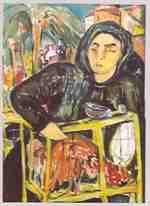
Irma Stern 1934
Peasant woman with chickens
oil on canvas
92.2 x 72.5cm
|
|
|
|
School's Curriculum Exhibition at the Durban Art Gallery
The Durban Art Gallery has collaborated on a project with the Department of Education in making works on the curriculum available for learners to view. The Gallery's collection is seldom seen in its diversity due to space constraints, so this exhibition will not only enhance the learners' appreciation of the works they are studying but also provide a view into the collection's scope for the general public. It will be on semi-permanent display.
Opens: August 16
Durban Art Gallery
2nd Floor City Hall, Smith Street, Durban
Tel: (031) 311 2264
Fax: (031) 311 2273
Email: strettonj@durban.gov.za
Hours: Mon - Sat 8.30am - 4pm, Sun 11am - 4pm
|
|
|
