cape listings
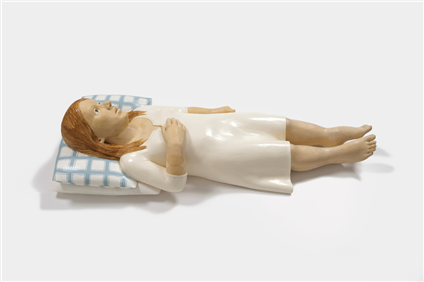
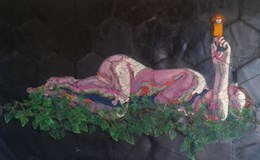
Claudette Schreuders
'Great Expectations',
2011.
Jelutong, enamel and oil
28 x 46 x 125 cm.
'Great Expectations'
Claudette Schreuders at STEVENSON in Cape Town
STEVENSON presents a solo exhibition of new work by Claudette Schreuders. This is the first time in almost a decade that the artist will show a complete group of new figures in South Africa.
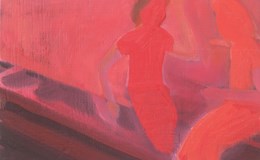
Schreuders creates tableaus of figurative sculptures that combine to reveal the richness and complexity that characterise interpersonal relationships. Where her previous group, 'Close Close' (2011), explored the impact and dynamics of the arrival of children, here Schreuders observes those children as they grow up and, more specifically, looks at their ambitions to be 'grown-up'. At the core of this narrative is the fraught and magical realm of love, seen from the perspective of anticipation. The artist explains: 'As a small girl I imagined being grown-up would only be about love and being in love. This group is a tribute to that imagined life.'
The figure of a white horse embodies the fantasy of romance, locating the cast of characters within the space of fiction. It is here that children's projections of their adult selves play out their imaginary lives - in 'the realms of the unreal', as the outsider artist Henry Darger termed it. In the sculpture that lends its title to the group, a girl lies on her bed, daydreaming; another gathers up her long hair, echoing the self-absorbed reverie of Balthus' 1955 'Nude before a Mirror'. Other characters include 'Loved Ones', a girl with bare breasts; a pair of best friends/rivals; the bust of a young boy; 'Song'; and a lovebird on its perch.
28 February - 06 April
also showing
Andrew Putter
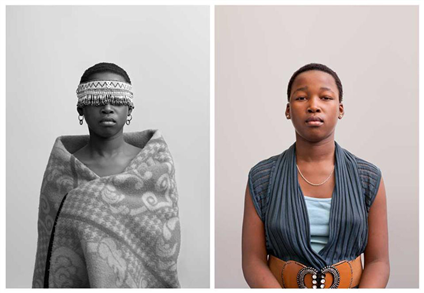
Notyatyambo Madiglana as 'An Initiate''; 'Notyatyambo Madiglana,
2012;
Selenium-toned silver gelatin lightjet print on fibre-based paper; Fuji crystal matt lightjet print
Edition of 3 + 2AP
Photography: Andrew Putter, Kyle Weeks and Hylton Boucher
'Native Work'
Andrew Putter
STEVENSON is pleased to present an exhibition of Andrew Putter's 'Native Work'.
This new installation comprises 21 black-and-white photographs of contemporary black Capetonians, in 'tribal' or 'traditional' costume in the genre of the iconic ethnographic photographer Alfred Martin Duggan-Cronin. These are displayed in a grid alongside the same subjects photographed in colour, where the sitters chose what they wished to wear based on how they see themselves.
'Cognizant of the dangers inherent in Duggan-Cronin's colonial, ethnographic approach to making images, Native Work nevertheless recognises an impulse of tenderness running through his project,' writes Putter in an article about his project published recently in the journal Kronos: Southern African Histories. 'By trusting this impulse in Duggan-Cronin's photographs, Native Work attempts to provoke another way of reading these images, and to use them in the making of new work motivated by the desire for social solidarity, a desire which emerges as a particular kind of historical possibility in the aftermath of apartheid.'
By exploring his own complex feelings towards an ideologically tainted but aesthetically compelling visual archive, Putter enters the fraught terrain of ethnographic representation to wrestle with himself about his own complicity, as an artist and a white South African, in this troubled visual legacy. Art critic Alex Dodd writes that this new work 'constitutes one of those rare instances in which it becomes unmistakably clear to the viewer that the primacy of authorial intention has everything to do with the subtle alchemy that determines the meaning and affective power of images. In this case, the immense respect and tenderness that went into the making of the photographs registers visually as a kind of auratic quality of dignity that shines through each and every portrait.'
Ian Grose
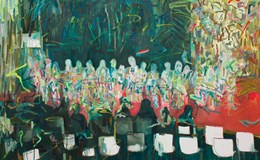
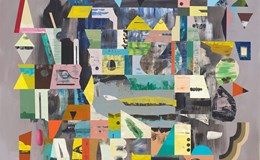
Dissimulation series (Untitled),
2012;
Oil on canvas,
'New Pictures'
Ian Grose
STEVENSON presents Ian Grose's first solo exhibition, 'New Pictures' at the Cape Town gallery.
Grose's paintings encompass the genres of portraiture, interiors, still life and landscape. Yet his intention is less to represent the subject of the genre than to explore our interpretation of pictures through reproduction and manipulation of select photographs and paintings. His curiosity lies in the proliferation and recontextualisation of imagery and the shifting constructs of meaning that result.
Drawing on pictures from the internet as much as from personal photographs and art history books, this body of work extends an often self-reflexive engagement with painting in the modern image economy. Within that project, much of the work stems from preoccupations with abstraction and pattern, and an ambivalence toward formalist strategy. Part apologetics, part hermeneutics, the paintings are premised on the enduring value of painterly attention in the creation and decoding of visual meaning.