'Ausencia Permanente'
Delio Jasse at SMAC ART GALLERY CAPE TOWN
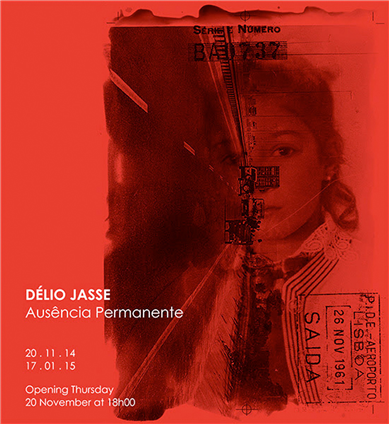
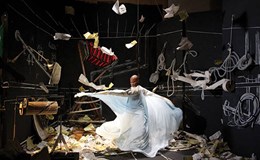
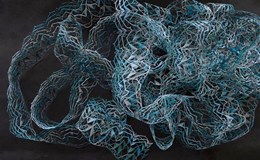
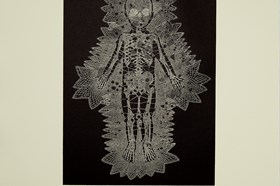
'Ausencia Permanente' is Angolan-born Delio Jasse’s first solo exhibition in South Africa. For this show, Jasse has chosen to present an installation produced on the occasion of his nomination for the BES Photo Award in 2014, a meditation on the transformation and (dis)ordering of the city of Luanda, its present and past inhabitants and their memories.
Throughout his production, Delio Jasse’s focus has been on imperial debris, on the ruins of the Portuguese empire, dispersed on the chaotic tables and spreads of merchants, antiquarians, second hand bookshops and flea markets around Lisbon, and on the busy streets and the bricoleured façades of Luanda’s architecture. Over the course of his many journeys and wanderings, Jasse has managed to assemble a stockpile of other people’s discarded memories and memoires; passports, visas, letters, albums, photographs, death notices – a body of colonial and migratory signifiers which he employs in his work. To this store of images and remnants of the colonial years of Portugal under António Oliveira de Salazar, from 1932 to 1968 or the period thereafter – which one might term that of 'imperial decay' – Jasse adds his own record of contemporary Angola; the multiform sites of less love for the bygone, those of disregard and abandonment which he sees in roads, buildings, compounds. These locations, these degraded environments, form a part of the psychic and material space in which Angolans or 'Luandinos' live and move today. They too are urban sites of 'imperial decay' in that they too contain the material and immaterial, the tangible and intangible, the visible and invisible traces of the waste of colonialism, that is, a type of refuse – material but also ideological and institutional – that degrades personhoods. This is evinced in the manner people are forced to live with the effects and affects of its damage.[i] Looking at Jasse’s images, we see slivers of spaces stubbornly inhabited by those displaced, requisitioned either to make way for commodity-life in the form of tourist consumption, mining or shopping malls, or occupied by those with nowhere else to turn. Unlike his romantic counterparts, Jasse’s does not look with an introspective, nostalgic gaze on ruins, he rejects their pathos and the rush of sentimental identification, looking instead to the lives of those living in or amongst those ruins, opting for a celebration of their survival.
20 November - 17 January
‘Gestaltes’
Johann Louw
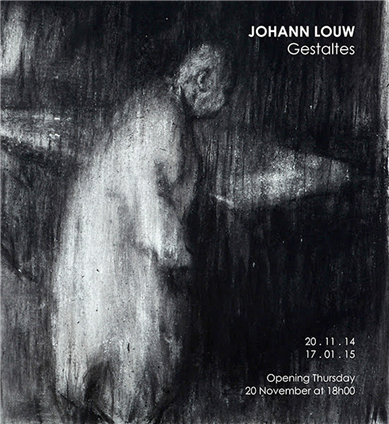
‘Gestaltes’ is Johann Louw’s fourth solo exhibition with SMAC Gallery. Best recognized for his expressive paintings, this exhibition is the first to comprise solely of charcoal drawings.
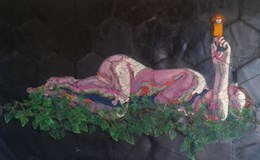
Studies of abandoned domestic scenes, nude and abject figures bent over or prostrated on the floor, ever-looming balloons, and animals caught at the moment when one would usually look away. In ‘Gestaltes’, these charged representations of forms and animals evoke the surreal and somewhat romantic language of the source of the exhibition title, Afrikaans poet and playwright N.P. van Wyk Louw’s 1942 anthology of poetry titled ‘Gestaltes en Diere’.
Continuing with his exploration of the enigmatic, Louw’s drawings of frozen moments seem to flicker through his tense, gestural mark-making and use of negative space. Depicting both lack and excess, there is a haunting in these stark, monochromatic compositions. There is also irony in Louw’s movement away from the rational through a focus on the predominantly every day, highlighting that which is often concealed and unseen.
This hyper awareness of his surroundings – whether imagined or real – suggests an interest in consciousness; a state of awareness or being aware of an external object or something within oneself. Johann Louw’s engagement with states of being, and the ability to experience and to feel, is both inward and outward looking. The animals act as metaphors and metonyms for the viewer to engage with. Figures are studied in relation to, and as a potential consequence of, their environment. The balloons, drawn from the Russian and Soviet Filmmaker, Andrei Tarkovsky’s, film stills, conjure up notions of transcendence and surpassing the ordinary. The relationships between the different works are productive yet unclear, and narratives are unknown or hidden from the viewer. Layered with references and foci, memories and fictions, the drawings emphasize ambiguity and a search for meaning.With this uncertainty, comes a suggested destabilizing of consciousness and a move into a confusing, more dreamlike state.
In this regard, Sigmund Freud’s notion of the uncanny (or ‘unheimlich’), as an instance where something is simultaneously familiar and foreign, is a significant element of these drawings. Freud’s concept of the uncanny and his interpretation of dreams had a significant influence on the Surrealist movement and their depiction of the unnatural and strange. Though the concept of the uncanny is not easily definable, Freud explored numerous instances which may give rise to feelings of the uncanny; such as animism, sorcery, repetition and the double. Freud connected these disparate examples through the ambiguous nature of the German word ‘Heimlich’, which relates to that which was meant to remain hidden and secret, but has been revealed. The uncanny then may be seen in Johann Louw’s recurring use of plastic masks, the deathly still figures, the tension between the known and the unknown, and his dislocated landscapes. As Freud stated, an ‘uncanny effect is often and easily produced when the distinction between imagination and reality is effaced, as when something that we have hitherto regarded as imaginary appears before us in reality’.
Uncanniness may arouse fear and doubt but, as experienced when viewing Johann Louw’s work, also interest. The secretly familiar, although unsettling, encourages curiosity, engagement and a felt response; the conscious and subconscious collide. Attention is drawn to the experience of viewing itself, as a voyeur, conspirator or the dreaming subject.