cape listings
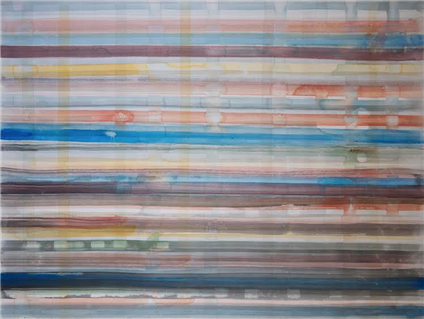
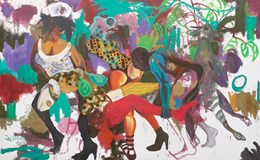
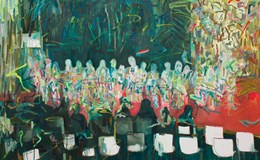
Tom Cullberg
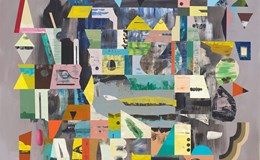
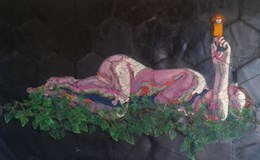
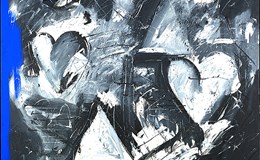
Untitled (Tower 3),
2014.
Acrylic polymer emulsion on canvas
170 x 225 cm .
'Tower’
Tom Cullberg at Brundyn
Brundyn is pleased to present ‘Tower’, the thirteenth solo exhibition by Tom Cullberg.
‘Tower’ continues Cullberg’s intuitive dialogue between figuration and abstraction through a series of new paintings and sculptural works. Moving away from some of the more directly associative sources of imagery in previous exhibitions, the new body of work is simultaneously more deeply personal for the artist and thematically open for the viewer.
Cullberg intends for his paintings in 'Tower' to be read in dialogue with each other rather than in isolation, activating them in different ways. Viewed as a whole, the works take on an installation-like quality. As Mary Corrigall notes:
'Through the display of his paintings Cullberg establishes discrete groups of works in anticipation of a
relationship that might emerge or has existed in their creation. This affords Cullberg a rare liberty, the
opportunity to continuously ‘recompose’ his work. This is something that is usually denied to painters
who are typically forced to fix the composition in the act of painting.
Eschewing any specific or prescribed meaning, the experience of the works in ‘Tower’ is akin to tuning channels on an old tube television set with no specific destination in mind. Set against a flourish of abstract painterly static, recognizable images leap forth, dissociated from their original contexts, and instead become part of a continuous flow of broadcast. The types of figurative images that appear are disparate: iconography from advertisements, magazines such as Vogue, news reports, various books on architecture and mid-century design, images from personal family archives, but they are ultimately democratized into a singular intuitive stream. Cullberg doesn’t aim to tell us how to think, but rather provides visual planes that may elicit thinking.'
With ‘Tower’, Cullberg not only collapses the traditional dichotomy between figurative and abstract painting but appears to have identified a space where these two vocabularies are interconnected. It is through mediating on the objects or subjects of these works and untangling the multitude of associations linked to them that the artist gains access to an abstract vocabulary. Cullberg consequently embraces the spirit of abstraction on every level; beyond its ambiguous vocabulary he denies fixity of any kind.
06 November - 03 December
also showing
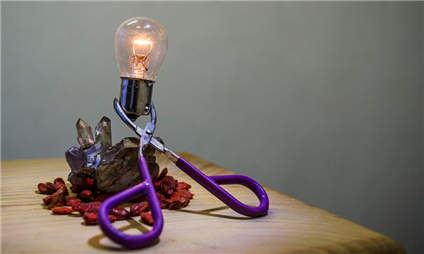
Miranda Moss
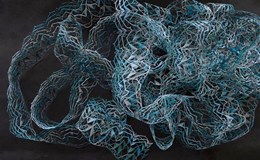
Potential Energy Solutions for the Dawning of the New Nu Age,
2014;
Lightbulbs, chrystals, goji berries, Himalayan cedar, tweezers and plywood
'The Nature of Stuff and Things'
Miranda Moss
Something has gone askew in the fundamental order of things.
We attempted to fix it, but stuff is stubbornly elusive in nature. We tried preserving the environment, but ran out of sodium benzoate halfway through. All romantic clichés were prohibited, yet the sunsets persist. Any remaining holes in the Ozone were filled with bubblegum-flavoured bubblegum. We prescribed a smorgasbord of ADHD meds, anti-anxiety pills and calamine lotions, but the fields grow restless still. The Mountain DewTM sprinkler systems only cultivated a rise in weed obesity levels while, despite the instalment of thousands of swimming pools, the deserts are as impoverished and thirsty as ever. We ensured all our free-range organic oceans were bottled at the sourcewith approved levels of iodine, fluorine and fluoxitine. We even invented an instrument to measure Spring with. Maybe gravity got up on the wrong side of the bed this morning. Maybe the tides just need to be turned off and on again.
They say that perhaps tomorrow, it will be fine.
(Weather permitting, that is)
Toying with the representation of Nature as a pure and extra-cultural phenomenon, 'The Nature of Stuff and Things' positions environments as deeply embedded in systems of interaction and exchange. Landscape, an idea inseparable from convention, is used as a medium to explore how personal, economic and visual value structures are projected onto the exterior world.
The “things” hail from an imaginary terrain, where anomalies are the status quo and matter mischievously imitates its observers’ personal quirks and desires; a mirage replete with existential predicaments and riddled with logical fallacies. Through techno-alchemical dabbling, familiar objects are subjected to extraordinary situations, while synthetic by-products are released back into the wild for the first time. Swayed by a process of post-natural selection, real and imagined associations of the land are superimposed, disrupting any essential purity which may be anticipated.
The products of this anxious arcadia are self-awarely escapist and ascribe to a kind of cynical optimism. They re-imagine natural phenomena yet the translation process is muddled, resulting in perplexing incidents and curious interactions; a misunderstood utopia. This process grasps at (and appears to tame) its subject, but has the quixotic efficiency of catching mist in a butterfly net.
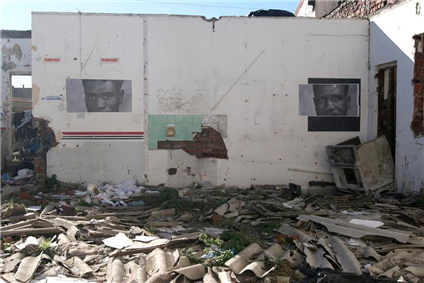
Burning Museum
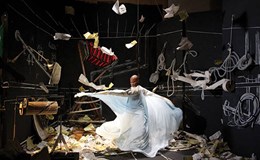
Documentation of 'The Walls have Eyes' series,
2014;
Abandoned building, 165 Albert road, Woodstock
Image courtesy of Burning Museum
'Plakkers'
Various artists
Brundyn+ presents Plakkers, a group exhibition by artists and collectives working in and around the genre of street art in Cape Town. The exhibition brings into conversation the many voices of visual dissent taking place in the city. “The wall” is a common motif in these artists' works, either as the site where the work is placed or as the very content of the work itself. As a versatile Afrikaans word meaning either stickers, decorators, squatters or pesters, Plakkers echoes this motif but also places the show within the vernacular register of everyday Cape Town news headlines where “land is invaded” and “squatters evicted”.
Central to the exhibition is the work of three city-based collectives who have appropriated the visual language of graffiti in order to comment on historic and contemporary events often forgotten in the public imaginary. Tokolos Stencils, X-Collective and The Burning Museum use the techniques of wheatpaste, stencil and spray paint to redecorate the city with their own agendas, touching on issues
such as the Marikana massacre, gentrification in Woodstock and broader issues of
forced removals and land redistribution.
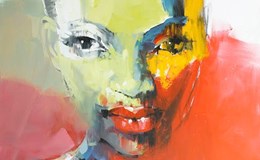
The concerns of individual artists are also represented. Khaya Witbooi’s hyper realistic afro-pop paintings simulating the graffiti and stickers on city walls coalesce with frames from Ashley Walters’ photographic essays on the walls of the Cape flats taken in the Nooitgedacht and Uitsig neighbourhoods. Chad Rossouwpresents an installation, which is an ode to the vibracrete walls of the suburb of Tableview while Atang Tshikare’s architectural drawings give as a glimpse onto
the structure of walls in a future Cape Town. Bringing the subject closer to home, Haroon Gunn Salie’s shards of broken stained glass, speak to the fracturing of the Bo-Kaap area of Cape Town, the quarter in which the gallery is situated.