AVA Gallery
25.09 - 08.10.2026
I visited ‘AVA 100’ twice. The first time was just after it opened on a Saturday morning, the light outside piercing but optimistic. The second time was just before the exhibition closed, in the fading hours of a Thursday afternoon, bathed in warmth. Revisiting the space in a circular motion, it felt apt to experience the exhibition in light that was both harsh and soft.
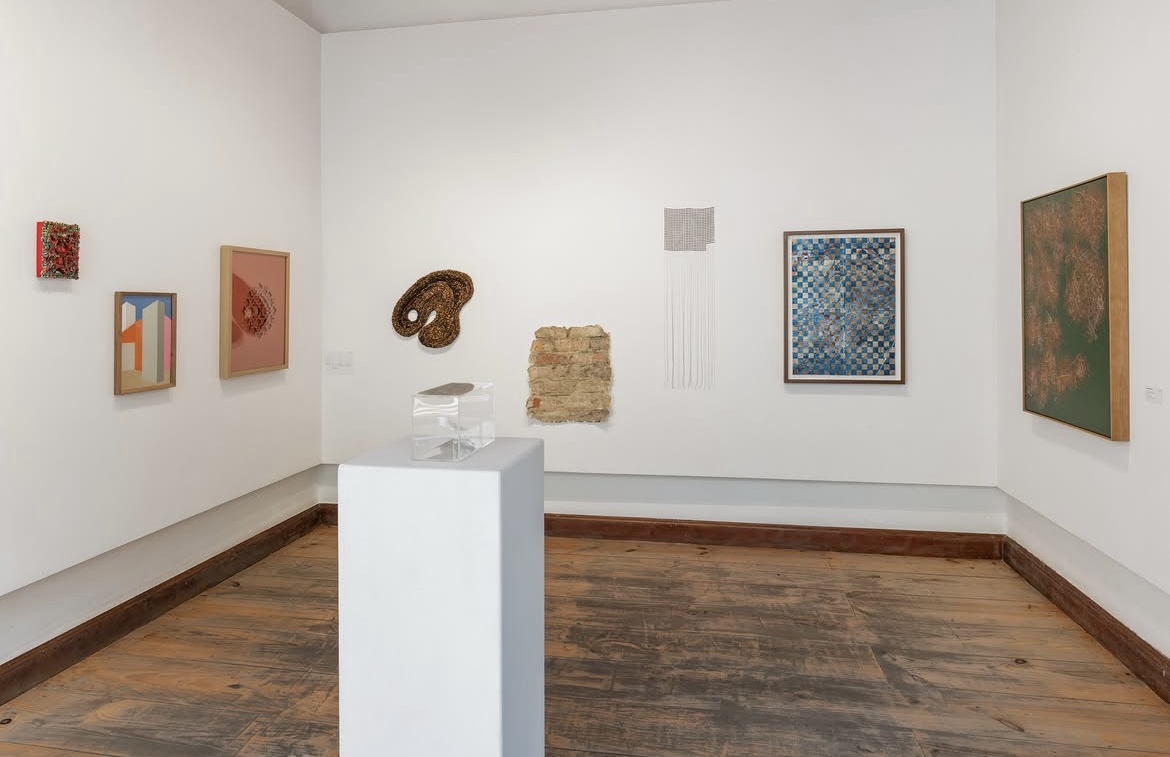
Installation View, ‘AVA 100’. Building Common Space for Artists, Cape Town
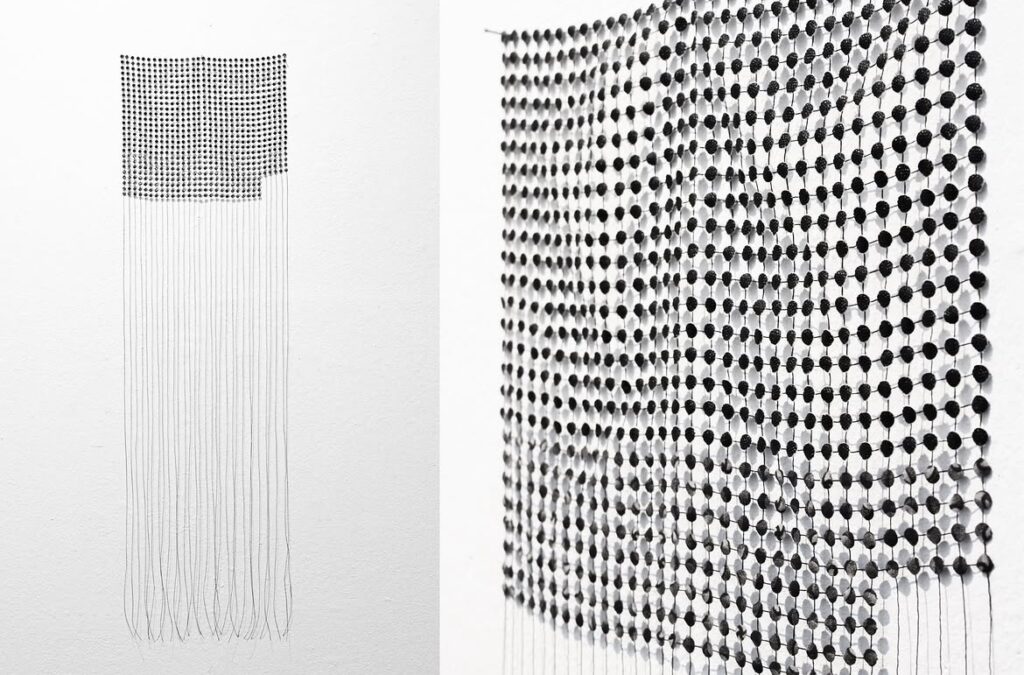
As the exhibition’s title suggests, there were one hundred artworks by one hundred artists, all of whom are Association for Visual Arts (AVA) members, on display: a varied mix of artists, styles, mediums, and subject matter. I began in the room closest to the front, which faces the street, through solid-framed windows. With each hour, differing intensities of light pour into the space. The four suspended metal frames in Pia Truscott’s Lollipop were embellished with the sherbet colours of ribbons, computer cables, rubber bands and beads. The wall behind it porous, mirroring each frame’s breaths with muted shadows. In the same room, Kamyar Bineshtarigh’s Forbidden Wall embedded rectangular outer layers shed by a wall’s formation of solid bricks into the rubbery memory of cold glue and canvas, now dried and fused. Traces of an absent space remembered and upheld like a treasured pelt. An archive of light and liquid was solidified in Angena amanzi endlini (water enters the home) by Lisakhanya Ngqoba, where squares of blue and brown paper from an interwoven cyanotype and calotype made a blanket, which held the histories and spillages of family love, labour, politics and movement. Material languages emanated from each artwork: I, as the viewer, caught in a tangle of voices, like radio waves across different frequencies. These works did the work of remembering, as does the gallery. Its walls, palimpsest surfaces, bore witness to these continuous shifts: sound and light, harsh and soft moments. A collective archive of the artists’ expressions and, by extension, the city’s political spectres.
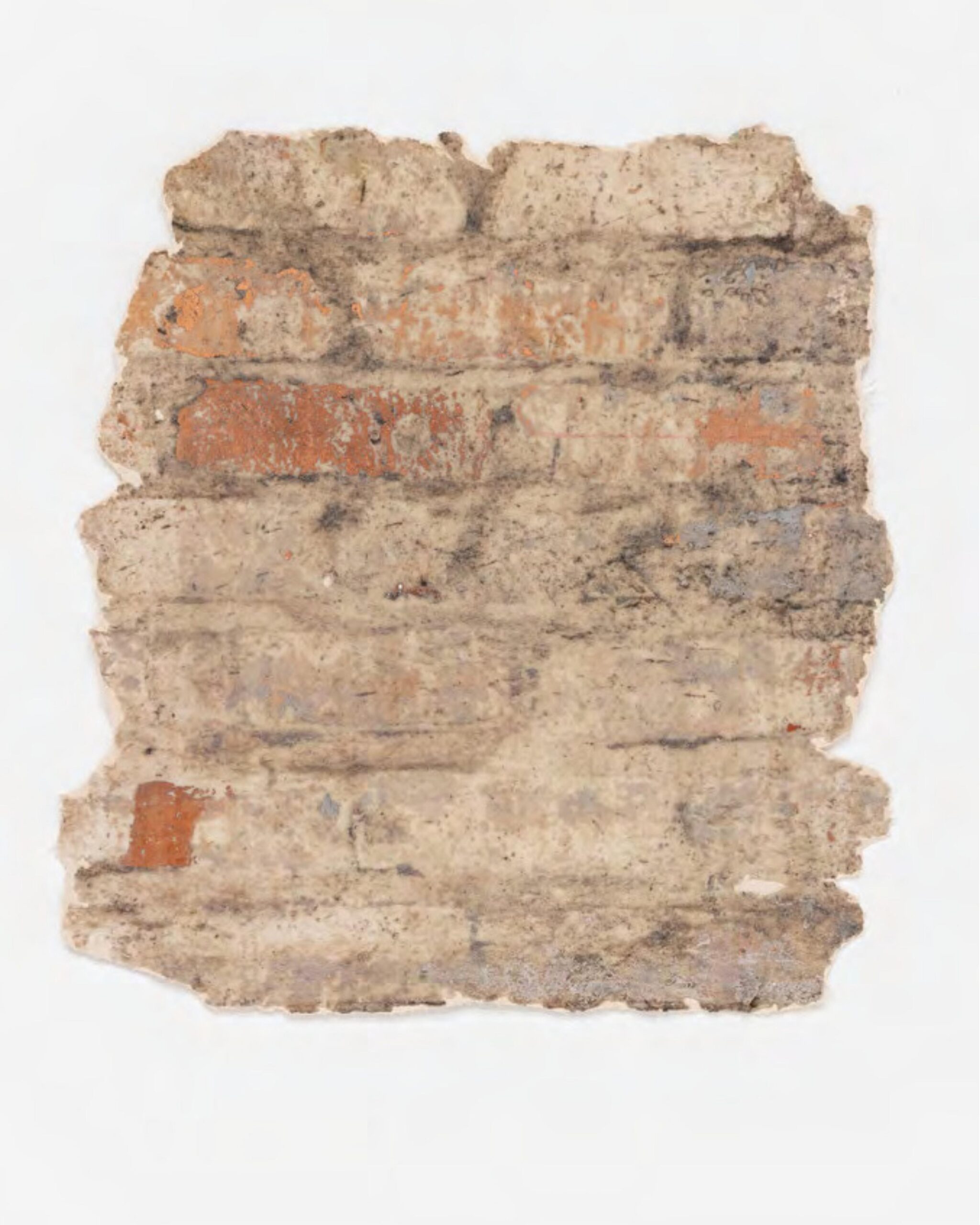
Kamyar Bineshtarigh, Brick Wall, 2024
Community. This is the central tenet that ties the exhibition together. It is the key idea behind the show – the AVA gallery meditates on its position today as a common space for artists, art lovers, and art professionals. The gallery’s roots can be traced back to 1850, and over such an expanse of South African time, the notions of community and common space were predominantly exclusionary and enforced. More presently, AVA sits within today’s iteration of a complex terrain we call Cape Town. The notion of community in this city has been, and continues to be, interrogated and reconfigured.
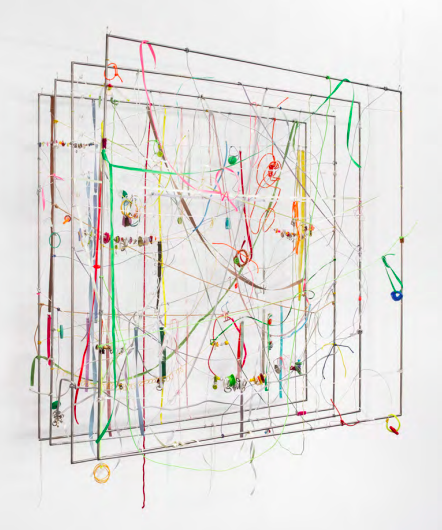
Pia Truscott, Lollipop,2026
What can a common space look like? I kept asking myself as I walked through the exhibition. What is the shape of being held? What is the form of belonging? These are questions on many of our minds currently, as we search for a way to ease a global dissonance aggravated by sinister algorithms and rising costs, while continuing to reckon with the enduring histories of our complex country. This anxiety is everywhere, and I felt it when looking at Josephine Grindrod’s Flora III. In this work of oil on paper, a thick, dark air bit at the petals of pink, trumpet-like flowers, craning their necks up at uncomfortable angles. Their lungs opened, seeking a wind to thin the oppressive sky. The choking flowers were reminiscent of the climate emergency that simmers in our minds, intensifying the sun’s light with each passing year. The moment felt heavy, but it was firmly held.
In the rest of this room, and indeed the exhibition as a whole, artworks congregate in a communal honouring of what humanity can mean. A few steps from Grindrod’s gorgeous but wheezing flowers in oil, I found the tender message signed in thick black pen, “To Yazeed, Best wishes, AM Kathrada”, written upon Yazeed Kamaldien’s digital photographic print titled Kathrada X Fassie. The moment referenced a meeting point of politics and music under a shared South African anti-apartheid activism between Ahmed Kathrada and Brenda Fassie. Beside this signed image, Ashley Walters’ Kidz, Clarkes Estate captured the sharp failures of the city to address a history of racialised violence and land dispossession. The photograph’s brick wall gaped open, failing its promise of solidity. Discarded plastic and other items were scattered across the floor, like laundry blown by a relentless wind off the barbed wire line cutting across the sky. Yet another black and white photograph in the same space, Lamont Khoza’s Portrait of uGogo Hluphekile, gifted us with just enough blur to show how much laughter was in its warm home space, enough for some to slip through the camera’s aperture. Here, there were the remnants of hardship and comfort, disappointment and delight, all jumbled together: a container of both the harsh and the soft, reflecting a creative community that witnessed them both.
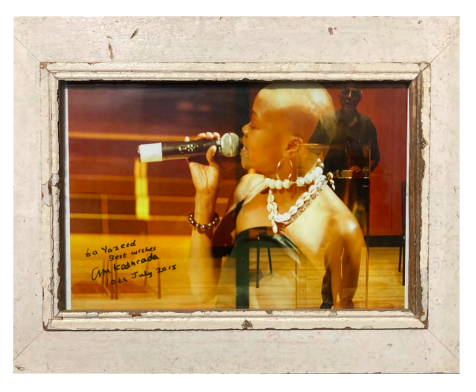
Yazeed Kamaldien, Kathrada X Fassie, 2001
I thought about this as I continued encountering each part of one hundred works, accompanied by “How old are you?”, “Do you believe in God?”, and “Is this a formal register?”: portions of recorded encounters in the city’s Company’s Garden playing upstairs in Keely Shinners’ video, Company Time. Conversations between the artist, the Garden, and its visitors accompanied scenes of different seasons and stalwart trees over many months. Different qualities of light dappled my face when I paused to watch. In my final moments in ‘AVA 100’ during my second visit, the day was ending, and the light outside was hushed.
This sense of community is underpinned by AVA’s membership-based structure, where artists are entwined within the gallery’s ongoing cultural fabric. In the case of this exhibition, one hundred members shaped the gallery’s most recent layer of its collective palimpsest. Consciously or unconsciously, ‘AVA 100’ responded to a moment when we ache for common spaces, to witness stories and have our stories witnessed: the harsh and soft moments impressed upon us, archiving our humanity so that we can understand each other’s individual worlds, to make sense of the larger one we share. Collectively, we are warmed by the same shifts of light.
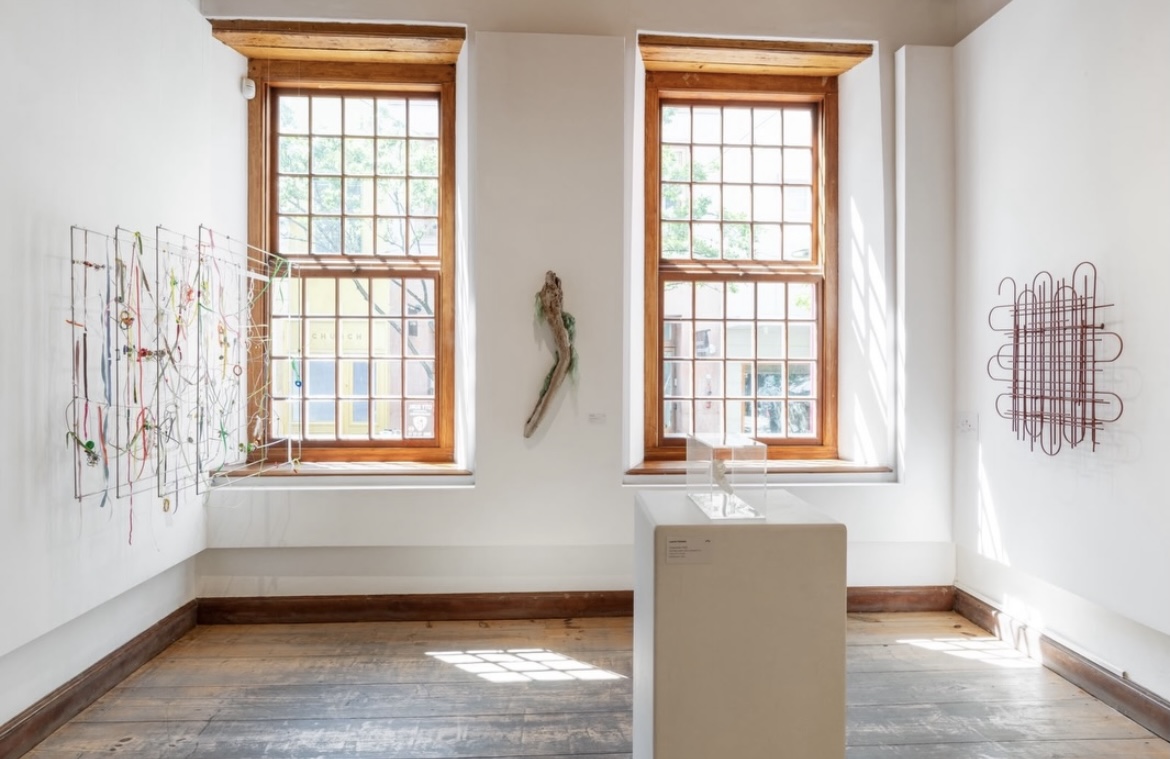
Installation View, ‘AVA 100’. Building Common Space for Artists, Cape Town