Investec Cape Town Art Fair
20.02 - 22.02.2026
Alongside the Main sections, the Investec Cape Town Art Fair 2026 includes four curated sections: Tomorrows/Today, SOLO, Generations and Cabinet/Record. This year, the SOLO section is curated by Paris-born, Amsterdam-based Céline Seror. For over a decade, Seror has dedicated her career to spotlighting new voices and narratives through various publications and artistic projects. In 2013, she co-founded the art agency ‘artness’ to advocate a transcultural vision of contemporary art. That same year, she worked on the conception and launch of IAM – Intense Art Magazine, the first publication dedicated to women in art from Africa. In 2018, she co-created the print and digital platform ‘The Art Momentum’.
For the fair, Seror focuses on what she calls ‘Echoes of Humanity’, highlighting the work of artists who invite us to dwell in the in-between, where perception shifts and new forms of connection emerge.
We sat down with Seror ahead of the fair to chat about the SOLO section that she curated.
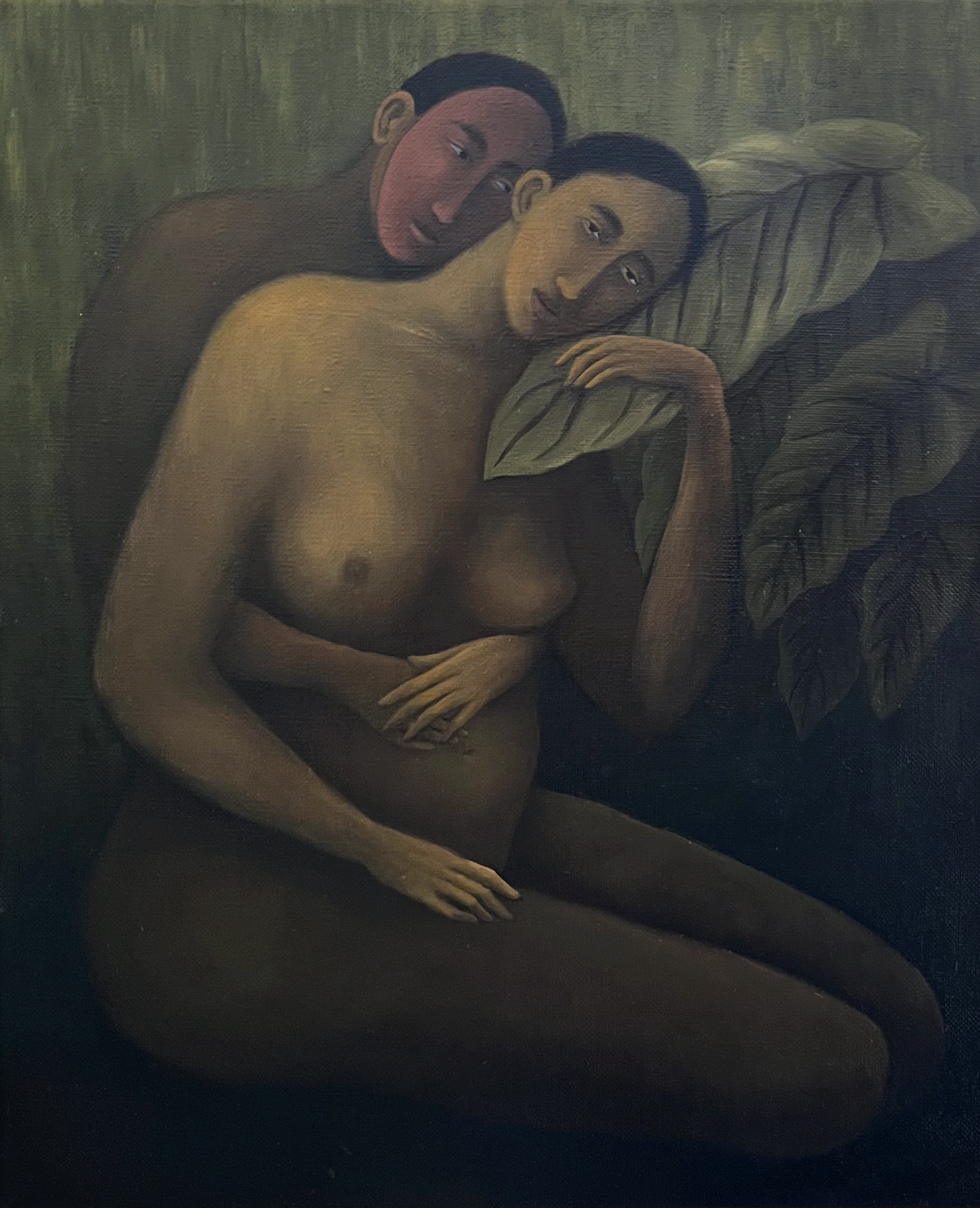
Tja Ling Hu, You shadow me, 2024, Namuso Gallery
The theme of the SOLO section focuses on what you call ‘Echoes of Humanity’… Can you tell us about the artists in this section and how they relate to this theme?
Echoes of Humanity emerged from an exploration of listening as an experience tied to responsibility. In a time marked by uncertainty and noise, listening becomes a radical gesture, an ethical commitment. The artists in this section approach listening as a relational act: something that connects beings, histories, geographies, and memories.
Their works carry resonances shaped by time, displacement, intimacy, and resistance. Whether through sculpture, paintings, ceramics, or conceptual investigations, each artist engages with stories that travel beyond the self. Some draw from personal archives; others give form to collective memory or to voices historically pushed to the margins. Together, their practices create a space where meaning reverberates.
In direct response to the fair’s overarching theme, Listen, each artist has also contributed a unique sound piece accessible via QR code within their booth. This additional sonic layer invites visitors not only to see the work, but to listen to it. Sound becomes an intimate bridge between artist and audience, deepening the encounter. The echo is no longer only visual or metaphorical; it becomes audible and embodied.
Can you tell us how you approach curating a section like this one?
My process began with a question: what does it mean to listen today? From there, I developed the framework of Echoes of Humanity, thinking about resonance as something shaped by relation, never fixed, always transformed.
The research phase was extensive. I revisited artists whose practices I had followed for years or discovered recently, and entered into conversations with their galleries. I was looking for positions that do not simply illustrate the theme, but expand it. What matters to me is coherence without uniformity: ten distinct artistic voices that each hold depth, while contributing to a shared path.
The decision to integrate sound was central to this curatorial vision. I wanted visitors to experience listening physically. By inviting each artist to create or select a sound work, the section becomes immersive. It proposes attention as a shared act and a way to slowing down within the intensity of a fair.
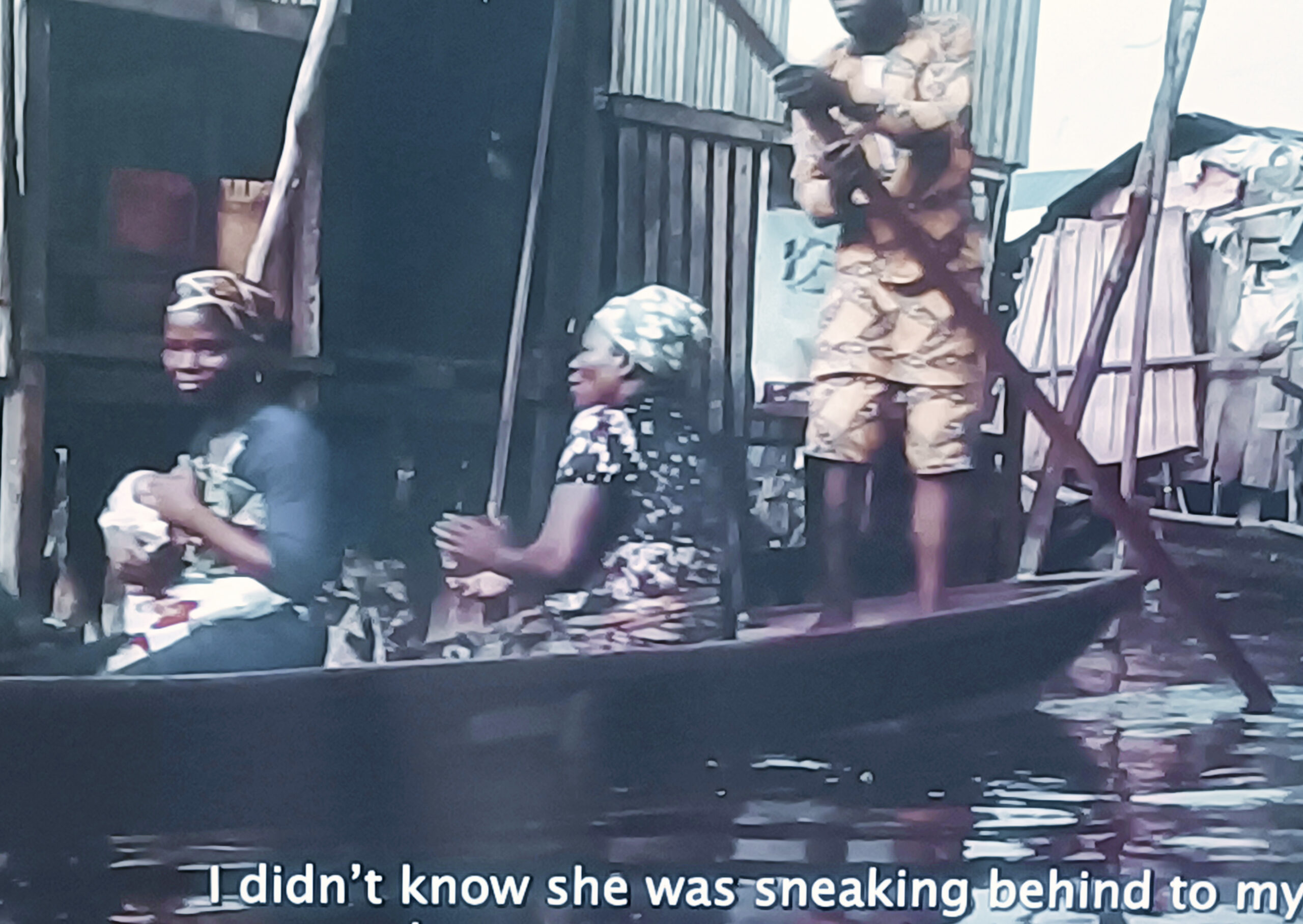
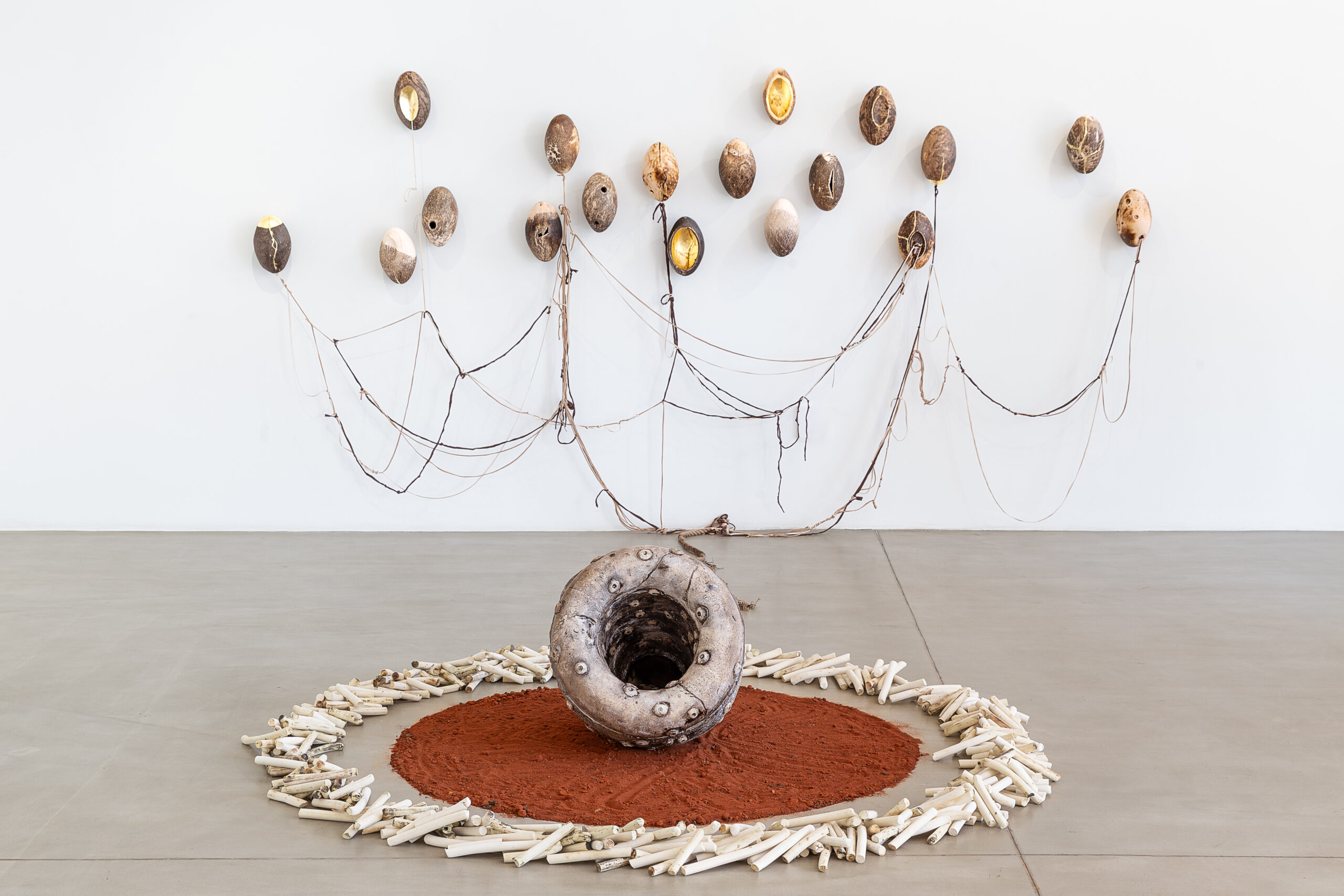
Tyna Adebowale, Ofofo (#Motherwomb), 2021-2023
The SOLO section is quite daunting, with a total of 10 artists. What challenges does this scale present?
Ten solo presentations within an art fair context is both ambitious and delicate. The challenge lies in balancing uniqueness and cohesion. Each booth must function as a complete artistic statement, yet together they must create a meaningful journey.
The addition of sound introduced another layer of complexity, technically and spatially. Careful consideration was given to how visitors would move through the section, how moments of visual density might contrast with quieter installations, how sound experiences would remain intimate through personal devices. My aim was to create rhythm: pauses, intensities, echoes across spaces.
The section brings together artists of diverse geographies, generations, and mediums. Can you speak to this?
This diversity is essential to the concept of echoes. Echoes travel across territories, across languages, across materials. By bringing together artists from different contexts and levels of experience, the section reflects the layered complexity of humanity itself.
The dialogue between painting, sculpture, installation, drawing, and mixed media creates multiple entry points into the theme. An emerging artist may resonate alongside a more established figure; their works speak across difference.
Installation View | Mellaney Roberts, ‘Waar Bloed Nie Loop Nie’, Berman Contemporary
And finally, why are solo exhibitions important?
Solo presentations are powerful because they create space for immersion. In the fast-paced environment of an art fair, a solo booth allows a visitor to step into distinct artistic worlds. It encourages sustained attention rather than fragmented viewing. In the context of SOLO 2026, this becomes even more significant. To truly listen, we must slow down. A solo exhibition becomes an invitation to pause.
Echoes of Humanity ultimately proposes listening not as a passive act, but as a shared responsibility. In each of the SOLO booths, art becomes a site of attention, a place where connection can be renewed, and where we are reminded that we are not alone.
SOLO | 2026 artists
Jeanne Hoffman (South Africa) — Everard Read (South Africa)
Manyaku Mashilo (South Africa) — Southern Guild (South Africa, USA)
Mellaney Roberts (South Africa) — Berman Contemporary (South Africa)
Nola Ayoola (Nigeria) — Windsor Gallery (Nigeria)
Owanto (Gabon) — Reiners Contemporary (Spain)
Pamela Enyonu (Uganda) — Umoja Art Gallery (Uganda)
Raquel Maulwurf (The Netherlands) — Livingstone Gallery (The Netherlands)
Tja Ling Hu (The Netherlands) — Namuso Gallery (The Netherlands)
Tyna Adebowale (Nigeria) — Ellen de Bruijne Projects (The Netherlands)
Wallen Mapondera (Zimbabwe) — SMAC Gallery (South Africa)