Investec Cape Town Art Fair
20.02 - 22.02.2026
“We can forgive a man for making a useful thing as long as he does not admire it. The only excuse for making a useless thing is that one admires it intensely.
All art is quite useless.” – Oscar Wilde, The Picture of Dorian Gray
As times feel stifling and increasingly hard and harsh, I find myself thinking a little deeper about what I am seeing around me and what it all means. I came across what, at the time, felt like a pathway to making sense of the images and objects around me: the notion that one way to think through aesthetic expressions of this moment might be through the idea of decadence or rather, a perceived era of decadence. Here, decadence is seen as an extravagant and often exaggerated response to what is experienced as restrictive, unstable and deeply precarious times.
The simplified version of this might be (the now bastardised) “lipstick” effect – that in trying times, people are often drawn to vain pleasures. Perhaps a more nuanced version of decadence is thinking of aesthetic choices in opposition to very real material conditions that make life unlivable. Decadence as a way to infuse voids with meaning, to resist deprivation, lack….nothingness…..taken to extremes.
But of course decadence necessarily has to be indulgent. And what is more indulgent than something which exists, whose actual definition of existence is that it has no function? To echo Oscar Wilde… all art is useless (and that is a good thing). It is also fair to suggest that any coherent reading of a moment will quickly break down in the context of an artfair where works presented do not always reflect society’s immediate “psyche” or concerns. Nonetheless, I find it interesting that some connections can be forged.

Chiara Calore, Golden Dreams, 2026
In any case, we can agree that the world is currently in a state of deprivation and lack (morally, economically, politically, artistically). We can also agree that artists and their production, consciously or subconsciously, will be affected by the world they live in. And yes, we can concede that fairs aren’t really spaces where discourse happens, but in South Africa, the artists we see at fairs tend to be active artists who are working across the ecosystem and tend to bring their newer experiments to the fair. It feels justified then to read what we see at the Investec Cape Town Art fair as “what artists are currently thinking about”….at least in part. So, given this state, what kinds of works should we expect to see artists make? One clear answer is that artists would respond by making socially and politically conscious works, perhaps even activist-leaning, as forms of response and resistance. On the other hand, we might also see a refusal to ‘participate’ by leaning more into works that seek to stand on their own terms, devoid of amplified meaning and impact.
Decadence has largely been theorised and documented. In the late 19th century, it was seen as a cultural movement that emphasised sensationalism, egocentricity, the bizarre, artificial, perverse and exotic. It was also seen as a way to signal moral decline. But I’m not interested in the judgment part (or looking for a way to assign blame). I’m interested in decadence as an observable phenomenon that best describes the psyche of our time, aptly reflected on by Professor of History at the University of Montana, Richard Drake, as he notes, “The Decadents praised artifice over nature and sophistication over simplicity, defying contemporary discourses of decline by embracing subjects and styles that their critics considered morbid and over-refined.1https://www.jstor.org/stable/260445” If then, decadence can be read as a kind of expression that resists, we might see artists fully embrace it.
I think of it as a move away from minimalist codes of the last couple of decades to things that are richer and fuller. Maybe sloppy too. Imposing. Colourful. Vivid. Uncontained. And always seeping. Rich and full can also be fragmented and nonsensical.

Chiara Calore, Twilight, 2026
What better medium is there to express decadence than painting? Using rich colours, thick brushstrokes, and layering paint for a sense of abundance, ampleness and opulence. Here I think of Chiara Calore’s solo booth, which was part of ‘Tomorrows/Today’ curated by Dr Mariella Franzoni. Calore’s work felt like it contained worlds within worlds. The paintings were incredibly small but incredibly detailed. A bird with a butterfly in its beak, on top of a woman’s head. Another face – tears, butterfly wings that resemble eyes, on her neck, the sun, the moon…gods. Her classical technique was clearly influenced by religious, Baroque and Romantic painting traditions. A reminder that decadence can also be goth – dark, theatrical – a way to layer things, making multiples and resisting sense.
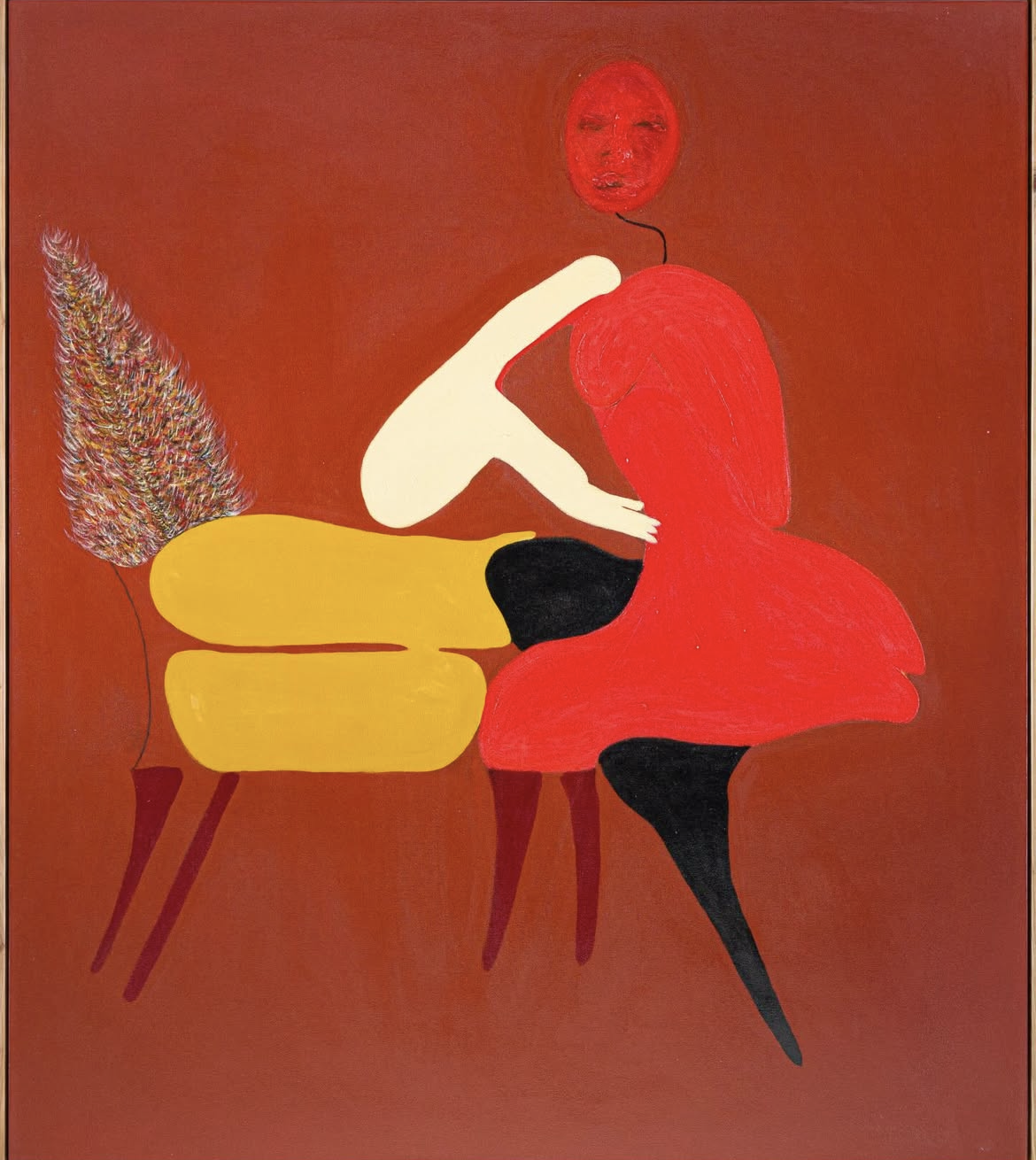
Yolanda Mazwana, The Body Listens , 2025
Another artist whose work is particularly bold and intense is Yolanda Mazwana. Yet perhaps more gentle. Her paintings are filled with blobjects – amorphous objects characterised by soft, edgeless forms. Non-forms that embody a sense of optimism. Mazwana’s figures are not realistic depictions; instead, they are globule-shaped to induce comfort. I guess if you’re thinking about decadence, you have to think about extreme comfort – no sharp edges, only rounded shapes and softness.
We can also think about decadence in terms of scale. Works that are huge, dramatic, affecting. They are larger than human and they overwhelm. I think of Dominique Zinkpè’s booth with Southern Guild as part of the Generations section curated by Tandazani Dhlakama. The Beninese artist is known for assembling tiny singular figures, gathering them to create a whole, often inspired by animism and magical universes. His universes are alluring, they mesmerise, and they pull you in.
I thought about Zinkpe’s work alongside El Anatsui. Both West African modern masters. Anatsui’s work, brilliant in structure and geometry, documents intricate histories of Nigerian sculpture-making using wood. Though the planes appear flat and subdued, their essence comes from a robust sense of carving and markmaking.
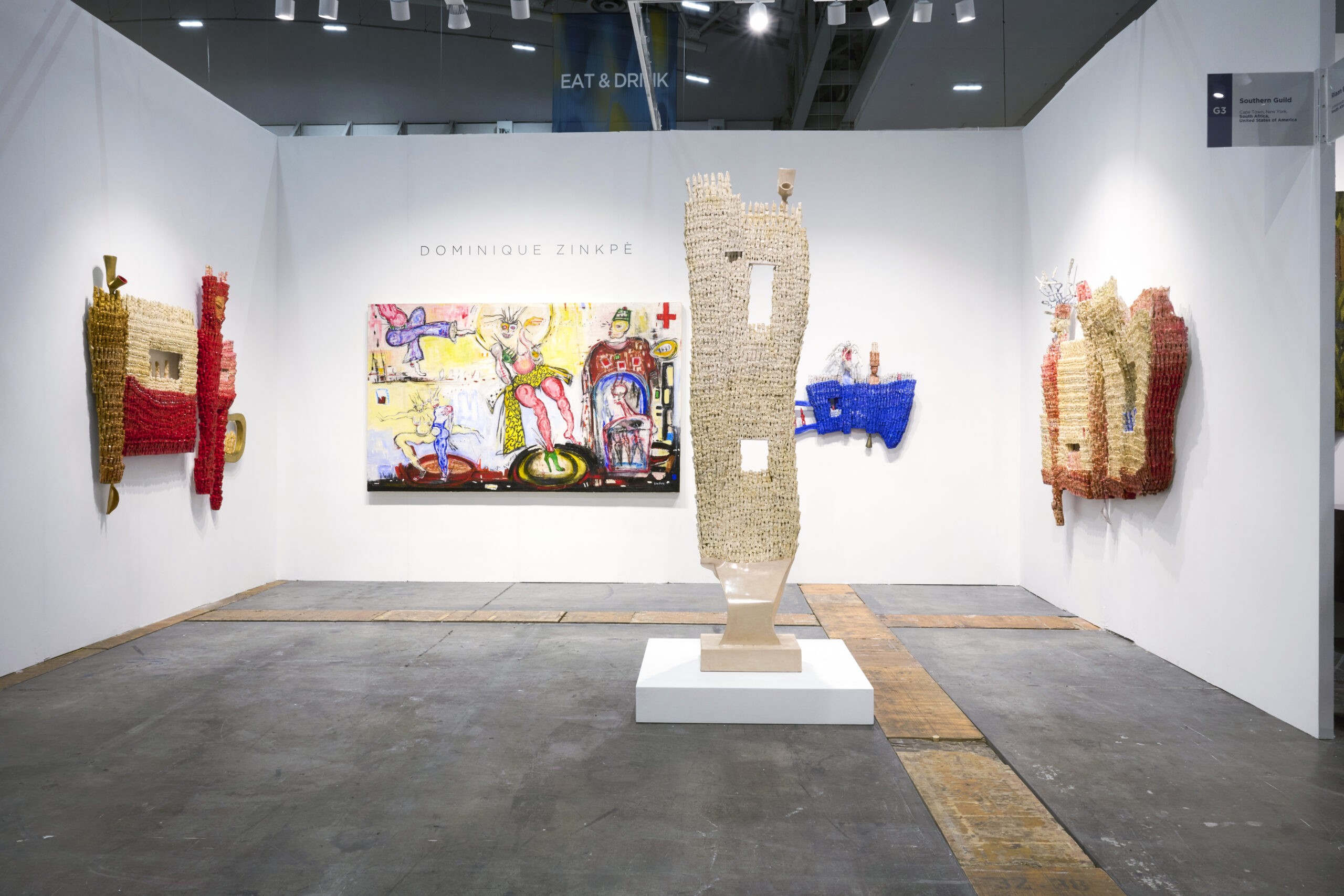
Installation View, Dominique Zinkpe, Generations Booth, 2026. Courtesy of Oliver Kruger and Southern Guild
Reflecting on scale and space, I also really enjoyed Mellaney Roberts’s installation, which was a wonderful opportunity to think of her practice in relation to the different materials she uses – ceramics, copper, sand and rope. Roberts, whose work was presented as part of the SOLO section, curated by Céline Seror, took home the RDC Art Collection Award, which is an acquisition prize.
Wallen Mapondera also uses scale for effect. His paint, though, tends to be thinly layered. Some works in his solo booth, titled ‘Power Elite (The Mbinga Culture)’, were hung so high that they required the use of your entire body to experience. There was an interesting contradiction too – this sense of boldness and excess against the aesthetics of Arte Povera, appropriating everyday and salvaged material and attaching them to the canvas. The sonic accompaniment of the work was a bit disappointing. It felt more like a voice note recorded for a friend than a well-thought-out sonic object to journey with the work.
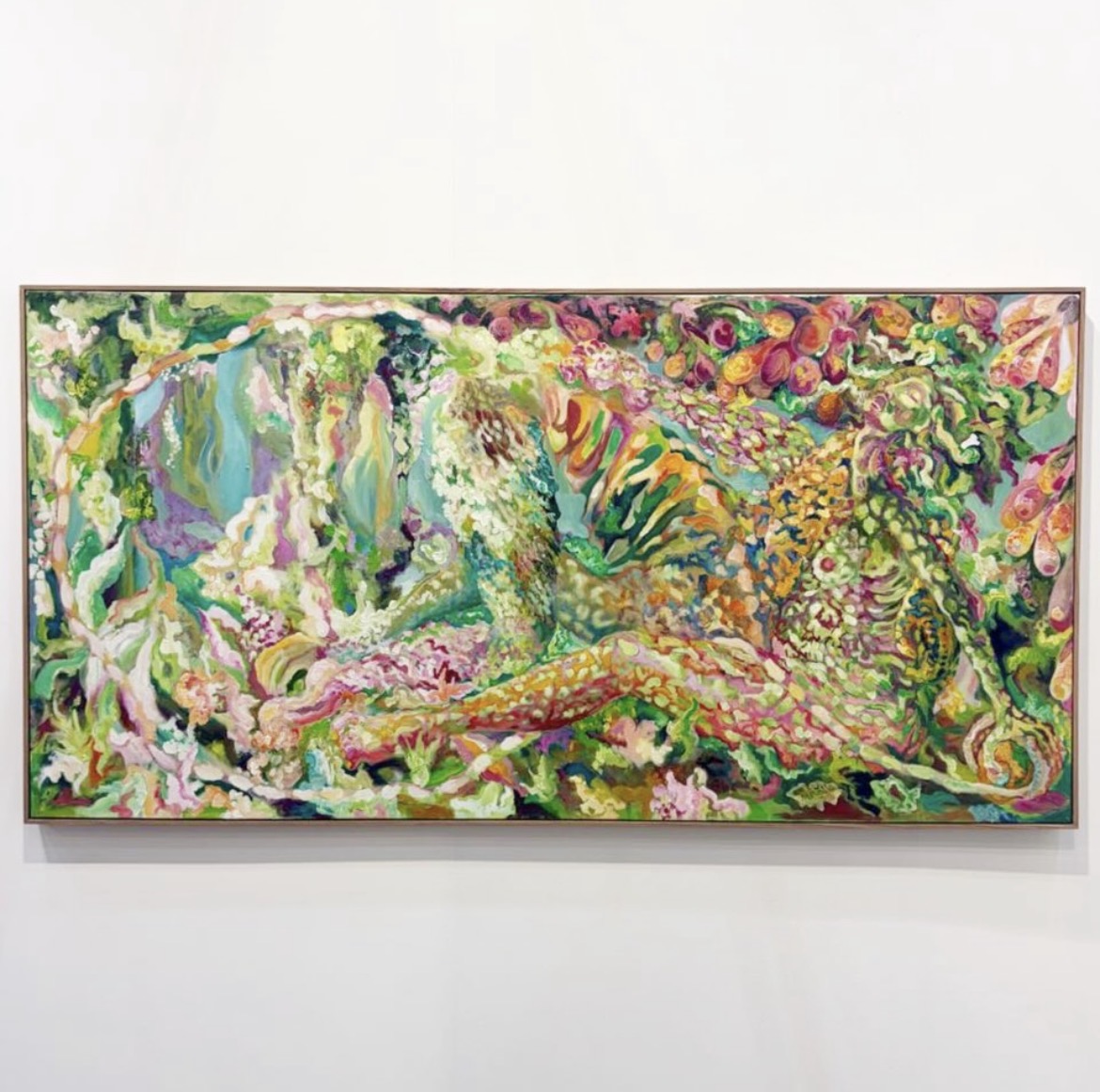
Nico Athene, Birth of Adam, 2025
I was surprised to encounter paintings by artist Nico Athene, whom I know primarily for her performances and who was showing with the new Crome Yellow Modern and Contemporary. One painting, ‘Birth of Adam’, was filled with greens, oranges, pinks, plums, blues….. plants, swirls, bubbles, an outline of a woman covered in and obscured by fruit and flowers. A cacophony of richness and eroticism. In fact, most of Athene’s paintings in the booth had this exuberant quality that speaks directly to notions of decadence I had in mind.
Lately, I have been unsettled in my desire for images – wanting to see more work that speaks to the world and yet also somehow remains intimate. And here is where I depart from thinking of decadence as a frame. I was thrilled to see Tja Ling Hu’s solo booth with Namuso Gallery. Tja Ling is a Netherlands-born Dutch artist of Chinese heritage whose figuration is a gentle and affecting expression of intimacy using a very limited palette – soft browns, dark olive green, gentle plum and orange. In terms of technique as well as presentation, this was an exquisite body of work. A quiet moment within the mad chaos of the convention centre.
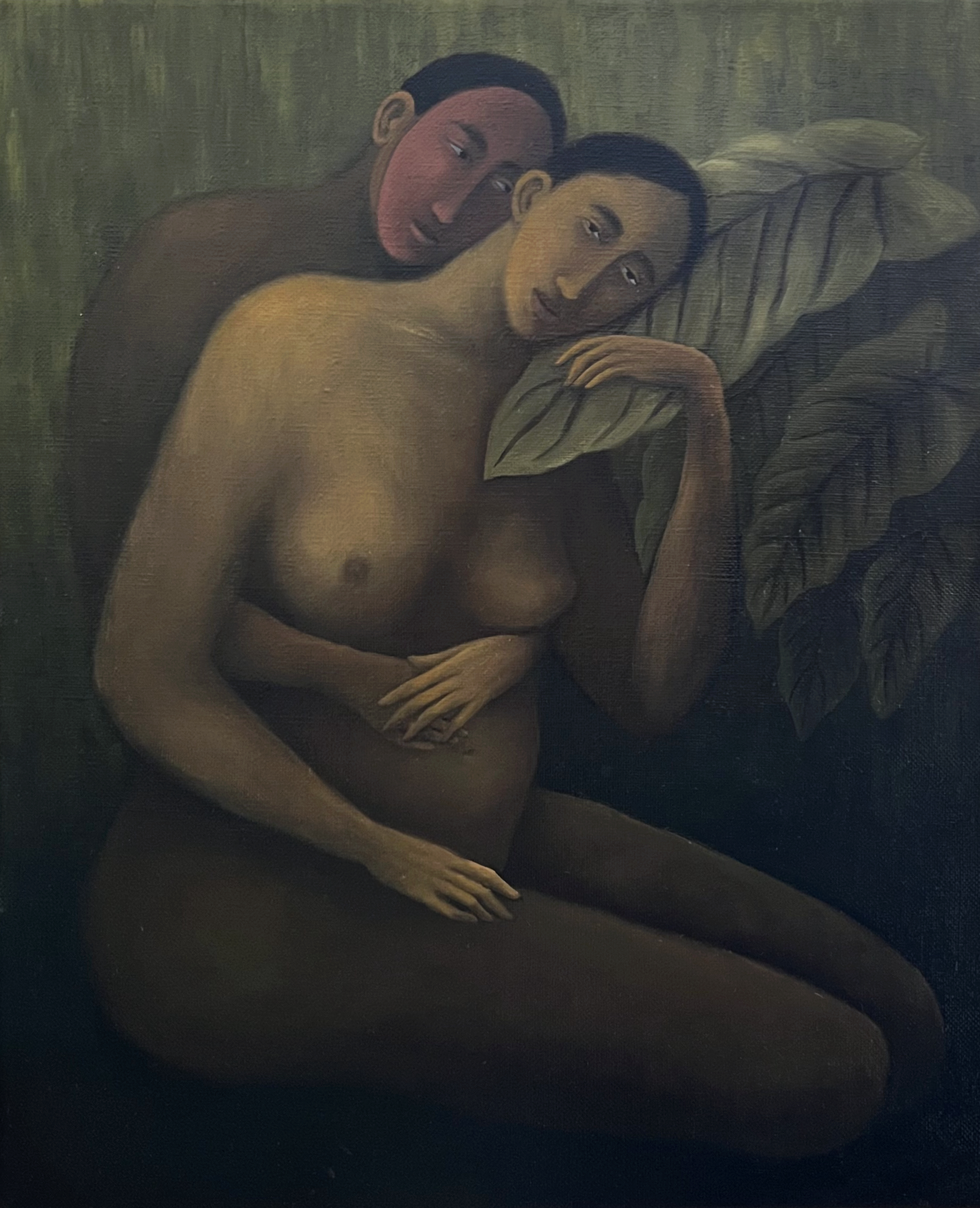
Tja Ling Hu, You shadow me, 2024
And as always, there were also artists doing interesting things with materials. This year, Amy Rusch received a nod and was awarded the inaugural materiality prize, which includes an invitation to participate in the Homo Faber Fellowship in Venice: an international craft training program that coalesces art, design and artisanal knowledge. Rusch’s rich practice is often an expression of mark-making through stitched threads on layers of found plastic bags, influenced by the land and the sea.
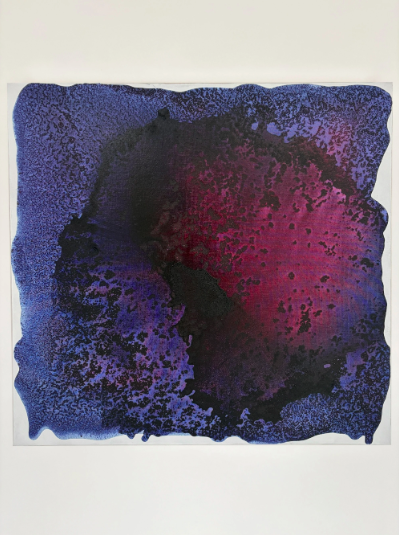
Taqwa Ali, The Rainmaker, 2025, Hibiscus water on linen, varnished in archival spray
Another artist who experiments with material I found interesting is Taqwa Ali, presented by BODE. Ali is an interdisciplinary artist whose research-based practice explores the symbolism of materials and their capacity to stitch gaps formed by trans-locational experiences. The works I saw used Hibiscus water on different surfaces -linen, cotton, paper, canvas. The dark purple, reddish and sometimes pinkish liquid that ties the artist to her native land in Sudan pulverises differently depending on how it is worked on, allowing her to perform various experiments that give her a more intricate relationship with this storied flower. I couldn’t stop thinking about Ali’s work alongside another East African artist, Sujay Shah, represented by Circle Gallery from Nairobi. One particular work, ‘Sensory Arms’, made with acrylic, oil paint, pastel and collage, depicted two figures connected at the centre of the canvas. The ghostly, surrealist figures and the verticality all lend the work a sensory pull. And as a kind of mix between blurred sensual figuration, uncanny composition and interesting use of light and shadow, I was also drawn to the work of Monilola Olayemi Ilupeju titled ‘TV Girl’. Made with oil and earrings on cowhide leather, the work depicts the artist’s silhouette intricately layered with white lace. Ilupeju speaks of the work as a sombre reflection alluding to “stars in a constellation, illuminating the surface while abruptly recalling the memory of skin.”
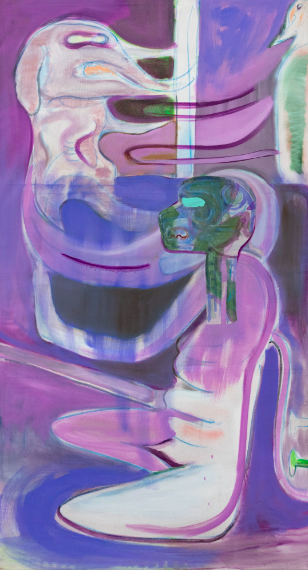
Sujay Shah, Sensory Arms, 2025
These works by Ali, Shah and Ilupeju are not edgy and definitely far from the ideas of the decadent outlined above. But they are self-indulgent. And what could be more sensually decadent than the pure pleasure of self-indulgence?
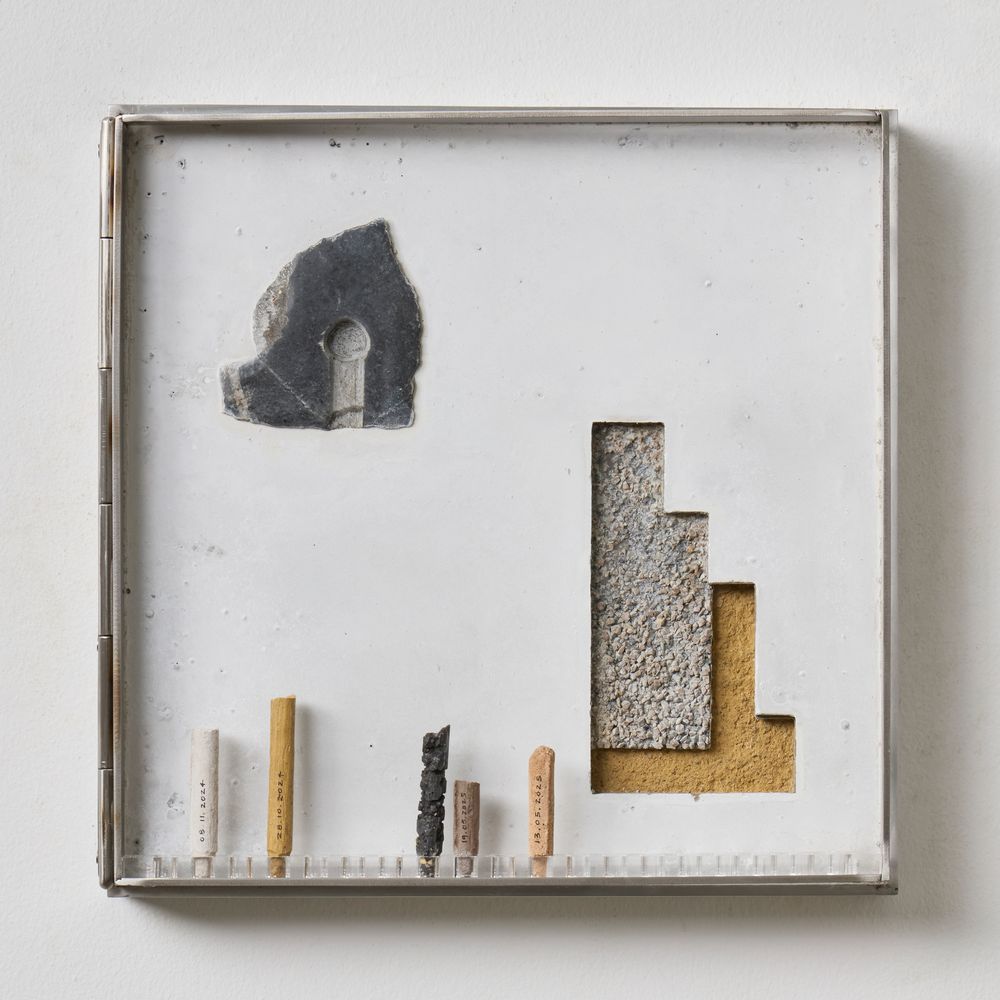
Ishmael Randall Weeks, Meditaciones:Mediciones XI, 2025
In a radical sense, decadence would be pushing an idea or a theory to its most extreme position, as a counter to what an artist might feel to be restrictive positions. This is where an idea or object revolves so fully that it loops back to its starting point. Decadence turned on its head is basically its antithesis – clean, straight, minimal. This excites me. In this regard, I was impressed with Gallery Nosco’s presentation, particularly the work of Ishmael Randall-Weeks, who uses earth, reclaimed concrete, plaster, wood, and industrial fragments (the hard stuff) as both substance and sign. Take the work, ‘Meditaciones/Mediciones XI’, for instance. It is made with stainless steel, aluminium, mineral, acrylic, soils and chalks framed within a 30 x 30cm square. The composition, fractured and tessellated, turns matter into metaphor, using tactility to speak to geological time.
There are also works outside of the fair that felt inspired, and that affected my experience of what I saw at the fair itself. Athi-Patra Ruga’s exhibition, ‘Cameos from the Frontier’ at WHATIFTHEWORLD, was an homage to his journey with stained glass that began in 2013. Texture-stained glass, with its ability to manipulate light and shadow, lends itself a majestic and reverent quality. Alongside Ruga’s show was Bindi Vora’s work, ‘The Powers Surge, Keeping the Ghost’. Vora presented works that mixed collage, drawing, painting and archival material, teasing out histories of migration, displacement and belonging. This theme of belonging was accentuated for me in works by Johannes Segogela (a largely forgotten modernist), whose strange and quirky sculptures of couples, families, demons and people praying reflected a strong sense of an artist working in direct response to the psyche and times of the society they found themselves in. This striking exhibit was a pop-up staged through Isaac Benigson’s ‘Old & Interesting Art’ on Buiten Street. Another honourable mention is Mankebe Seakgoe’s solo at RESERVOIR, ‘This is not Piano’, which was a great example of a beautifully executed presentation – with a minimalist style but also a density that reveals itself when you lean into the language the artist is slowly developing.
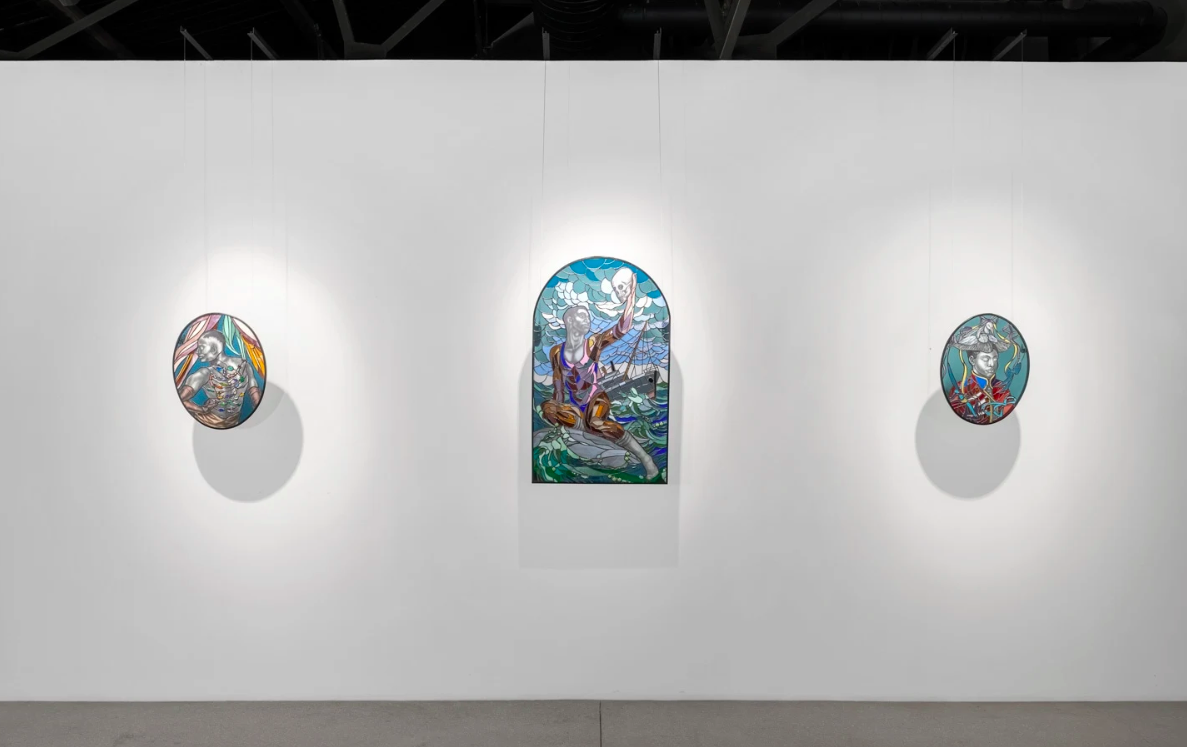
Installation View, Athi-Patra RugaCameos from the Frontier, 2026
When all is said and done, it is clear that decadence does not fully explain or reflect the current concerns or the current moment. Though shadows of it do exist. When an opaque object obstructs the propagation of light, a shadow is created. If the shadow can be thought of structurally as umbra: the darkest part where the light source is completely blocked, the penumbra; the lighter part where only a portion of the light source is obscured and the antumbra: the ring of light that appears around the object if the light source is larger than the object itself… then we might think of decadence as the antumbra. The ring of light that appears around objects, simultaneously existing with other inputs, sensibilities, inquiries and ideas around art making of now.
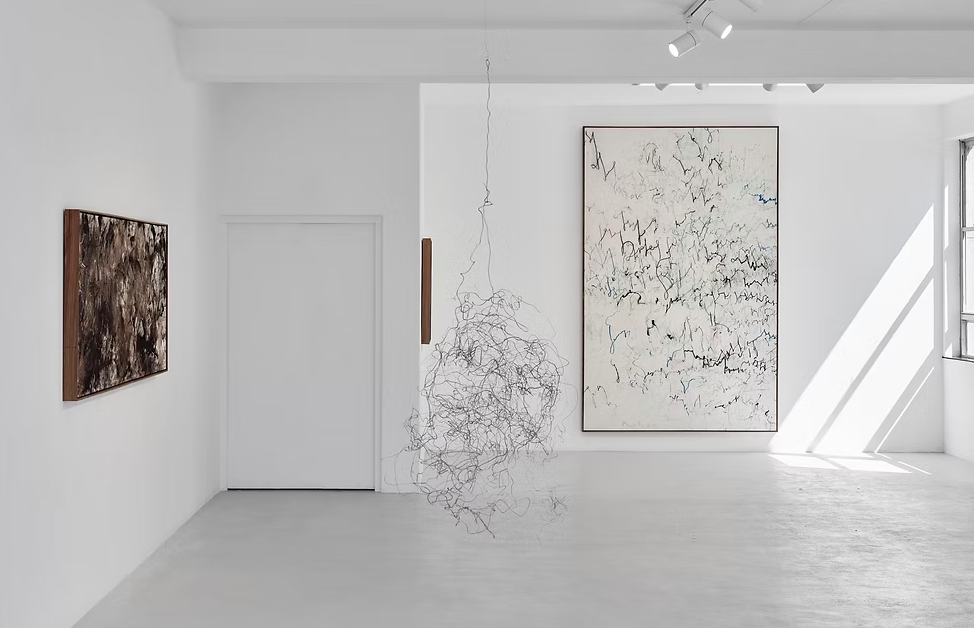
Installation View, Mankebe Seakgoe, ‘This is not piano’, 2026, RESERVOIR