The International Festival of Films on Art (Le FIFA)
12.03 - 29.03.2026
Lerato Shadi, Penny Siopis, Ângela Ferreira, Dineo Seshee Bopape and Kiluanji Kia Henda participate in The International Festival of Films on Art (Le FIFA), the largest art and art film festival in the world, taking place between 12 and 29 March 2026 in Canada.
The artists will participate as part of the ‘Concrete Affection | Carte Blanche’ program by Valentine Umansky, curator at Tate. Her selection offers an exploration of works that reflect the richness and diversity of contemporary practices.
The International Festival of Films on Art (Le FIFA) is dedicated to the international promotion and distribution of films on art and media arts. Le FIFA presents an annual event in March that allows the discovery of the latest productions of films on art and art films. Each year, more than 200 films from over 40 countries are carefully selected to present the best of art and art films from Canada and elsewhere.
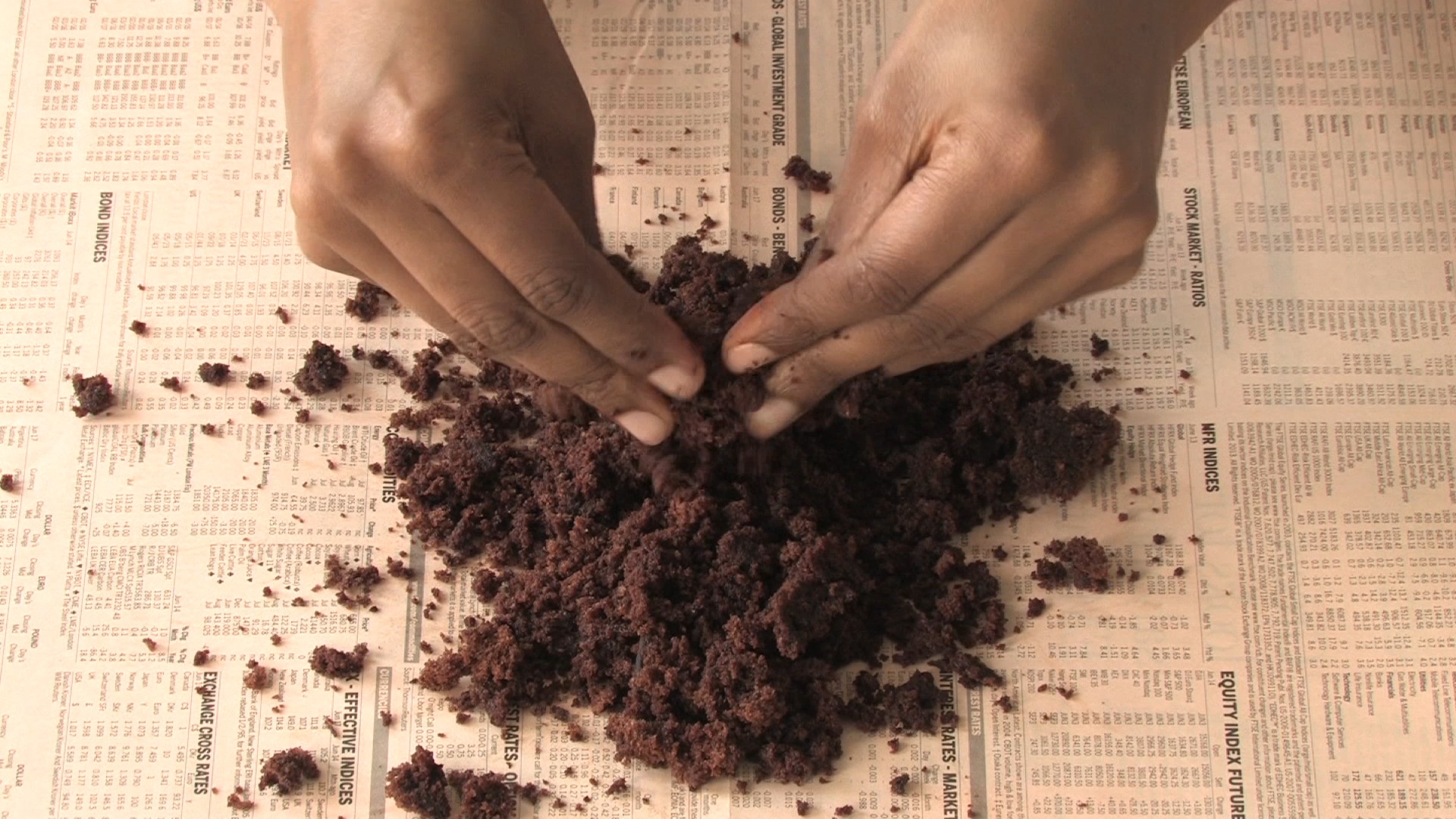
Lerato Shadi, Matsogo, 2013.
Lerato Shadi — Matsogo (2013, South Africa, 5′)
Matsogo shows a pair of hands crumbling a slice of cake, before reassembling it into its original form.
Moving from deconstruction to reconstruction, the very essence of the cake and its edible nature are destabilised and ultimately lost: recreated as an object, it retains the appearance and certain elements of the cake, but no longer serves its original function.
The soundtrack weaves together songs drawn from two popular Setswana folktales, passed down by the Tswana people in their traditional language. Intertwined, these songs blur and complicate the narratives, giving rise to an ongoing polylogue involving three to five characters, revolving around belief and disbelief, trust and betrayal.
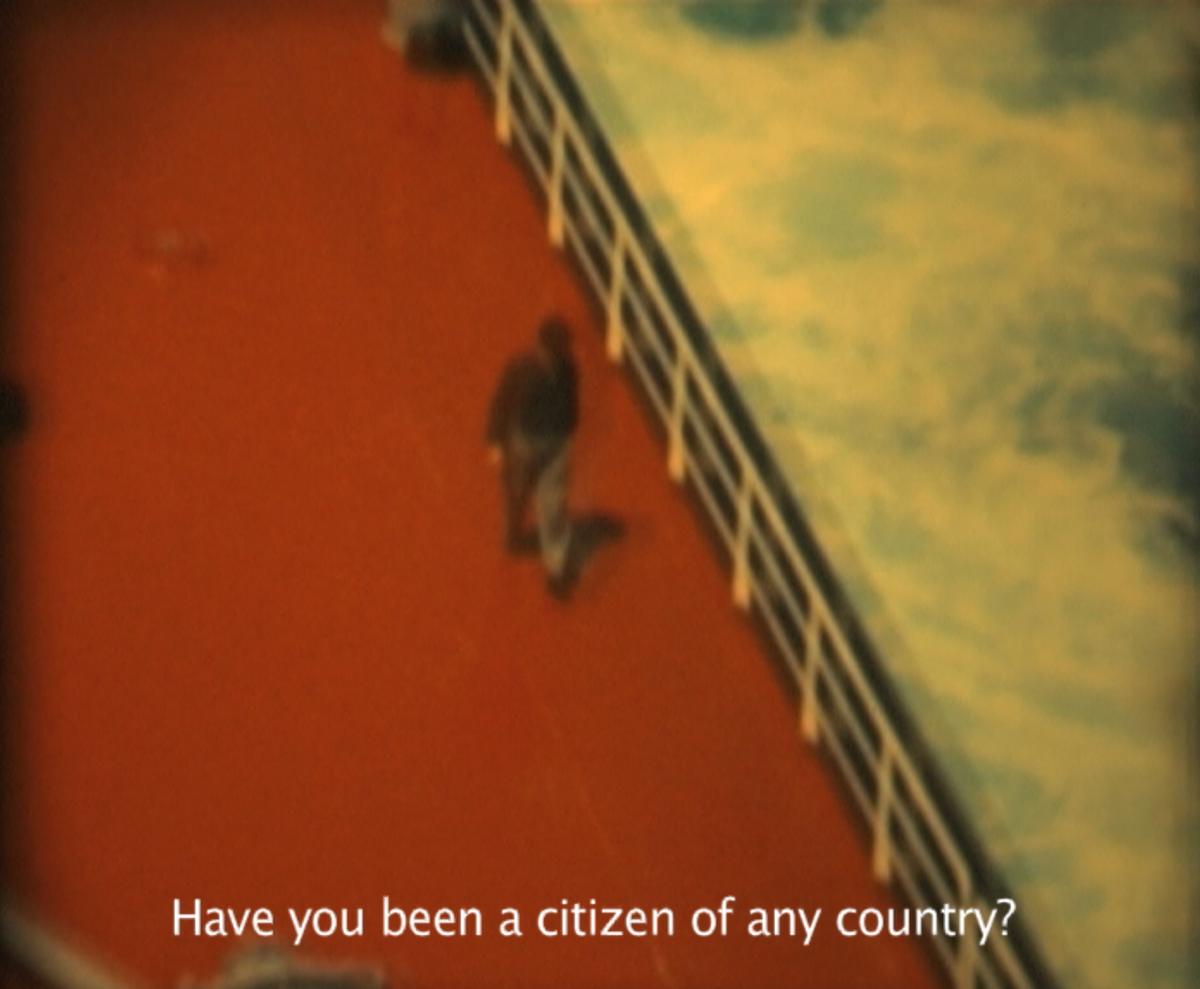
Penny Siopis, Obscure White Messenger, 2010.
Penny Siopis — Obscure White Messenger ( 2010, South Africa, 15′)
In Obscure White Messenger, South African artist Penny Siopis uses anonymous home-movie footage to tell the story of Demitrios Tsafendas, the man who assassinated Prime Minister H.F. Verwoerd, the “architect of apartheid,” in 1966.
The work’s title references a mention of Tsafendas in Long Walk to Freedom, Nelson Mandela’s autobiography, the leader of the anti-apartheid struggle and President of South Africa from 1994 to 1999. What drove Tsafendas, a man of mixed race, an undocumented migrant, and a parliamentary messenger at the time, to commit this act?
The film explores the intertwining of madness and political motive as it emerges from texts drawn from multiple sources, including transcripts of interviews. Throughout, it questions the identity of the so-called “illegitimate” Tsafendas, his place in the world, and more broadly, what it means to be stateless in a society where citizenship too often defines what it means to be fully human.
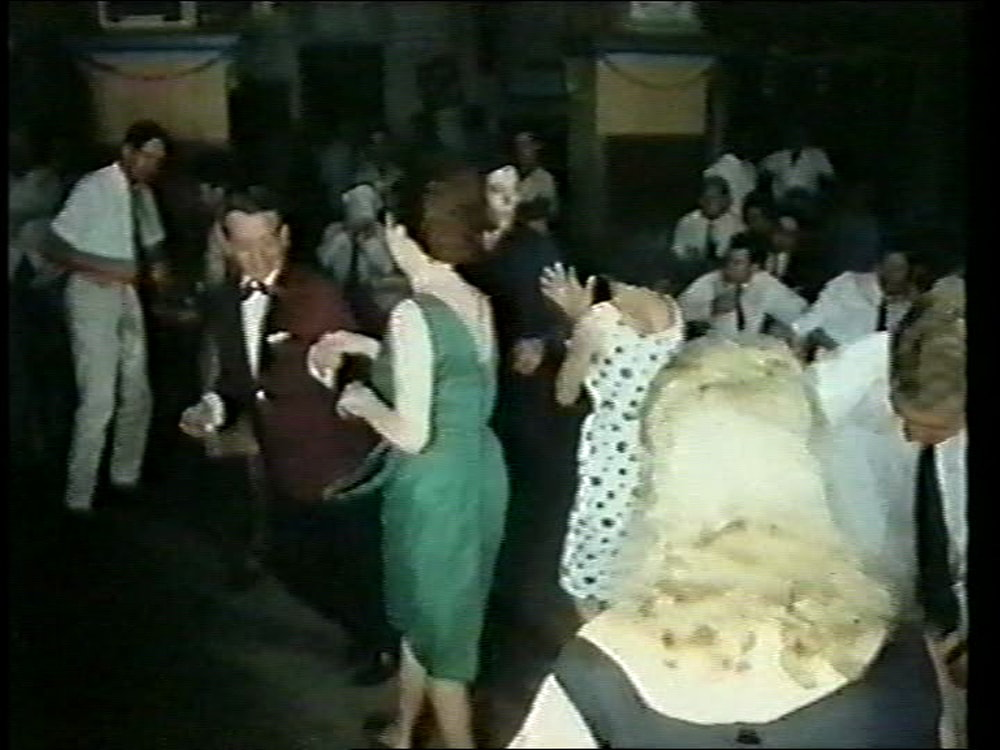
Ângela Ferreira, Adventures in Mozambique and the Portuguese Tendency to Forget, 2016
Ângela Ferreira — Adventures in Mozambique and the Portuguese Tendency to Forget (2016, Portugal / Mozambique, 19′)
The film Adventures in Mozambique and the Portuguese Tendency to Forget offers a critique of the life and work of the Portuguese anthropologist duo Jorge and Margot Dias, known in the 1960s and 1970s for their research on the Makonde people in northern Mozambique.
South African artist Ângela Ferreira sheds light on the hidden political agenda behind their investigations and their links to the Salazar regime, the Portuguese dictatorship that ruled the country between 1932 and 1968. The film reveals the complicity between anthropology and colonialism, and, drawing on Margot Dias’s diaries, Ferreira subverts the colonial gaze by transforming the researcher herself into an object of study.
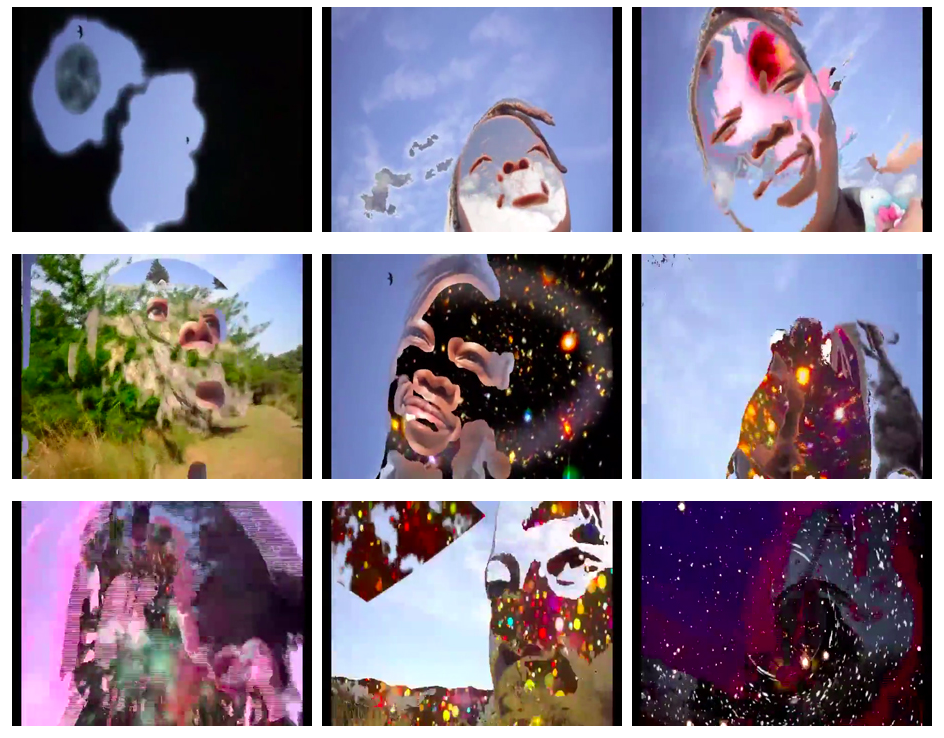
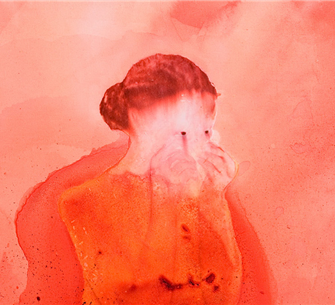
Dineo Seshee Bopape, is i am sky, 2013
Dineo Seshee Bopape — is i am sky (2013, Afrique du Sud, 17′)
is i am sky shows the artist’s face merging with the surrounding landscape. Filmed near San Francisco in 2011 and shot from a low angle, the work presents viewers with a restricted view of Bopape ‘s face and the expanse of blue above her. As the video progresses, her features blend with bursts of colour, the cosmos, and darkness, blurring the markers of her identity.
The title, written without capital letters, engages in a dialogue with the poem ‘The Endless Realm’ by composer Sun Ra ( 1934–1993 ), written in 1972. It begins: ‘I have nothing ! Nothing! How really is I am… ‘Bopape’s work echoes Sun Ra’s celebration of cosmic infinity as the frontier for Black liberation and existential nihilism. As the work progresses, the frame formed by the artist’s skin and face becomes a gateway to the vastness of the universe. Describing the video, Bopape said, “I was looking for a way to marry the sky,” to merge with “the space that nothing occupies.” At the time is i am sky was made, former ANC Youth League chairman Julius Malema was on trial in South Africa. A prominent activist, he was convicted of inciting hatred after singing a controversial line from an anti-apartheid song. In response, we hear Bopape singing the liberation struggle song “Hamba Kahle Mkhonto,” a chant often sung at the funerals of MK leaders killed during the apartheid years. The soothing sweetness of his voice contrasts with the harshness of the wind hitting his microphone, suggesting the resistance faced by those who fight for the freedom to be. These sounds then overlay the crashing of waves and drum rhythms before giving way to an interstellar atmosphere. In this way, is i am sky addresses historical and political constraints while mobilising distorted sounds and images as forces of resistance and emancipation.
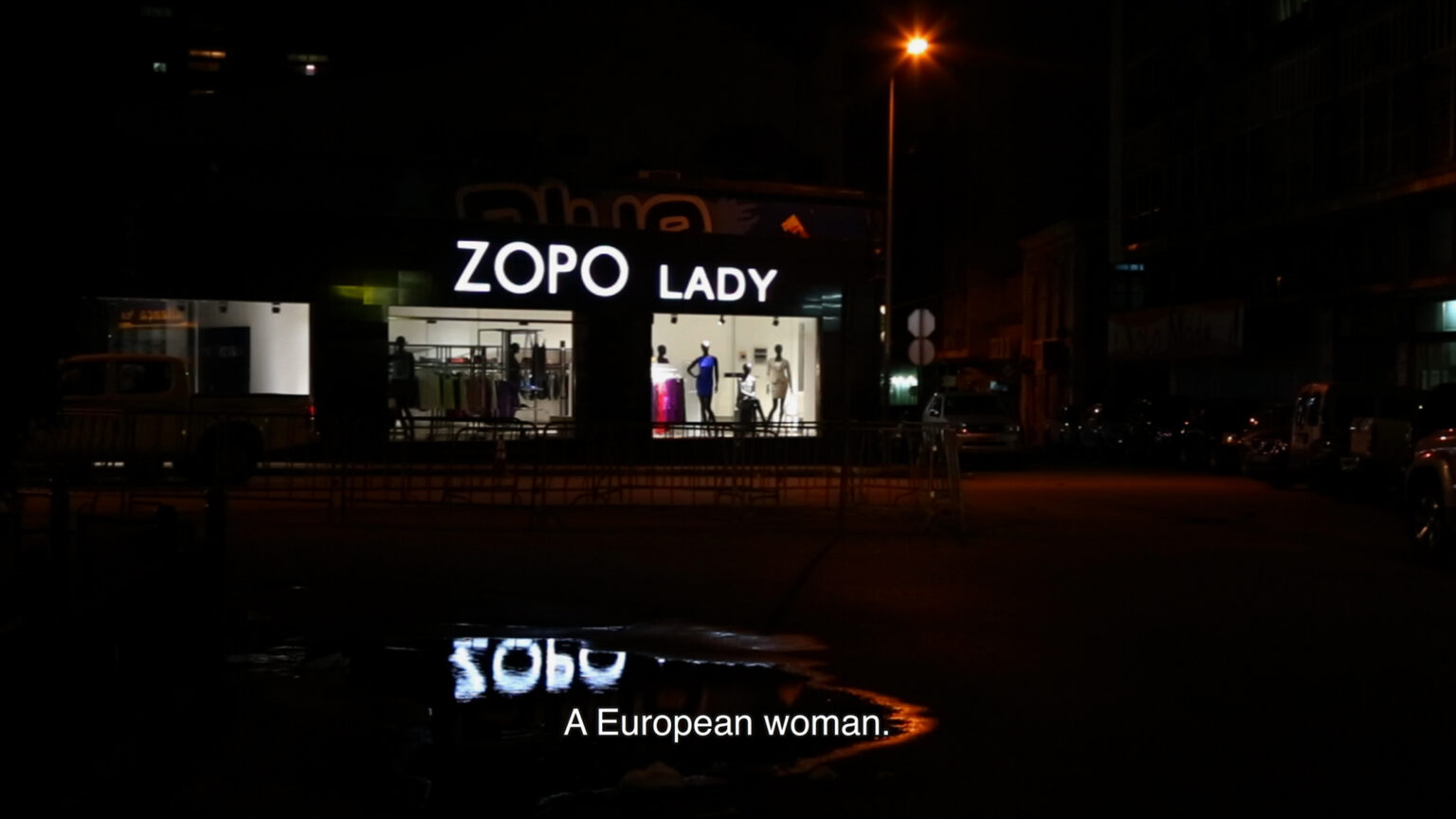
Kiluanji Kia Henda, Concrete Affection — Zopo Lady, 2014
Kiluanji Kia Henda — Concrete Affection — Zopo Lady (2014, Angola, 12′)
Concrete Affection — Zopo Lady portrays Luanda’s modern architecture through the memory of a historical rupture: the mass departure of thousands of inhabitants following Angola’s Independence in 1975 and the beginning of a long civil war. Filmed from terraces, interiors, and empty streets, the narrative unfolds in an uninhabited city where the narrator reflects on the painful decision to abandon the only place he has ever called home. While preparing his boxes, he is haunted by a platonic love and by the impossibility of packing his affections. The absent woman seems to materialise within the urban landscape itself, merging with façades and corridors. Delivered to solitude, the city becomes his only companion — at once intimate and unsettling.
As part of an installation of wooden boxes, the film approaches Luanda’s modernist architecture from a deeply personal perspective, transforming space into an archive of memory and desire. The work reflects on migration, loss, and the emotional violence of departure, revealing architecture as a silent witness to history and to the fragile bond between place and belonging.