Zeitz MOCAA
03.08 - 24.03.2024
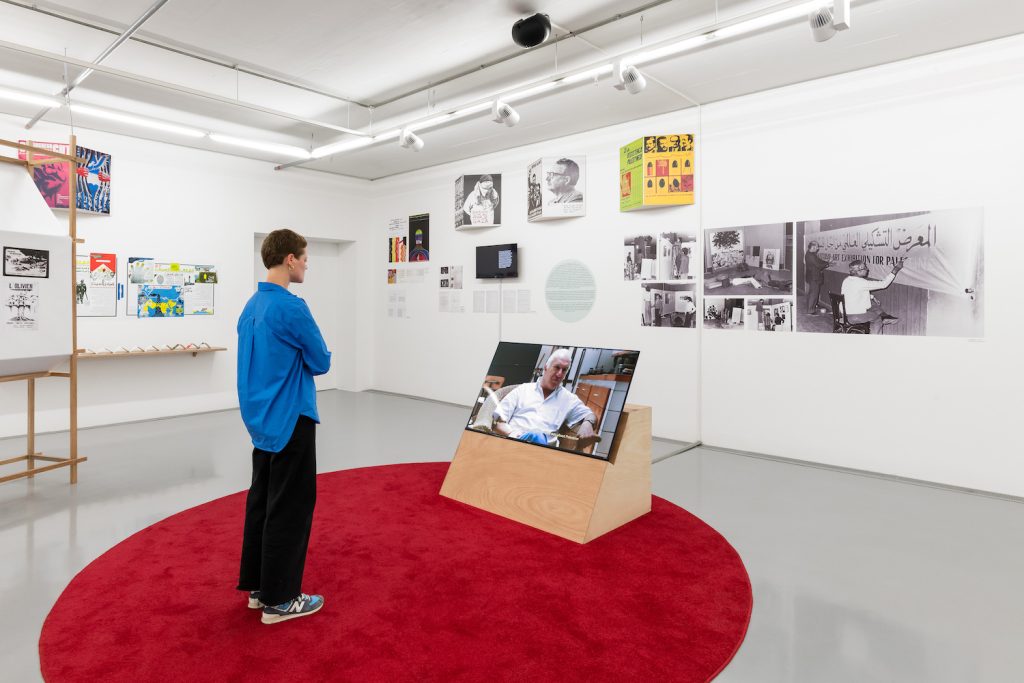
Past Disquiet, the latest research exhibition up at Zeitz MOCAA, was recommended to me as the type of show that would be better to write about than to experience. So it goes with research exhibitions, a difficult genre to crack. The problem, for this formalist critic at least, is that research exhibitions are almost necessarily too preoccupied with content to pay much attention to form. Findings are presented in bulk, without much inflection, so that visitors can partake in “threading narratives for themselves.” This usually means that the viewer is subjected to unrefined blocks of information, more than any normal person can process on a Wednesday morning visit to the Waterfront, no matter how fascinating the content might be.
Though the denseness got to me eventually, Past Disquiet is not uniquely to blame for the shortcomings of its genre, so I will take the exhibition on its own terms. If you have the time and energy to engage with this rhizomatic sprawl of art historical facts, dates and names, you will find some interesting nuggets. The author-curators, Kristine Khouri and Rasha Salti, set out to document “militant, artistic and museological practices that were connected to tricontinental anti-imperialist solidarity movements in the 1970s and 1980s.” Their finished work amounts to an impressive catalogue of the ways in which artists attached themselves to political causes after May ‘68, as well as the international affiliations that were forged in the process.
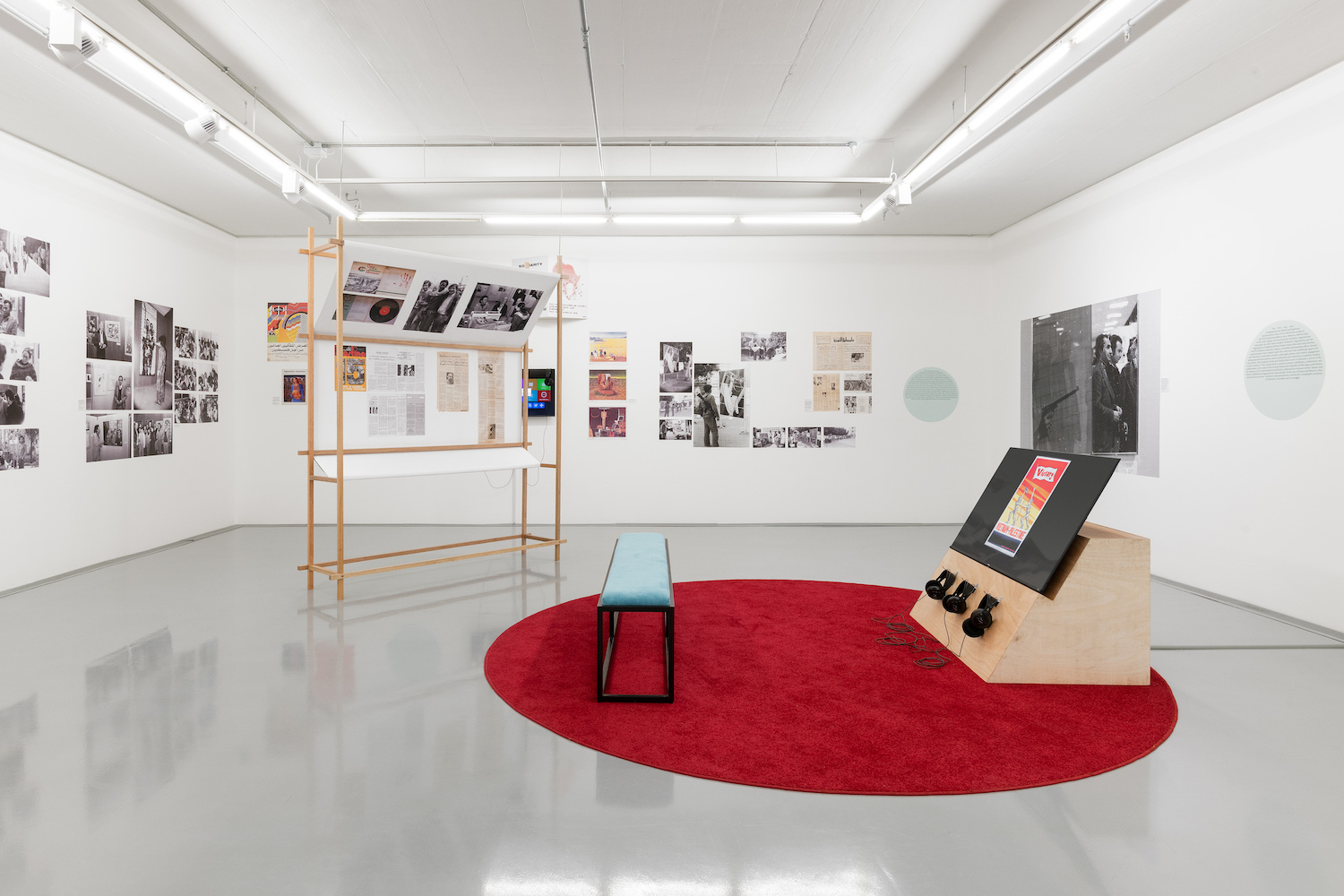
Installation view: Past Disquiet, 2023. Photo by Dillon Marsh. Courtesy of Norval Foundation.
Perhaps the most prominent art-related strategy for political struggle that was raised in Past Disquiet was international solidarity exhibitions, like the Chilean Museum of Solidarity or the International Art Exhibition for Palestine. These collections featured artworks donated by bigname artists to gain visibility for and build solidarity around their respective causes. From what I could tell, the artworks included in these exhibitions were not necessarily agitprop, nor was it required that they respond to the cause directly. It was, rather, the act of collecting itself that became politically meaningful. One video source, for which I could not find the title card midst all the research matter, claimed that the diversity of work included in the original Artists Against Apartheid exhibition represented “the universal character of the denunciation.” It hardly mattered what the works themselves were doing, as long as they could form part of the rich heritage of the international left.
Through the accumulation of these bodies of work, international bonds between militants, artists, curators and thinkers were forged. The letter correspondences on display in Past Disquiet provide a material sense of this camaraderie. Art was merely the occasion for diverse practitioners with shared political interests to come together. These case studies provide an interesting reference point now, as a renewed Artists Against Apartheid initiative launches its response to Israeli occupation. What changes when artworks no longer need to be smuggled across borders in a suitcase, but can, instead, simply be submitted online in PDF-form? One gets the sense that the position of the contemporary artist in relation to global politics is radically different now, though it remains difficult to quantify the difference. A survey like Past Disquiet can, at least, remind us what the terms of political engagement for artists have been in the past and thereby help guide the political energy of artists in the present.
That being said, the question of how the artist emoting in their studio is able to intervene in material crises remains as open now as it has ever been. Yet it is telling that artists and militants have historically been such close allies, as Khouri and Salti have highlighted here. Art seems to accumulate around politics and politics around art. One might say that art is the excess attached to politics in its most formal and functional sense. The latter is always directional, it addresses its concerns directly, whereas art is best at approaching its subjects through indirection. Most artists are also too preoccupied with solving aesthetic problems to devote much of their time to political ones, but they can provide a sort of occasion for politics. At the very least, art is a great excuse to get together and scheme.
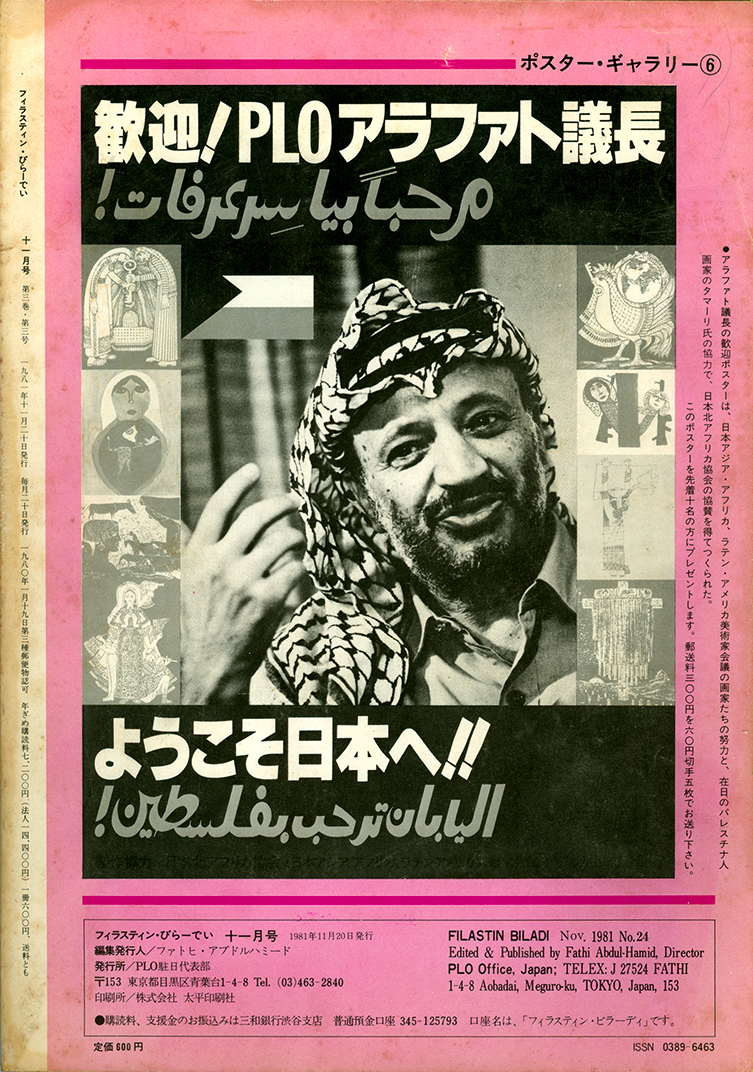
Cover of Filastin Biladi published by the PLO office, Tokyo, 1981. Courtesy: Misako Nagasawa and Toshio Sato.
Even the most functional political artforms, like the poster or the mural, for example, demonstrate a certain excess. To reduce the posters included in this exhibition to their promotional function would be to miss the unusual potency of the 20th century political poster. Those produced by the PLO Plastic Arts Section and the Medu Art Ensemble, in particular, are some of the most striking images of their time. Medu’s poster making practice was prolific in spite of the knowledge that their work would usually be torn down by the security police within a matter of hours. These were not mere props in a campaign to raise awareness; they were sublime interruptions of the flow of apartheid life. So too the muralists of Chile did more than merely proclaim their cause to the public. Their work lent a sense of scale to the political struggle. The indelible bigness that defined the practice of muralismo managed to say more than politics alone could have.
Lifting the most prominent forms of political struggle from this study inevitably means glossing over the body of the exhibition. Tangential stories and micro-histories are meant to be the main attraction here and they are frequently engrossing. One gets to see where the trajectories of Mongane Wally Serote and Julio Cortázar intersect, for example, which can be thrilling if you are into that sort of thing. However, what shines through the bits and pieces of history on display here is artists’ desire to secure their practice to this world. The truth is their work can never be tied down, it is always more than, but, as Past Disquiet demonstrates, the tension between art and politics is an endlessly generative one.
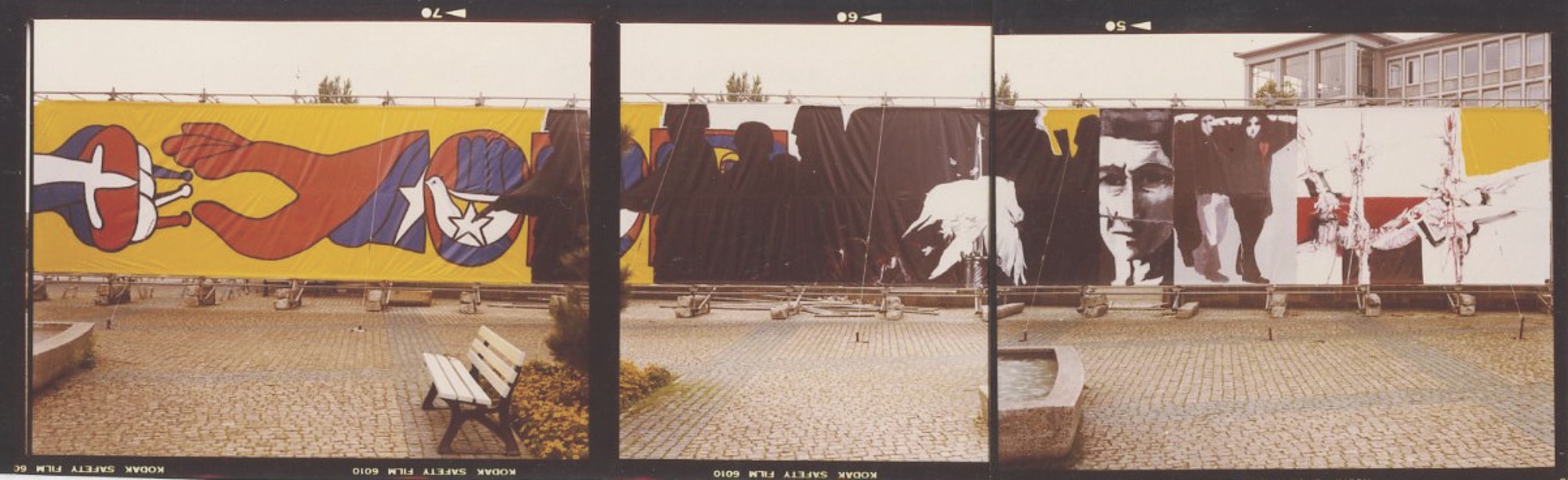
Photographs of the mural (3.75 x 60 meters) painted in homage to John Heartfield during Documenta 6, by several muralist brigades, including the Brigada Pablo Neruda (Paris), Brigada Salvador Allende (Frankfurt), between July 5-10, 1977, Kassel. Courtesy: Guillermo Núñez Archives, Gerald Warnke.