Investec Cape Town Art Fair
20.02 - 22.02.2026
Alongside the Main sections, the Investec Cape Town Art Fair 2026 includes four curated sections: Tomorrows/Today, SOLO, Generations and Cabinet/Record.
This year, ‘Cabinet/Record’ is curated by Beata America, assistant curator at Zeitz Museum of Contemporary Art Africa (MOCAA). ‘Cabinet/Record’ aims to shift perspectives on photography as an apt medium to display acts of preservation and expression. America proposes a means to look deeper, beyond the façade of the photograph and to induce active listening to the moments that linger outside of the frame.
We sat down with America ahead of the fair to chat about ‘Cabinet/Record’.

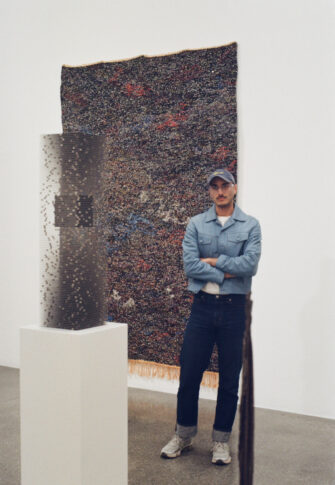
Tommaso Fiscaletti, Ali Kaabaoui Kèbili, from the series ‘Everything Never Was’, 2025
Can you tell us about your curatorial process for this section of the fair?
It’s been really interesting. What is nice about the theme ‘Listen’ is that it’s broad and open, but that can also be a really challenging thing. There is almost too much you can do that you have to draw your own curatorial boundaries. For me, that started with the medium. Photography is a perfect record-keeping medium and a way to preserve memory, but what are the things that happen outside of the frame that we don’t see? Because cabinets, as objects, are in themselves record-keeping devices, a place to hold objects of significance to be preserved and displayed, the play on words for the title ‘Cabinet/Record’ felt natural. Records as archived memory, but also records of nostalgia.
I wanted to see sound as more than an auditory response, but also an idiomatic expression that becomes the spark for that memory. And whatever it is, it is different for everyone. It sounds like a story you’ve heard before, or the sound of a good or bad idea. It could be the sound of freedom, resistance or fortitude. Visual images have the ability to do that, spark something in us that reminds us of something else. In many cases, personal and sentimental.
One might say this is a very exciting yet challenging time for photography, given the proliferation of images across art and media. Can you tell us your view of what you think this medium allows and why we should pay attention to it?
You’re right, I think that with the saturation of photography, in online media especially, it becomes harder and harder to determine what is a “good photograph”, but that’s not really the point. It’s an authentic expression of a moment in time, which is what makes a photograph interesting and great. I’m able to look at a photograph of my grandparents’ house and almost smell the memory that comes with that. The food on the stove, family members talking in the background, and my grandfather watching WWE. Or I can look at a picture of friends laughing and remember the joke that was told seconds before. Those are sensorial memories that are tangible and live outside of just that one frame.
This idea of memory and nostalgia seems to be built into the concept of “Cabinet”. How did this influence your thinking in terms of putting together the group of artists?
I think subconsciously, maybe, but as I mentioned before, because of what the object of a cabinet holds, photography provides the same function. A vehicle to hold memory and nostalgia. So, when I was looking for works that resonated with the section, they fed into each other naturally.
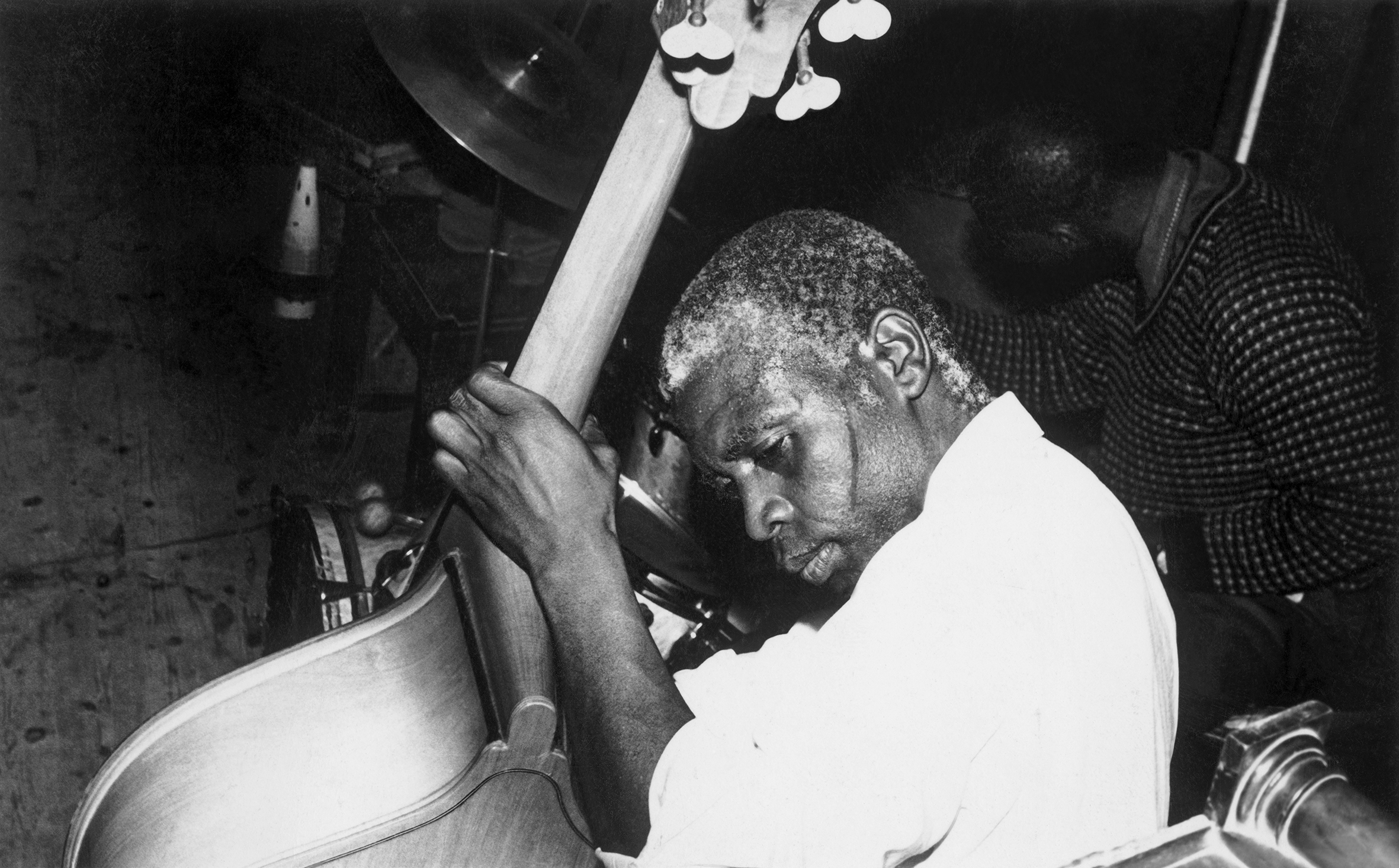
Daniel ‘Kgomo’ Morolong, Musician visiting from Johannesburg. Early 1960s.
Can you tell us about the different artists that you have landed on – what conversations are they having through their work?
It’s an incredibly diverse list of artists in the section with a flowing state of connection, but I’ll talk about two particular intergenerational conversations. There is a conversation between Daniel ‘Kgomo’ Morolong (b. 1928) and Thero Makepe (b. 1996). Before becoming a photographer, Morolong was a double bassist in the popular 1950s South African jazz band the African Quavers, which later became the Havana Swingsters. Interestingly, in the same decade, Thero Makepe’s grandfather Hippolytus Mothopeng, who was also a jazz musician, fled apartheid South Africa in 1958 for a freer Botswana. Makepe’s series ‘Music from My Good Eye’ (2019) pays homage to his late grandfather, who continued to perform throughout the 60s and 70s, and the musical legacy he instilled in his family. The works from both artists show raw, sincere moments of musicianship that aren’t just about music but speak of a very particular time for the patriarchs that they observe and pay homage to.
A similar intergenerational conversation is happening between Alick Phiri (b. 1948) and Maingaila Muvundika (b. 1999) in a work titled Kanyama to Cambridge, presented by Everyday Lusaka, a Zambian gallery, to exhibit for the first time at the ICTAF. Muvudika, a contemporary conceptual artist, responds to Phiri, one of the few black Zambian photographers of his time, to explore the legacy of photography and the introspective nature and agency of self-portraiture. It is also a body of work that produces the photographs as Risograph prints, which create a beautiful, layered effect and textured print in alternate green and red hues.
Was there any part of the curatorial process that felt particularly challenging?
For most of my career, I have been an institutional curator, predominantly working in museums and in a team setting. For this project, I was mostly working alone, a practice I’m definitely not used to and often found challenging. I thrive off bouncing ideas off colleagues and engaging in constant conversation about artworks to shape and grow whatever project I’m working on. I had to force myself not to just work in isolation, which is so easy when it’s just you and your laptop, but talk about the project with people around me to hear different perspectives.
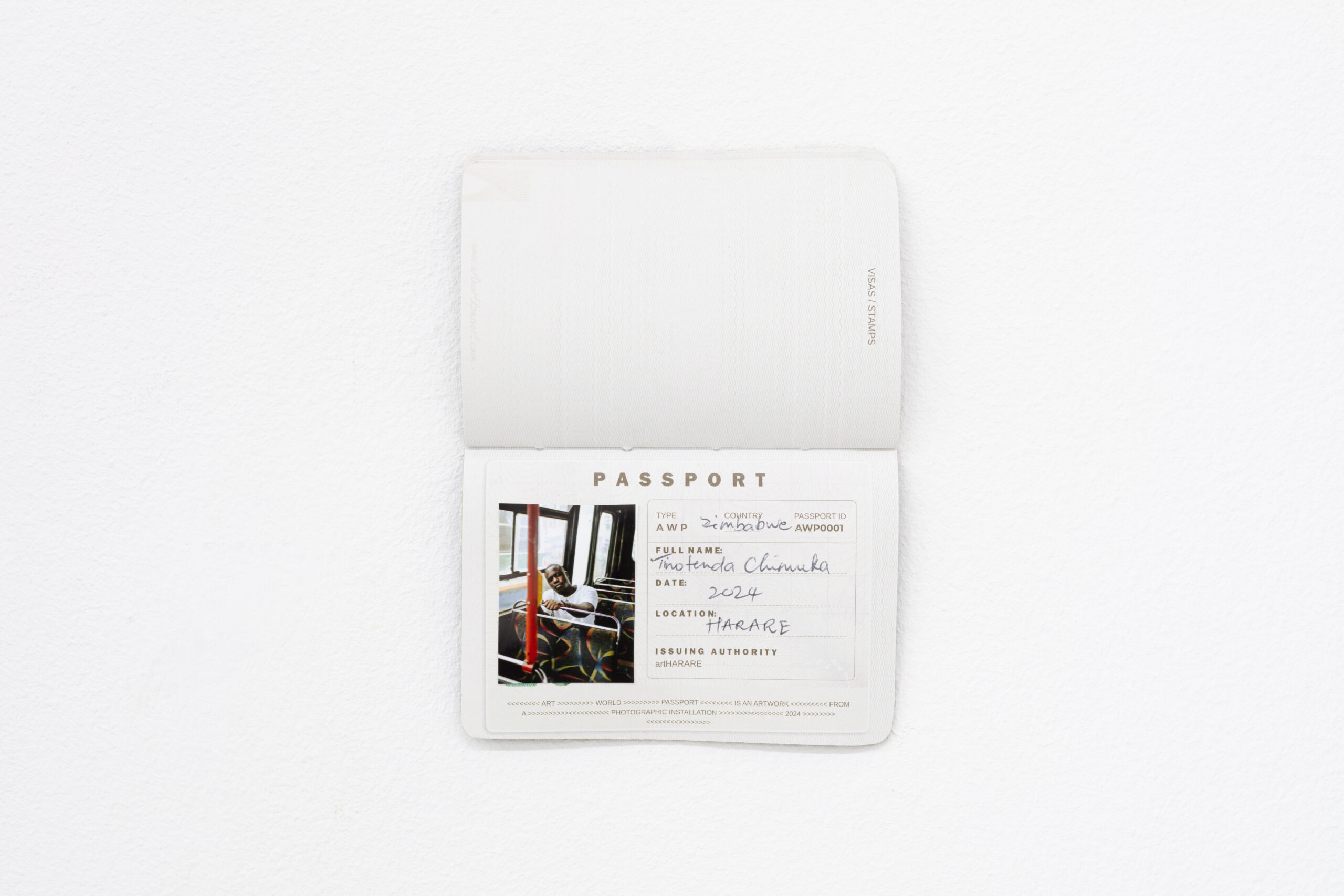
Artists Collective, Art Passport, artHarare
And finally, can you tell us about the Photographic participation performance by artHARARE?
The ArtWorld Passport Portraits is an interactive project which attempts to reimagine the traditional travel document as a carrier of mobility, identity and artistic belonging. Throughout the weekend, there will be a photographer stationed in the section, inviting fair goers to have the portrait taken and issued in their own “ArtWorld Passport”. One image is placed in their art passport, and the other is placed on a growing wall installation of participants that becomes an archive of artistic and cultural connectivity. Viewers are given a physical token of their time at the fair to hold and carry, which prompts them to think about how it is used as a vessel of movement and symbolic citizenship. I’m very excited to have ArtHARARE present this project in the Cabinet section; it’s dynamic and activates the section in a way that hasn’t happened before.
Cabinet/Record Participants
- Artist Collective – artHARARE (Zimbabwe/South Africa)
(Nothando Chiwanga, Bade Fuwa, Tatenda Chidora, Chelsea Manhlangu, Tamary Kudita, Sonya Rademeyer, Tisichile Kasito & Wonai Haruperi)
- Daniel ‘Kgomo’ Morolong – Everard Read (South Africa)
- Maingaila Muvundika & Alick Phiri – Everyday Lusaka Gallery (Zambia)
- Alka Dass & Thero Makepe – Lemkus Gallery (South Africa)
- Ibrahima Thiam – OH Gallery (Senegal)
- Alf Kumalo – Peffers Fine Art (South Africa)
- Musa N Nxumalo – Suburbia Contemporary (Spain/South Africa)
- Tommaso Fiscaletti – Untitled (South Africa)