Cape Town Print Fair
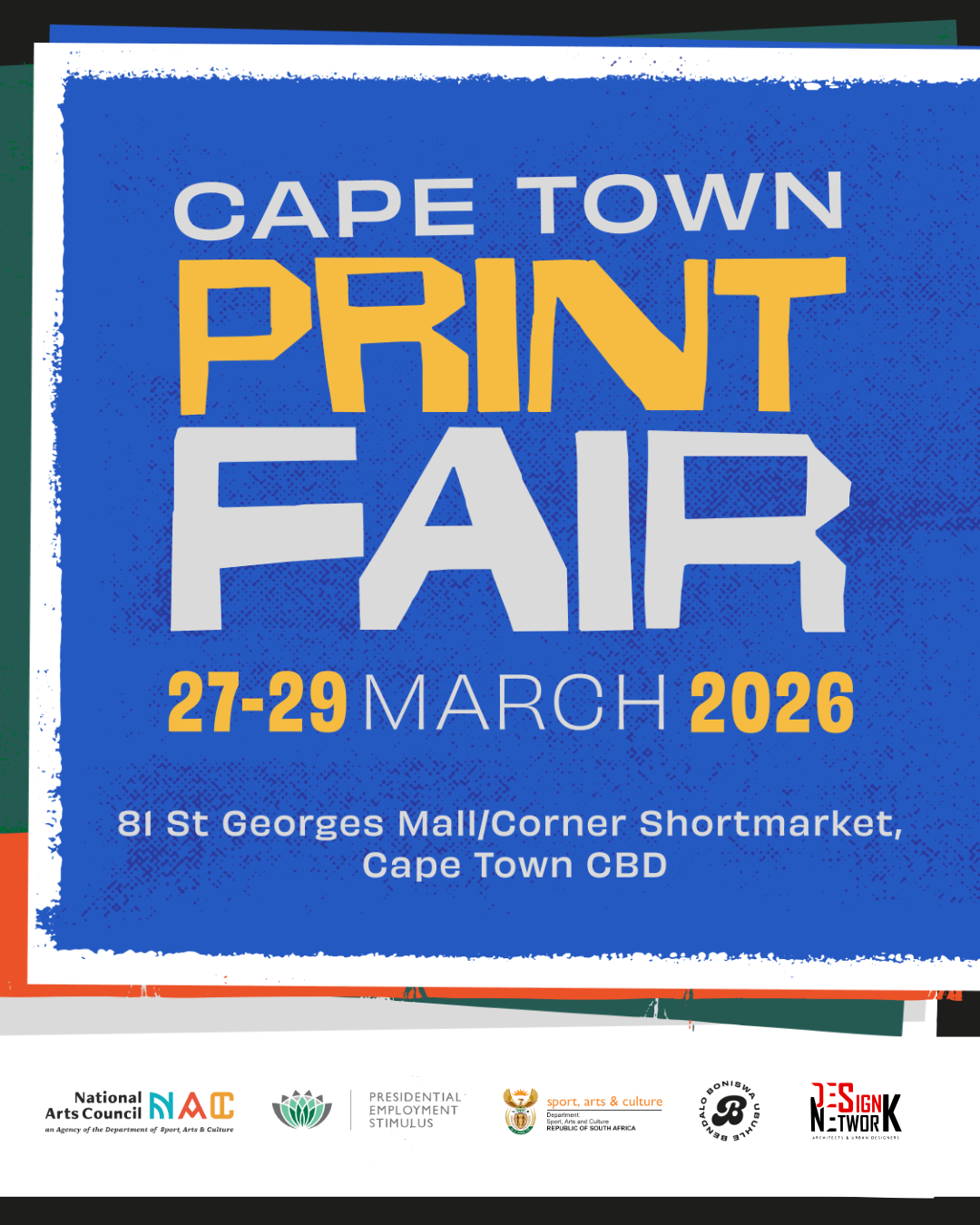
27.03 - 29.03.2026
The inaugural Cape Town Print Fair is a three-day event scheduled for 27–29 March 2026, celebrating independent print culture with over fifty exhibitors showcasing prints, zines and artist books. Located in the city centre, it features live demonstrations, workshops, and artist talks aimed at making art accessible.
We interviewed its director, Breeze Yoko, to find out more about the initiative.
Breeze Yoko is a South African multidisciplinary artist and curator whose work reclaims communal knowledge production from external narratives. A Berlinale Talent Campus alumnus, he has created murals across Africa and Europe—whimsical yet powerful works that reimagine public space. His award-winning films have been recognised at the Tricontinental Film Festival, the Siena Film Festival, and Dak’Art. As founder and Artistic Director of Ubuhle Bendalo, he builds new platforms for urban contemporary art. Rooted in a practice of restoration rather than intervention, Yoko’s work contributes to a living culture of memory, discussion, and collective imagination across African communities and the diaspora.
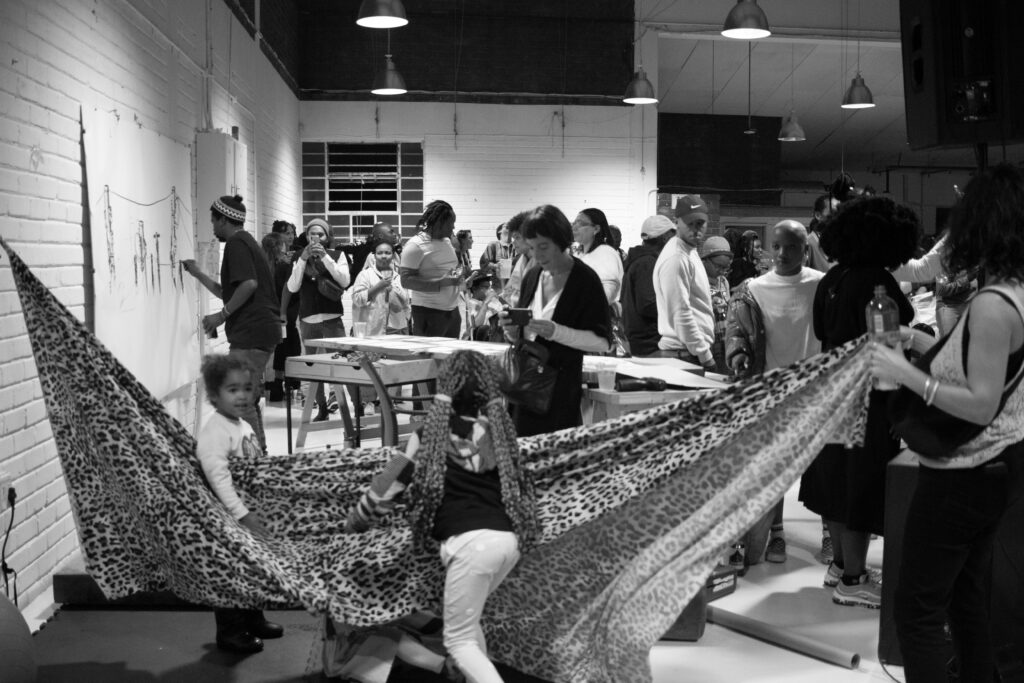
Who is behind the fair, and how did the idea come about?
The organisation ‘Boniswa Ubuhle Bendalo’ is behind the fair, and the idea came about from its director, Breeze Yoko. We have this incredible, world-class art scene here, but I realised there wasn’t a dedicated moment to celebrate a medium that’s so deeply woven into our country’s fabric, printmaking. South Africa has this wonderful, untapped history of using prints to tell stories, to resist and to empower. It felt like a sleeping giant, waiting to be awoken to its full potential.
As you mention, South Africa has a rich history of printmaking and poster-making as forms of political and artistic expression. To what extent is that history well known today, and does it shape how artists think about prints and editions?
One of the biggest challenges to printmaking is that it is often seen as the “poor cousin” to painting, a footnote in the local art history books. So no, we don’t think this history is well known, and this has been one of the contributing factors that drove us to take on this mammoth undertaking. We feel it is important to keep this history alive and not let it fade from public view.
This fair is our way of putting printmaking centre stage. We want to bridge the gap between the studios and archives and the wider public, to reignite that connection. And on a practical level, we want to build a proper marketplace for it so that this powerful art form can sustain the artists who dedicate their lives to it.
Let’s talk about value. Why would someone choose to buy a print or edition over a painting or other traditional medium? Why does this medium matter?
The obvious answer would be to say that buying a print over a painting or other ‘traditional’ medium often comes down to accessibility. Prints offer collectors the opportunity to own a piece of an artist’s vision at a more attainable price point without sacrificing artistic integrity. This becomes very important because it challenges the traditional hierarchy of value in the art world, where exclusivity has been the primary driver of worth. Editioned prints create a bridge between artists and audience, allowing a wider distribution of ideas and aesthetics while still maintaining scarcity through numbered series.
Far from being mere copies, I see prints as distinct works created through unique processes like woodcut, lithograph or screenprint, carrying their own aesthetic language and a rarity through limited, signed editions. Ultimately, this medium matters because it offers a different kind of relationship, one that balances intimacy and community with historical prestige, allowing collectors to engage with art on terms that prioritise the artist’s concept, process and a shared sense of ownership.
Can you walk us through the programming, the talks, demonstrations, and workshops?
We open doors at 14:00 on Friday, 27 March, welcoming guests and audience to our artists and their displays and art on offer. In the evening, we will have the official opening night with drinks and some snacks lasting till about 20:00.
Saturday doors open at 11:00 am, and we have workshops hosted by Wolff Architects with limited spacing, so registration is a must to participate in this workshop.
We also have a kids’ section that will be hosting workshops for kids where they will be doing printmaking and drawing. These will run in two 2-hour segments per day.
We also have a zine workshop where participants will learn how to make a zine with guidance from one of our facilitators.
Throughout the day, artists will be hosting demonstrations at their stalls and some at the designated demo area. Audiences can go home with artwork they made themselves.
Africa South Art Initiative (ASAI) will host a book launch in the early afternoon. Atiyyah Khan will present a sonic lecture on her zine As-Shams, the story of one of the first independent jazz record labels, As-Shams/The Sun, its visionary founder Rashid Vally and the iconic record store Kohinoor, which was a hub of activity in downtown Johannesburg.
Sunday, doors open at 11:00 am to another jam-packed day with talks, demos and workshops, including a presentation from Dream Press, who will be educating us more about the latest phenomenal Risograph printing, how it works and many ways it can be used.
A more detailed program will be shared with the public on Monday, 23 March.
What has been the hardest part of bringing this fair together?
Organising this fair has certainly come with its challenges. Between a limited budget and an even tighter timeline—imposed by funding constraints—the hardest part for me has been finding a venue in Cape Town. It’s striking how many spaces landlords and rental agencies are willing to leave vacant rather than open them up for short-term creative initiatives like the Cape Town Print Fair. We looked into dedicated venue hire options, but they were either too small or far out of reach financially. Through this process, we experienced firsthand how the Cape Town property market impacts local businesses and creative startups in the CBD and surrounding areas.
Other than that, this has been a beautiful learning experience, and we are eternally humbled and grateful to the print community, who have been shown to be so patient and very understanding of the various challenges that have come up.
What excites you most about this initiative? And what are you hoping to achieve?
What excites us most is the opportunity to bring the printmaking community together in a dedicated space, creating a true home for independent artists and publishers who rarely find such platforms. We’re driven by the potential to build a marketplace where meaningful connections happen. If this first fair enables an artist to create a new body of work because they’ve found buyers, or sparks a lifelong love of collecting in a first-time visitor, we’ll have achieved our goal. Ultimately, it’s about building a future for print, one page at a time.